A powerful depiction of Vladimir Mukhin's struggle to resuscitate an almost forgotten russian cuisine, going against the established tradition. Be prepared for stunning images of culinary creations at White Rabbit, some will leave you uneased. A fifth-generation chef, Mukhin worked in his father’s kitchen as a young man, preparing Soviet-era classics. So, like generations of youths before him, Mukhin had to rebel against the old man. He left his small hometown of Essentuki for Moscow and became obsessed with modern techniques and food from across Europe. It wasn’t until he worked as a sous chef in France, when he collaborated on a menu with chef Christian Etienne, that Mukhin realized Russian cuisine could exist within modern cooking. 'His French clients who ate it were amazed,' he says. ¡They loved his Russian cooking.'
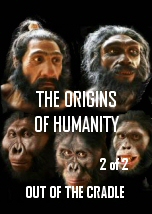
An extraordinary journey tracing the footsteps of early Homo sapiens leaving Africa, reaching the easternmost end of the Eurasian continent, and developing unique culture there. The latest palaeoanthropological findings and CGI created by top game creators will stun the viewers.
Valeant Pharmaceuticals was a multinational specialty pharmaceutical company based in Canada. It grew rapidly through a series of mergers and acquisitions under the leadership of J. Michael Pearson. The company was involved in a number of controversies surrounding drug price hikes and the use of a specialty pharmacy for the distribution of its drugs, which led to an investigation by the U.S. Securities and Exchange Commission and caused its stock price to plummet more than 90 percent from its peak while its debt surpassed $30 billion. Wall Street short-sellers exposed a scam that regulators overlook: how Big Pharma gouges patients in need of life-saving drugs.
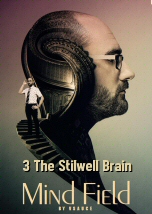
A single microscopic brain cell cannot think, is not conscious, but if you bring in a few more brain cells, and a few more, and connect them all, at a certain point, the group itself will be able to think and experience emotions and have opinions and a personality and know that it exists. How can such astonishing things be made from such simple ingredients? Well, answering that question means learning not only who we are but, more importantly, how we are. Today, using what neuroscientists know so far, we are going to make a town function like a brain, using people as neurons.
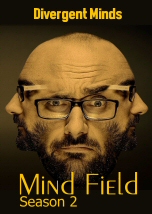
Autistic minds provide windows into how we all think, feel, and behave. A complete brain science should be able to account for all kinds of minds and brains. As long as some minds remain a mystery, so too will all minds. Michael Stevens travels to London to meet a blind, autistic savant with astonishing musical abilities, and volunteers to have his brain's function temporarily disrupted at UCLA's Neuromodulation Lab.
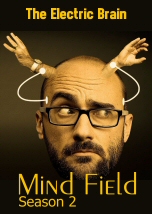
The nervous system is fundamentally electric. When we move our arm, it moves because a electric signal has been sent to the muscle that controls it. Now, because the brain is electric, we could also use electricity to record what the brain is doing or bypass it entirely, and control a body. That means that we could restore movement to people who are paralyzed, feel through an artificial hand as if it was our own, and even read people's minds. Michael Stevens explores how electricity can be used to move cockroaches, control other peoples' limbs and even read peoples' thoughts.















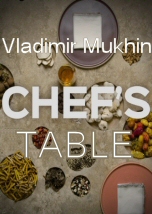



A fifth-generation chef, Mukhin worked in his father’s kitchen as a young man, preparing Soviet-era classics. So, like generations of youths before him, Mukhin had to rebel against the old man. He left his small hometown of Essentuki for Moscow and became obsessed with modern techniques and food from across Europe. It wasn’t until he worked as a sous chef in France, when he collaborated on a menu with chef Christian Etienne, that Mukhin realized Russian cuisine could exist within modern cooking. 'His French clients who ate it were amazed,' he says. ¡They loved his Russian cooking.'