Valeant Pharmaceuticals was a multinational specialty pharmaceutical company based in Canada. It grew rapidly through a series of mergers and acquisitions under the leadership of J. Michael Pearson. The company was involved in a number of controversies surrounding drug price hikes and the use of a specialty pharmacy for the distribution of its drugs, which led to an investigation by the U.S. Securities and Exchange Commission and caused its stock price to plummet more than 90 percent from its peak while its debt surpassed $30 billion. Wall Street short-sellers exposed a scam that regulators overlook: how Big Pharma gouges patients in need of life-saving drugs.
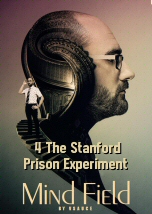
It all begins as a study on the psychology of prison life led by Stanford psychology professor Dr. Philip Zimbardo. 24 volunteers - 12 guards and 12 prisoners - have agreed to spend the next two weeks recreating life in a correctional facility. Normal people can become monsters, given the right situation, that's the standard narrative of the Stanford Prison Experiment, one of the most famous psychological experiments of all time. But what if the cause of its participants' cruel behavior wasn't what we've always been told?
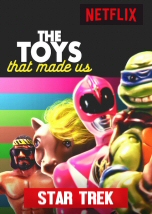
Since the original series went on the air in 1966, the Star Trek franchise has had a history of ups and downs in the toy business - from AMT's faithful scale model kit of the USS Enterprise to Remco's obscure tie-in merchandise, to Mego's best–selling action figure line. Following Mego's bankruptcy in 1983 and a string of flops by Ertl and Galoob, Playmates Toys picked up the toy license in the late 1980s and sparked a resurgence in the franchise's toy sales. From the mid-2000s onwards, companies such as Art Asylum and McFarlane Toys continue to keep the Star Trek toy franchise alive.
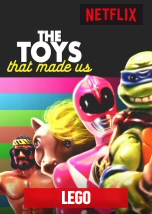
In 1949, after decades of making wooden furniture and toys, Ole Kirk Christiansen's small factory in Billund, Denmark, moved to plastic and created the 'Automatic Binding Bricks', which would later be known as LEGO. When the company patented the tube system in 1958, LEGO became the dominant toy line worldwide throughout the 1960s and 1970s. When other competitors capitalized on the expiration of the company's patents in the 1980s, LEGO faced stiff competition until they reported their first loss in 1998. Poor business decisions with film licenses and the failure of the Jack Stone and Galidor lines brought LEGO to near-bankruptcy until Jørgen Vig Knudstorp took over the company and, by bringing it back to its roots, rejuvenated LEGO's profits. By the time The Lego Movie hit theaters in 2014, LEGO became the largest toy franchise in the world.
Here's a growing trend in artificial intelligence. Dating video games and other applications let users carry on virtual relationships with computerized girlfriends ranging from career women to Japanese schoolgirls. There's even something for the ladies. How soon will there be artificial intelligence of such complexity that protecting its well-being and rights becomes a serious political and social concern? In what year will there be an app or computer program or a device that you not only love but that possibly, within the realm of believability might actually love you ...back?
Everywhere you go, you generate a cloud of data. You're trailing data, everything that you do is producing data. And then there are computers looking at that data that are learning, and these computers are essentially trying to serve you better. They're trying to personalize things to you. They're trying to adapt the world to you. So on the one hand, this is great, because the world will get adapted to you without you even having to explicitly adapt it. There's also a danger, because the entities in the companies that are in control of those algorithms don't necessarily have the same goals as you, and this is where I think people need to be aware that, what's going on, so they can have more control over it. We came into this new world thinking that we were users of social media and search engines. It didn't occur to us that social media and search engines were actually using us.














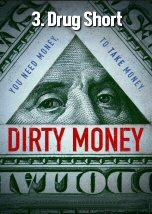






Wall Street short-sellers exposed a scam that regulators overlook: how Big Pharma gouges patients in need of life-saving drugs.