From the first flicker of life billions of years ago to the extraordinary diversity of animals alive today, Chris Packham embarks on an epic journey through evolution. Combining cutting-edge science, spectacular wildlife and vivid reconstructions of long-vanished creatures, he reveals how countless generations of innovation, adaptation and chance transformed simple cells into bodies capable of movement, reproduction, flight, intelligence and astonishing complexity. Along the way, familiar animals become gateways into some of the greatest mysteries in the history of life. In the first two episodes, Packham traces two remarkable evolutionary stories. In Kenya, he asks how a microscopic cell could ultimately give rise to the enormous, intelligent and highly social elephant, uncovering the crucial breakthroughs that made complex bodies, lungs, limbs and giant size possible. Then, in South Africa, the ostrich and its extraordinary egg open the door to the evolution of reproduction itself: From the origins of sex to the appearance of eggs, feathers and flight. Together, these episodes reveal that some of nature’s most spectacular creatures are the result of billions of years of unlikely experiments, lucky accidents and relentless adaptation.
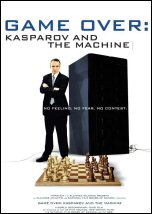
Garry Kasparov is arguably the greatest chess player who has ever lived. In 1997 he played a chess match against IBM's computer Deep Blue. Kasparov lost the match. This film shows the match and the events surrounding it from Kasparov's perspective. It delves into the psychological aspects of the game, paranoia surrounding it and suspicions that have arisen around IBM's true tactics. It consists of interviews with Kasparov, his manager, chess experts, and members of the IBM Deep Blue team, as well as original footage of the match itself.











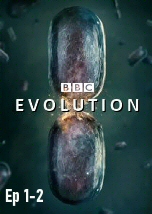

In the first two episodes, Packham traces two remarkable evolutionary stories. In Kenya, he asks how a microscopic cell could ultimately give rise to the enormous, intelligent and highly social elephant, uncovering the crucial breakthroughs that made complex bodies, lungs, limbs and giant size possible. Then, in South Africa, the ostrich and its extraordinary egg open the door to the evolution of reproduction itself: From the origins of sex to the appearance of eggs, feathers and flight. Together, these episodes reveal that some of nature’s most spectacular creatures are the result of billions of years of unlikely experiments, lucky accidents and relentless adaptation.