






Last Watched

"Nature"  Sort by

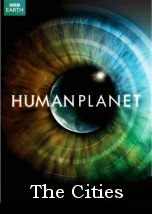
The Cities

   2011    Culture
Humans are so clever they’ve built their own habitat, designed to keep wild nature out. Yet as we discover the urban environment is totally dependant on the natural world. Over the three years of filming for Human Planet, the teams have spent time with over seventy different communities in countries across the planet. Despite seeing many different ways of living, there are some aspects of family life that remain the same whether you live in a tree house in West Papua, or a brick house in Bolton. These similarities became very clear when the urban team went to film on a rubbish dump in Kenya. Here on the Kibarani dump on the outskirts of Mombasa, Ali, Ashe and their family live and survive amongst the rubbish, and even here, just like anywhere on the planet, everything stops for a nice cup of tea!
Series: Human Planet
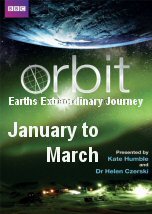
January to March

   2014    Nature
In this second episode we travel from January to the March equinox. Kate Humble gets closer to the Sun than she has ever been before, whilst Helen Czerski visits a place that gets some of the biggest and fastest snowstorms on Earth.
Series: Orbit: Earth Extraordinary Journey

The Last Lions

   2011    Nature
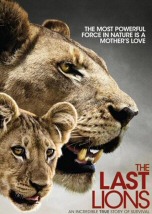
Fifty years ago there were close to half-a-million lions in Africa. Today there are around 20,000. To make matters worse, lions, unlike elephants, which are far more numerous, have virtually no protection under government mandate or through international accords. This is the jumping-off point for a disturbing, well-researched and beautifully made cri de coeur from husband and wife team Dereck and Beverly Joubert, award-winning filmmakers from Botswana who have been Explorers-in-Residence at National Geographic for more than four years. Pointing to poaching as a primary threat while noting the lion's pride of place on the list for eco-tourists-an industry that brings in 200 billion dollars per year worldwide-the Jouberts build a solid case for both the moral duty we have to protect lions (as well as other threatened "big cats," tigers among them) and the economic sense such protection would make. And when one takes into account the fact that big cats are at the very top of the food chain-and that their elimination would wreak havoc on all species below them, causing a complete ecosystem collapse-the need takes on a supreme urgency.

More Than Human

   2015    Technology
Scientific advancements are challenging the concept of what it means to be human. Technology embedded in our bodies is fairly common: artificial limbs, pacemakers. But new research is taking us beyond replacement parts and into a new realm that is changing the nature of the human body and the human mind. Will the fusion of biology and technology change how we think, how we feel, how we experience the world?

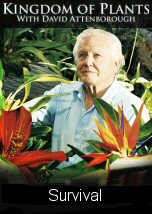
The Survival

   2012    Nature    3D    HD
David Attenborough discovers the plants that have evolved to shed their dependency on water enabling them to survive in the driest environments. The story begins at midnight in midsummer as David steps into the Princess of Wales Conservatory to witness the extraordinary nocturnal blooming of a cactus. The queen of the night, with its giant flowers, is the centre piece of a stunning symphony of cacti blooms that burst open in the desert (and at Kew) at night. In a mesmerizing 3D slow motion sequence, we discover the extraordinary connections between cacti and their natural pollinators: bats. As the sun rises, David meets other amazing plants. Species like the century plant, the Agave franzosini, which grows steadily for over 50 years, only to then flower itself to death with one mighty telegraph pole sized bloom which literally bursts out of the roof of Kew’s green house.
Series: Kingdom of Plants

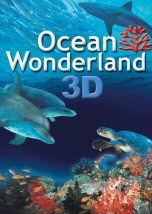
Ocean Wonderland 3D

   2003    Nature    3D    HD
The mission of the film is to underline the crucial ecological role of coral reefs play in maintaining the well being of our planet, and to point out and warn against the dangers that are destroying the world's coral reefs. Entirely filmed using digital technology, thanks to it, the film was shot almost entirely with natural light, thus showing the underwater world as it exactly is. This is the closest you can get to dive without being there. Shot on the Great Barrier Reef in Australia and in the Bahamas, it brings to you the amazing beauty of the many varieties of coral and the immense diversity of the marine life thriving there.
Life

Life

2009  Nature
Minimalism

Minimalism

2015  Culture
The Americas

The Americas

2025  Nature
Desert War

Desert War

  History
Clash of the Gods

Clash of the Gods

2009  History
The Rehearsal Season 2

The Rehearsal Season 2

2025  Culture