This is a destabilizing documentary that challenges Americans’ narratives and asks the viewer to engage in a conversation with a slippery subject. It’s riveting in how dangerous and intimate it feels, leveraging its multiple camera-angles and hand-held shots to make the viewer feel as if they, too, are in the room with Vladimir Putin. As a conversation that covers a vast span of Russian history, culture, and politics as refracted through the mind of Russia’s president — it’s often remarkable. During an extraordinary career, Stone has never pretended to be an unbiased journalist and he’s not about to feign pretense now.
Caesar winters his army in Gaul near the Italian border while his enemies in Rome fear that he will do something no Roman General has done: cross the Rubicon with his army. To counter-balance his opponents, Caesar puts his friend Mark Antony up for office as the people's Consul. Vorenus and Pullo accompany Mark Antony and Octavian to Rome. For Pullo, it's an opportunity to get drunk and ravish every woman in sight.
Valeant Pharmaceuticals was a multinational specialty pharmaceutical company based in Canada. It grew rapidly through a series of mergers and acquisitions under the leadership of J. Michael Pearson. The company was involved in a number of controversies surrounding drug price hikes and the use of a specialty pharmacy for the distribution of its drugs, which led to an investigation by the U.S. Securities and Exchange Commission and caused its stock price to plummet more than 90 percent from its peak while its debt surpassed $30 billion. Wall Street short-sellers exposed a scam that regulators overlook: how Big Pharma gouges patients in need of life-saving drugs.
It all begins as a study on the psychology of prison life led by Stanford psychology professor Dr. Philip Zimbardo. 24 volunteers - 12 guards and 12 prisoners - have agreed to spend the next two weeks recreating life in a correctional facility. Normal people can become monsters, given the right situation, that's the standard narrative of the Stanford Prison Experiment, one of the most famous psychological experiments of all time. But what if the cause of its participants' cruel behavior wasn't what we've always been told?
Since the original series went on the air in 1966, the Star Trek franchise has had a history of ups and downs in the toy business - from AMT's faithful scale model kit of the USS Enterprise to Remco's obscure tie-in merchandise, to Mego's best–selling action figure line. Following Mego's bankruptcy in 1983 and a string of flops by Ertl and Galoob, Playmates Toys picked up the toy license in the late 1980s and sparked a resurgence in the franchise's toy sales. From the mid-2000s onwards, companies such as Art Asylum and McFarlane Toys continue to keep the Star Trek toy franchise alive.
In 1949, after decades of making wooden furniture and toys, Ole Kirk Christiansen's small factory in Billund, Denmark, moved to plastic and created the 'Automatic Binding Bricks', which would later be known as LEGO. When the company patented the tube system in 1958, LEGO became the dominant toy line worldwide throughout the 1960s and 1970s. When other competitors capitalized on the expiration of the company's patents in the 1980s, LEGO faced stiff competition until they reported their first loss in 1998. Poor business decisions with film licenses and the failure of the Jack Stone and Galidor lines brought LEGO to near-bankruptcy until Jørgen Vig Knudstorp took over the company and, by bringing it back to its roots, rejuvenated LEGO's profits. By the time The Lego Movie hit theaters in 2014, LEGO became the largest toy franchise in the world.










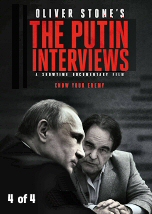


As a conversation that covers a vast span of Russian history, culture, and politics as refracted through the mind of Russia’s president — it’s often remarkable. During an extraordinary career, Stone has never pretended to be an unbiased journalist and he’s not about to feign pretense now.