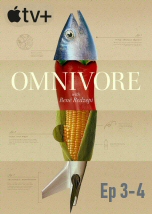
In episodes 3 and 4, a seemingly simple ingredient becomes the invisible force that has shaped civilizations, fueled exploration, and quietly dictated the fate of empires. From ancient trade routes to modern industry, salt emerges not just as a seasoning, but as a powerful driver of human history and survival. At the same time, the story shifts to something far more familiar yet equally unsettling: the global dominance of a single type of banana. What appears to be abundance hides a fragile system built on uniformity, where one disease could wipe out a staple food relied upon by millions. As the journey unfolds, the narrative exposes the hidden cost of convenience and monoculture, revealing how the loss of biodiversity is not a distant ecological concern but an immediate threat to our food security and future. With striking connections between past and present, these episodes invite you to rethink what you eat, where it comes from, and how something as ordinary as salt or a banana could hold the key to understanding the balance—and imbalance—of our world.
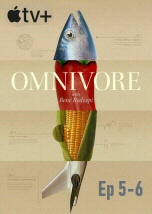
In episodes 5 and 6, you can see how two everyday foods open the door to something far bigger: Memory, survival, tradition and the uneasy bond between humans and the natural world. One journey takes you to La Alberca, in Spain, where the pig is not just an animal but part of a living ritual charged with history, pride and contradiction. The other leads into the rice fields of Kerala, India, where every grain carries the weight of climate, heritage and the fight to preserve ways of life that are slipping away. These chapters do far more than show food on a plate: they reveal beauty, tension and the hidden forces that sustain entire cultures, making each scene feel rich, intimate and impossible to forget.
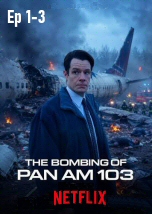
On 21 December 1988, Pan Am Flight 103 explodes over Lockerbie, Scotland, killing all 259 people on board and 11 residents on the ground. What follows is one of the largest and most complex terrorism investigations ever undertaken in Britain, forcing Scottish detectives and the FBI to work across borders, sift through an enormous debris field and reconstruct how a bomb was placed aboard the aircraft. Based on real events, the series follows both the painstaking search for those responsible and the devastating impact of the attack on the town of Lockerbie and on families on both sides of the Atlantic. In the first three episodes, the investigation begins amid chaos as police recover bodies and fragments of the aircraft while international pressure mounts for answers. Early clues lead investigators toward possible suspects and networks connected to the bombing, but every breakthrough raises new questions. When Scottish officers travel to the United States with potentially crucial evidence, tensions emerge between agencies, particularly over intelligence the CIA may be withholding about a possible bomb maker. The result is a gripping reconstruction of an inquiry in which forensic evidence, international politics and competing intelligence interests collide, while the families of the victims wait for the truth.









As the journey unfolds, the narrative exposes the hidden cost of convenience and monoculture, revealing how the loss of biodiversity is not a distant ecological concern but an immediate threat to our food security and future. With striking connections between past and present, these episodes invite you to rethink what you eat, where it comes from, and how something as ordinary as salt or a banana could hold the key to understanding the balance—and imbalance—of our world.