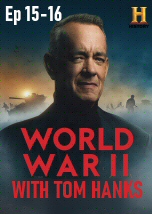
In episodes 15 and 16, the war begins to close in on the Axis powers not only across battlefields, but inside the societies that created it. Germany and Japan face the turning tide in radically different ways: Hitler’s regime tries to preserve the illusion of normal life while driving production through propaganda, forced labor and terror, while Japan demands sacrifice, austerity and total obedience from its people as American submarines cut the lifelines of empire. As bombing raids, shortages and fear shatter the home front, the documentary reveals how nations built on conquest begin to feel the terrible cost of the war they unleashed. The story then moves into one of the most powerful chapters of resistance in occupied Europe. As Allied armies advance from Normandy and Soviet forces push from the east, ordinary people and underground fighters rise against Nazi rule in France, Poland and even inside the machinery of extermination itself. From coded BBC messages and the liberation of Paris to the doomed Warsaw Uprising and the desperate courage of prisoners documenting the horrors of Auschwitz, these episodes show war at its most human and devastating: A struggle not only between armies, but between tyranny and the refusal to be erased.
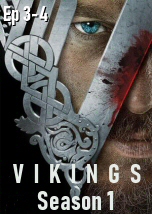
In episodes 3 and 4, Ragnar returns from England with treasure, prisoners and the first proof that his forbidden dream was not madness, but the beginning of a new world of opportunity. Yet victory quickly turns dangerous when Earl Haraldson seizes the riches for himself and forces each man to choose only one reward. Ragnar’s choice is not gold, but Brother Athelstan, a captured monk whose knowledge of England may prove more valuable than any silver. As celebration gives way to suspicion, the raid becomes a threat to the old order, and Ragnar’s growing fame starts to look like a direct challenge to the Earl’s power. With permission now granted to sail west again, Ragnar and his crew return to England in search of greater wealth, deeper secrets and more dangerous enemies. But every success abroad increases the danger waiting at home. In Kattegat, Haraldson turns against Ragnar, accusing him of murder and dragging him before the law in a trial that becomes a battle for loyalty, honor and survival. Between Saxon lands, Viking ambition and the politics of a ruthless chieftain, these episodes turn exploration into open conflict and show how Ragnar’s legend begins to threaten everyone who stands above him.
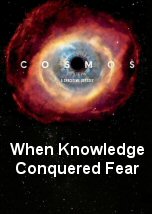
During 1959-1961 both the Americans and Soviets are planning manned space flight, and we see both sides preparing to do so with the development of the Vostok programme (Russia) and Project Mercury (USA). After difficulties and failures on both sides, the Soviets succeed in putting Yuri Gagarin into space first, with the Americans putting Alan Shepard up shortly afterwards.
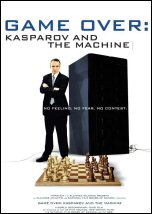
Garry Kasparov is arguably the greatest chess player who has ever lived. In 1997 he played a chess match against IBM's computer Deep Blue. Kasparov lost the match. This film shows the match and the events surrounding it from Kasparov's perspective. It delves into the psychological aspects of the game, paranoia surrounding it and suspicions that have arisen around IBM's true tactics. It consists of interviews with Kasparov, his manager, chess experts, and members of the IBM Deep Blue team, as well as original footage of the match itself.











The story then moves into one of the most powerful chapters of resistance in occupied Europe. As Allied armies advance from Normandy and Soviet forces push from the east, ordinary people and underground fighters rise against Nazi rule in France, Poland and even inside the machinery of extermination itself. From coded BBC messages and the liberation of Paris to the doomed Warsaw Uprising and the desperate courage of prisoners documenting the horrors of Auschwitz, these episodes show war at its most human and devastating: A struggle not only between armies, but between tyranny and the refusal to be erased.