Experience the world from the viewpoint of animals themselves. From spellbinding wildlife spectacle to intimate encounters, Planet Earth II takes you closer than ever before. Remote islands offer sanctuary for some of the planet's strangest and rarest creatures. The rare pygmy three-toed sloth enjoys a peaceful existence on an idyllic Caribbean island, while nesting albatross thrive in predator-free isolation. But island life always comes at a cost. On the Galapagos Islands, young marine iguana must escape an onslaught of deadly racer snakes the moment they hatch from the sand. On the sub-Antarctic island of Zavodovski, life gets more extreme still. Every day, one and a half million penguins risk being battered against the rocks by fierce waves as they try to get on and off the island.
In this documentary we moved to Ancient Egypt to learn their vision of the world, life and death, gods and magic. For the ancient Egyptians, the Nile was the main connection between their lives and an infinite supply of provisions. But its waters hid an underworld of darkness and mystery for its first settlers. The Nile was one the spiritual paths that combined life and death, the real world and the underworld.
ln 1942 through an horrific process of trial and error these Nazis created something entirely new in History - killing factories capable
of murdering millions. With the increase in killing at Auschwitz and nearby Treblinka, people are showing tremendous courage, like German officer Albert Battel risking his life to save detainees.
Painted over five centuries ago, Filippo Lippi's nativity is like none other: it shows the birth of Christ in a dark, wooded wilderness. There are no shepherds, kings, ox, ass – there is no Joseph. Its beauty inspired Michelangelo, Leonardo da Vinci and Botticelli. But it also conceals a deeply personal story. It was painted for Cosimo de Medici, a wealthy banker who feared that his money was dragging him straight to hell. The artist's life was equally surprising. One of the most celebrated painters of his day, Filippo Lippi was also a Carmelite friar, but he was no stranger to the temptations of the flesh, to which he frequently yielded. Shortly before painting his Adoration, he caused uproar by seducing a twenty year-old nun. His paintings rejoice not only in divine beauty, but in the beauty of women. In later times, the Adoration's history was interwoven with that of rulers and dictators. It became a bargaining chip after Napoleon's allies seized twenty merchant ships. And in the 20th century, it was hidden by the Nazis in a potassium mine, where specialist american officers, known as Monuments Men, stumbled upon it. they were now told to get it ready to be shipped out. In an unprecedented turn of events they refused. This is the only known case in the whole of the Second World War of American officers refusing an order. It was sent to the National Gallery of Art, but in 1949 Lippi's Adoration was returned to Germany.
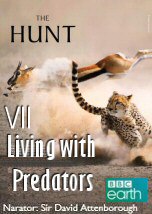
The final episode of the series visits the frontline of the conflict with the world's top predators, meeting the scientists fighting to save them. Crossing five continents and combining landmark natural history footage with real-life human drama, it checks the pulse of the earth's iconic animals, including lions, tigers, polar bears and blue whales. With three-quarters of the planet's carnivores now in decline, can people find ways to live with predators before they disappear forever?
Sagan discusses the story of the Heike crab and artificial selection of crabs resembling samurai warriors, as an opening into a larger discussion of evolution through natural selection (and the pitfalls of intelligent design). Among the topics are the development of life on the Cosmic Calendar and the Cambrian explosion; the function of DNA in growth; genetic replication, repairs, and mutation; the common biochemistry of terrestrial organisms; the creation of the molecules of life in the Miller-Urey experiment; and speculation on alien life (such as life in Jupiter's clouds). In the Cosmos Update ten years later, Sagan remarks on RNA also controlling chemical reactions and reproducing itself and the different roles of comets (potentially carrying organic molecules or causing the Cretaceous–Paleogene extinction event).




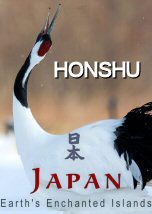

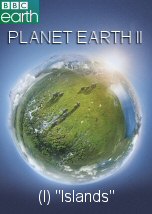






Remote islands offer sanctuary for some of the planet's strangest and rarest creatures. The rare pygmy three-toed sloth enjoys a peaceful existence on an idyllic Caribbean island, while nesting albatross thrive in predator-free isolation. But island life always comes at a cost. On the Galapagos Islands, young marine iguana must escape an onslaught of deadly racer snakes the moment they hatch from the sand. On the sub-Antarctic island of Zavodovski, life gets more extreme still. Every day, one and a half million penguins risk being battered against the rocks by fierce waves as they try to get on and off the island.