








Last Watched

"Life "  Sort by

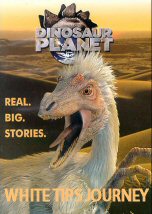
Dinosaur Planet: White Tip Journey

   2003    Science
Take a dino's-eye view of life in the prehistoric past as cutting-edge filming techniques and hard science. When White Tip, a female velociraptor, loses the rest of her pack, she must struggle to survive on her own. In time, she locates a new pack, as well as a mate, only to find that her hardships are just beginning in the harsh desert environment.
Series: Dinosaur Planet
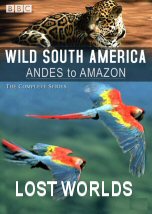
Wild South America: Lost Worlds

   2005    Nature
A major new series exploring the wildlife of South America. This is a breathtaking aerial journey through the most spectacular locations on the continent, from the icy peaks of the Andes to the Amazon jungle and the Atacama desert. These extreme conditions are home to a mind-boggling variety of creatures, many of them rarely seen before on television.
Series: Wild South America

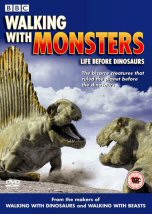
Walking with Monsters

   2005    Science
From the makers of Walking With Dinosaurs comes an epic and entertaining new exploration of early life on Earth, revealing that before the age dinosaurs, a succession of fantastical animals and plants ruled the planet. A time when a two-ton predatory fish came on land to hunt, when four-metre sea scorpions sliced sushi in the shallows and when just one species of lumbering reptile represented 80 per cent of all life. For the first time, this special two-hour presentation uncovers and recreates these creatures and the bizarre world they inhabited.

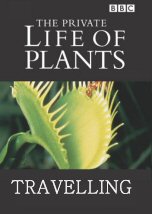
The Private Life of Plants: Travelling

   1994    Nature
Sir David Attenborough reveals plants as they have never been seen before - on the move and dangerously devious. About the major problems of life - growing, finding food, reproduction - and the varied ways plants have evolved to solve it. Filmed from the plant's point of view, using computer animations, fibre-optics and unique time-lapse photography. The first episode looks at how plants are able to move". The bramble is an aggressive example: it advances forcefully from side to side and, once settled on its course, there is little that can stand in its way. An altogether faster species is the birdcage plant, which inhabits Californian sand dunes. When its location becomes exposed, it shifts at great speed to another one with the assistance of wind — and it is this that allows many forms of vegetation to distribute their seeds. While not strictly a plant, the spores of fungi are also spread in a similar fashion. One of the most successful (and intricate) flowers to use the wind is the dandelion, whose seeds travel with the aid of 'parachutes'. They are needed to travel miles away from their parents, who are too densely packed to allow any new arrivals. Trees have the advantage of height to send their seeds further, and the cottonwood is shown as a specialist in this regard. The humidity of the tropical rainforest creates transportation problems, and the liana-species Alsomitra macrocarpa is one plant whose seeds are aerodynamic 'gliders'. Some, such as those of the sycamore, take the form of 'helicopters', while others, such as the squirting cucumber release their seeds by 'exploding'. Water is also a widely used method of propulsion. The tropical sea bean Entada gigas has one of the biggest fruits of all plants and is dispersed by water streams. However, most plants use living couriers, whether they be dogs, humans and other primates, ants or birds, etc., and to that end, they use colour and smell to signify when they are ripe for picking.
Series: The Private Life of Plants

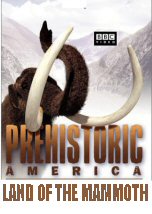
Land Of The Mammoth

   2003    Nature
Journey through the long-vanished corners of prehistoric North America, beginning when man first entered the vast, unspoiled continent some 14,000 years ago, in this appealing BBC documentary. Witness ancient beasts, mammoths, mastodons, giant bears, and sabre-toothed cats, and see the legacies each has passed to their modern successors. Computer animation and digital effects bring to life mammoths, saber-toothed cats, giant ground sloths, short-faced bears, glyptodonts, and a plethora of smaller animals in a lush Ice Age mosaic.
Series: Prehistoric America

Van Gogh

   2006    Art
Born in Groot-Zundert, The Netherlands, Van Gogh spent his early life as an art dealer, teacher and preacher in England, Holland and Belgium. His period as an artist began in 1881 when he chose to study art in Brussels, starting with watercolours and moving quickly on to oils. The French countryside was a major influence on his life and his early work was dominated by sombre, earthy colours depicting peasant workers, the most famous of which is The Potato Eaters, 1885. It was during Van Gogh's studies in Paris (1886-8) that he developed the individual style of brushwork and use of colour that made his name. In 1888 he moved to Arles where the Provençal landscape provided his best-known subject matter. However, it also marked the start of his mental crisis following an argument with his contemporary Paul Gauguin. Van Gogh was committed to a mental asylum in 1889 where he continued to paint, but he committed suicide in 1890.
Series: Power of Art
Our Planet

Our Planet

2019  Nature
The Dinosaurs

The Dinosaurs

2026  Science
Welcome to Earth

Welcome to Earth

2021  Nature
Leaving Neverland

Leaving Neverland

2019  Culture
Life in a Day

Life in a Day

2021  Culture
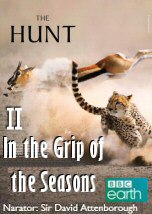
The Hunt

The Hunt

2015  Nature