Inside the heart of the atom, its nucleus houses energy. This hidden treasure was forged billions of years ago in distant stellar furnaces. The secret of starlight is nothing to fool with. It can bring a civilization to life and it can burn it to the ground. Two atoms from different parts of the universe meet on a small planet. A deadly embrace between science and state altered the fate of the world and a gripping cautionary tale of others who grew used to living in the shadow of grave danger until it killed them all except one.
This remarkable science-history series investigates the blistering pace of human endeavour in space exploration, computing, energy, resources, Earth science and our understanding of the evolution of life itself. Across the last 50 years, humans have set a blistering pace and scientific discovery. We've crossed the boundaries of our solar system, made machines that can learn harnessed the power of the sun and built life from scratch. It's a period like no other in history, where human endeavour is changing everything: this is The Great Acceleration. As we race toward the future, we must examine the journey. In the first episode, Dr Shalin Naik explores the ambitious space shuttle mission that began in the '70s plus the future colonization of Mars. Over the past 50 years, space has become central to everything, from communications to entertainment to climate modelling. And as private enterprise enters space exploration, our understanding of the universe will only continue to expand. We will know if we can survive on other objects - the moon, maybe Mars, maybe even some of the moons of Jupiter and Saturn. Deep space is the last and infinite frontier. That's what we do as human beings. We explore, we learn, we make discoveries, from the moment we're born to the moment we die.
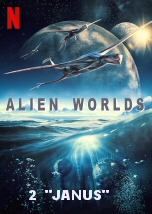
Most planets we know of are so hellish, it seems impossible that anything could live. But it's amazing where life can take hold in the Earth. Astrobiologists look for simple single-celled microbes known as extremophiles in places as Danakil Depression, known in Ethiopia as 'The Gateway to Hell.' In Episode 2, the fictional world is Janus, a planet in such a close orbit than its rotation is locked by the star's gravity and it always shows the same face to its sun. On one side of the planet, it's always daytime, a searing desert. On the other side, it's forever night, a frozen shadowland. Squeezed between the two, a sliver of perpetual twilight. Freezing meltwater flows from the cold side, carving canyons through the landscape. Deep in these canyons lives an extraordinary five-legged creature.
NASA is on a mission to send humans to Mars within just 15 years, but to reach this next frontier of space exploration, experts must discover new technology and cutting-edge science that protects astronauts from the Red Planet's deadliest killers.
In the third episode, the discovery of extraterrestrial life might face an impossible challenge: the physics of the universe itself; but using cutting-edge tech, experts might be on the verge of a groundbreaking find -- and the evidence could already be in hand.
Stars helped create us, building and spreading the ingredients for life to develop. But there will definitely be a point in the future when, in the future when, you look up, you will no longer be able to see stars. For billions of years, stars brought life to the universe. Now, they're dying out in a star apocalypse. What's causing the die-off, and what happens to life when the lights go out?














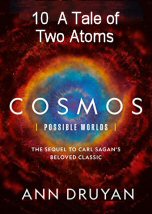



Two atoms from different parts of the universe meet on a small planet. A deadly embrace between science and state altered the fate of the world and a gripping cautionary tale of others who grew used to living in the shadow of grave danger until it killed them all except one.