We inhabit a cosmos of undiscovered dimensions and paradoxical realities. We live on one level of perception, but there are others. Every once in a while, a searcher happens upon the doorway to one of these other levels. One of them discovered a paradox about reality that proved to be so profound, we have yet to understand how it could be possible. The universe, or perhaps we should say, universes have never been the same. In the counterintuitive realm of quantum mechanics, light can be two contradictory things, and somehow - no one knows how - an unseen observer can alter the nature of reality. The man who stumbled on this hole in reality and the still- unfolding technological revolution that it made possible.
Inside the heart of the atom, its nucleus houses energy. This hidden treasure was forged billions of years ago in distant stellar furnaces. The secret of starlight is nothing to fool with. It can bring a civilization to life and it can burn it to the ground. Two atoms from different parts of the universe meet on a small planet. A deadly embrace between science and state altered the fate of the world and a gripping cautionary tale of others who grew used to living in the shadow of grave danger until it killed them all except one.
When Homo sapiens, which means 'wise ones,' discovered and controlled fire hundreds of thousands of years ago, everything changed. Fire allowed us to cook food and heat dwellings, and it served as a focal point for storytelling and sharing cultural identity among community members. We don't yet have established parameters for what it means to be 'distinctly human,' It would seem the only thing that separates us from other animals, Neil deGrasse Tyson ponders, is our neurotic need to feel 'special'. Against the backdrop of the Halls of Extinction, Tyson insists that there must be a clear distinction between ourselves and animals that justifies our eating them, wearing them and even bringing an end to their species. From the birth of the devil in ancient Persia to a searing story of saintliness among macaque monkeys, this episode is an exploration of human potential for change. It concludes with the story of how one of history's greatest monsters was transformed into one of its shining lights.
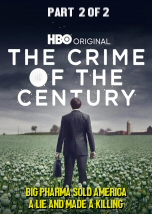
In the second part and conclusion, a spotlight on the mass marketing of the synthetic opioid fentanyl examines the connections between drug manufacturers and government policy. Video of sales retreats and promotional material reveals a deep cynicism among company employees and a disregard for the widespread, nefarious corporate practices.
Genetic breakthroughs have shed light on how life evolves in real-time. From filling in the missing links to creating a new species, in the last 50 years scientists have solved some of the biggest mysteries of evolution. In this episode, we look at revolutionary discoveries that shook the world and may shape our future.
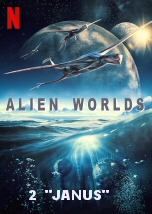
Most planets we know of are so hellish, it seems impossible that anything could live. But it's amazing where life can take hold in the Earth. Astrobiologists look for simple single-celled microbes known as extremophiles in places as Danakil Depression, known in Ethiopia as 'The Gateway to Hell.' In Episode 2, the fictional world is Janus, a planet in such a close orbit than its rotation is locked by the star's gravity and it always shows the same face to its sun. On one side of the planet, it's always daytime, a searing desert. On the other side, it's forever night, a frozen shadowland. Squeezed between the two, a sliver of perpetual twilight. Freezing meltwater flows from the cold side, carving canyons through the landscape. Deep in these canyons lives an extraordinary five-legged creature.











In the counterintuitive realm of quantum mechanics, light can be two contradictory things, and somehow - no one knows how - an unseen observer can alter the nature of reality. The man who stumbled on this hole in reality and the still- unfolding technological revolution that it made possible.