

Last Watched

"Cat"  Sort by

Space Travel

   2008    Technology
When man finally broke free of the Earth's gravitational pull the dream of travelling to other planets became a reality. Today scientists are proposing a bizarre array of technologies in the hope of travelling faster through space: from space craft sporting sails that catch laser beams, to propulsion engines powered by a bizarre entity known as anti-matter. Finally explore the science behind the seemingly fanciful notion of warp-drive and a theoretical particle that can travel faster than light.
Series: The Universe
Edge of Space

   2009    Technology
Low Earth Orbit, 120 miles above sea level, is where the majority of space exploration has occurred. This 1,100 mile band around Earth is where--for a cool $20 million--any private citizen can take the vacation of his or her life on the International Space Station. Commercial prospects for LEO are huge; but dangers lurk for any individual willing to travel here--radiation, cosmic rays, and space debris numbering in the thousands threaten any spacecraft travelling in orbit. It's the new frontier, or the final frontier...and the possibilities are endless if you are willing to travel to the edge of space exploration.
Series: The Universe

Heaven and Hell

   1980    Science
Sagan discusses comets and asteroids as planetary impactors, giving recent examples of the Tunguska event and a lunar impact described by Canterbury monks in 1178. It moves to a description of the environment of Venus, from the previous fantastic theories of people such as Immanuel Velikovsky to the information gained by the Venera landers and its implications for Earth's greenhouse effect. The Cosmos Update highlights the connection to global warming.
Series: Cosmos

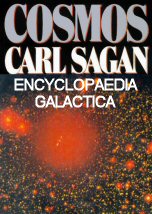
Encyclopaedia Galactica

   1980    Science
Questions are raised about the search for intelligent life beyond the Earth, with UFOs and other close encounters refuted in favor of communications through SETI and radio telescope such as the Arecibo Observatory. The probability of technically advanced civilizations existing elsewhere in the Milky Way is interpreted using the Drake equation and a future hypothetical Encyclopedia Galactica is discussed as a repository of information about other worlds in the galaxy. The Cosmos Update notes that there have been fewer sightings of UFOs and more stories of abductions, while mentioning the META scanning the skies for signals.
Series: Cosmos

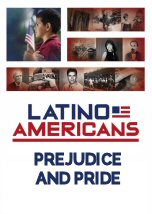
Prejudice and Pride

   2013    History
In the 1960s and 1970s a generation of Mexican Americans, frustrated by persistent discrimination and poverty, find a new way forward, through social action and the building of a new "Chicano" identity. The movement is ignited when farm workers in the fields of California, led by Cesar Chavez and Dolores Huerta, march on Sacramento for equal pay and humane working conditions. Through plays, poetry and film, Luis Valdez and activist Corky Gonzalez create a new appreciation of the long history of Mexicans in the South West and the Mestizo roots of Mexican Americans. In Los Angeles, Sal Castro, a schoolteacher, leads the largest high school student walkout in American history, demanding that Chicano students be given the same educational opportunities as Anglos. In Texas, activists such as Jose Angel Gutierrez, create a new political party and change the rules of the electoral game. By the end of the 1970s Chicanos activism and identity have transformed what it means to be an American. Chicano and Latino studies are incorporated into school curriculum; Latinos are included in the political process.
Series: Latino Americans

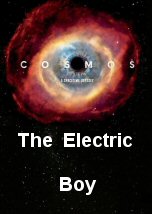
The Electric Boy

   2014    Science
This episode provides an overview of the nature of electromagnetism, as discovered through the work of Michael Faraday. Tyson explains how the idea of another force of nature, similar to gravitational forces, had been postulated by Isaac Newton before. Tyson continues on Faraday, coming from poor beginnings, would end up becoming interested in studying electricity after reading books and seeing lectures by Humphry Davy at the Royal Institution. Davy would hire Faraday after seeing extensive notes he had taken to act as his secretary and lab assistant. After Davy and chemist William Hyde Wollaston unsuccessfully tried to build on Hans Christian Ørsted's discovery of the electromagnetic phenomena to harness the ability to create motion from electricity, Faraday was able to create his own device to create the first electric motor by applying electricity aligned along a magnet. Davy, bitter over Faraday's breakthrough, put Faraday on the task of improving the quality of high-quality optical glass, preventing Faraday from continuing his research. Faraday, undeterred, continued to work in the Royal Institution, and created the Christmas Lectures designed to teach science to children. Following Davy's death, Faraday returned to full time efforts studying electromagnetism, creating the first electrical generator by inserting a magnet in a coil of wires. Tyson continues to note that despite losing some of his mental capacity, Faraday concluded that electricity and magnetism were connected by unseen fields, and postulated that light may also be tied to these forces. Using a sample of the optical glass that Davy had him make, Faraday discovered that an applied magnetic field could affect the polarization of light passing through the glass sample (a dielectric material), leading to what is called the Faraday effect and connecting these three forces. Faraday postulated that these fields existed across the planet, which would later by called Earth's magnetic field generated by the rotating molten iron inner core, as well as the phenomena that caused the planets to rotate around the sun. Faraday's work was initially rejected by the scientific community due to his lack of mathematical support, but James Clerk Maxwell would later come to rework Faraday's theories into the Maxwell's equations that validated Faraday's theories. Their combined efforts created the basis of science that drives the principles of modern communications today.
Series: Cosmos: A Spacetime Odyssey
Ancient Aliens

Ancient Aliens

  History
The Dinosaurs

The Dinosaurs

2026  Science
The Virtual Revolution

The Virtual Revolution

2010  Technology
Leaving Neverland

Leaving Neverland

2019  Culture
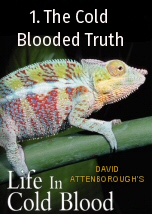
Life In Cold Blood

Life In Cold Blood

2008  Nature
High Score

High Score

2020  Technology