








Last Watched

"ELE"  Sort by

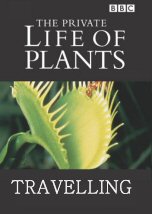
The Private Life of Plants: Travelling

   1994    Nature
Sir David Attenborough reveals plants as they have never been seen before - on the move and dangerously devious. About the major problems of life - growing, finding food, reproduction - and the varied ways plants have evolved to solve it. Filmed from the plant's point of view, using computer animations, fibre-optics and unique time-lapse photography. The first episode looks at how plants are able to move". The bramble is an aggressive example: it advances forcefully from side to side and, once settled on its course, there is little that can stand in its way. An altogether faster species is the birdcage plant, which inhabits Californian sand dunes. When its location becomes exposed, it shifts at great speed to another one with the assistance of wind — and it is this that allows many forms of vegetation to distribute their seeds. While not strictly a plant, the spores of fungi are also spread in a similar fashion. One of the most successful (and intricate) flowers to use the wind is the dandelion, whose seeds travel with the aid of 'parachutes'. They are needed to travel miles away from their parents, who are too densely packed to allow any new arrivals. Trees have the advantage of height to send their seeds further, and the cottonwood is shown as a specialist in this regard. The humidity of the tropical rainforest creates transportation problems, and the liana-species Alsomitra macrocarpa is one plant whose seeds are aerodynamic 'gliders'. Some, such as those of the sycamore, take the form of 'helicopters', while others, such as the squirting cucumber release their seeds by 'exploding'. Water is also a widely used method of propulsion. The tropical sea bean Entada gigas has one of the biggest fruits of all plants and is dispersed by water streams. However, most plants use living couriers, whether they be dogs, humans and other primates, ants or birds, etc., and to that end, they use colour and smell to signify when they are ripe for picking.
Series: The Private Life of Plants
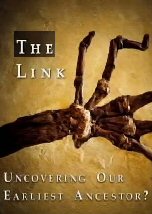
Uncovering Our Earliest Ancestor

   2009    Science
The BBC has made an extraordinary new documentary, presented by Sir David Attenborough, which will reveal the discovery of a fossilised skeleton that may be a vital ‘missing link’ in human evolution. The centrepiece of the programme is the unveiling of the first-ever complete skeleton of an extinct animal called an adapid

Chemistry: Discovering the Elements

   2010    Science
Just 92 elements made up the world, but the belief that were only four - earth, fire, air and water - persisted until the 19th Century. Professor Al-Khalili retraces the footsteps of the alchemists who first began to question the notion of the elements in their search for the secret of everlasting life.He reveals the red herrings and rivalries which dogged scientific progress, and explores how new approaches to splitting matter brought us both remarkable elements and the new science of chemistry.
Series: Chemistry

The Rolling Stones

       Art
Six videos the Rolling Stones have selected from their files. Including Mick and Keith interviews where they explain why this particular selection.

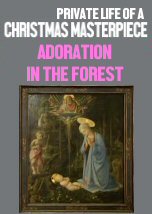
Adoration in the Forest

   2010    Art
Painted over five centuries ago, Filippo Lippi's nativity is like none other: it shows the birth of Christ in a dark, wooded wilderness. There are no shepherds, kings, ox, ass – there is no Joseph. Its beauty inspired Michelangelo, Leonardo da Vinci and Botticelli. But it also conceals a deeply personal story. It was painted for Cosimo de Medici, a wealthy banker who feared that his money was dragging him straight to hell. The artist's life was equally surprising. One of the most celebrated painters of his day, Filippo Lippi was also a Carmelite friar, but he was no stranger to the temptations of the flesh, to which he frequently yielded. Shortly before painting his Adoration, he caused uproar by seducing a twenty year-old nun. His paintings rejoice not only in divine beauty, but in the beauty of women. In later times, the Adoration's history was interwoven with that of rulers and dictators. It became a bargaining chip after Napoleon's allies seized twenty merchant ships. And in the 20th century, it was hidden by the Nazis in a potassium mine, where specialist american officers, known as Monuments Men, stumbled upon it. they were now told to get it ready to be shipped out. In an unprecedented turn of events they refused. This is the only known case in the whole of the Second World War of American officers refusing an order. It was sent to the National Gallery of Art, but in 1949 Lippi's Adoration was returned to Germany.
Series: The Private Life of a Masterpiece

The Nazis, A Warning From History. Episode 2

   1997    History
The BBC's definitive television history of the rise and fall of the Nazis. The Nazis - A Warning From History exposes the popular myths surrounding the rise and fall of the Third Reich. The series explores how the Nazis came to power, how they ruled, how they treated their occupied territories and, above all, how a cultured nation could be responsible for such acts of inhumanity. How could a political party as fundamentally evil and overtly racist as the Nazis come to power? This remains one of the most enigmatic questions of the last century. Acclaimed historian Laurence Rees examines what led a cultured nation at the heart of Europe to commit the atrocities it did. In so doing, he exposes popular myths and encourages understanding of the real forces that led to one of the darkest chapters in modern history. Was it simply the hypnotic power of Hitler's rhetoric? Did the Gestapo really impose themselves by terror on an unwilling population? Through interviews with witnesses and perpetrators, along with archive film and records, this six-part series unveils a more chilling reality.
Series: The Nazis, A Warning From History
The Germanic Tribes

The Germanic Tribes

2007  History
The Planets

The Planets

2000  Science
Future Warfare

Future Warfare

2021  Technology
Life

Life

2009  Nature
Solar System

Solar System

2024  Science
The Life of Mammals

The Life of Mammals

2002  Nature
Leaving Neverland

Leaving Neverland

2019  Culture
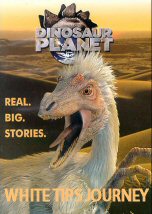
Dinosaur Planet

Dinosaur Planet

2003  Science