A boxing match in Brooklyn; life in postwar Bosnia and Herzegovina; the daily routine of a Nigerian midwife; an intimate family moment at home: these scenes and others are woven into Cameraperson, a tapestry of footage collected over the twenty-five-year career of documentary cinematographer Kirsten Johnson. Through a series of episodic juxtapositions, Johnson explores the relationships between image makers and their subjects, the tension between the objectivity and intervention of the camera, and the complex interaction of unfiltered reality and crafted narrative. A hybrid work that combines documentary, autobiography, and ethical inquiry, Cameraperson is both a moving glimpse into one filmmaker's personal journey and a thoughtful examination of what it means to train a camera on the world.
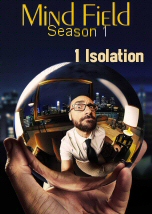
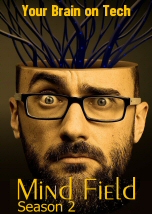
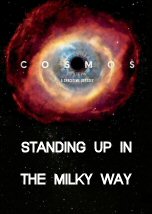
Two and a half thousand years ago, the Greek philosopher Socrates worried that the wide use of writing would have a negative impact on people's minds. He said that writing would create forgetfulness, because people will not use their memories. They would trust the external written characters and not remember themselves. In a world with an ever-growing tech industry, Michael Stevens tries to find out what effect technology has on our brains. He finds Technology isn't just changing our lives, it's changing our brains. In his experiments he tests what just 10 days of gaming does to things like our spatial memory.
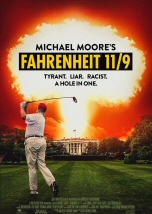
Michael Moore examines the current state of American politics, particularly the Donald Trump presidency and gun violence, while highlighting the power of grassroots democratic movements. Fahrenheit 11/9 finds the filmmaker in fine fighting form, delivering a political call to action that ranks among his most effective works.
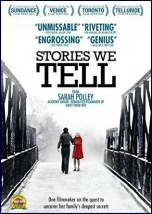
Polley is both filmmaker and detective as she investigates the secrets kept by a family of storytellers. She playfully interviews and interrogates a cast of characters of varying reliability, eliciting refreshingly candid, yet mostly contradictory, answers to the same questions. As each relates their version of the family mythology, present-day recollections shift into nostalgia-tinged glimpses of their mother, who departed too soon, leaving a trail of unanswered questions. Polley unravels the paradoxes to reveal the essence of family: always complicated, warmly messy and fiercely loving. Stories We Tell explores the elusive nature of truth and memory, but at its core is a deeply personal film about how our narratives shape and define us as individuals and families.
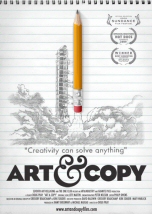
This film reveals the work and wisdom of some of the most influential advertising creatives of our time -- people who've profoundly impacted our culture, yet are virtually unknown outside their industry. Exploding forth from advertising's 'creative revolution' of the 1960s, these artists and writers all brought a surprisingly rebellious spirit to their work in a business more often associated with mediocrity or manipulation: George Lois, Mary Wells, Dan Wieden, Lee Clow, Hal Riney and others featured in ART & COPY were responsible for 'Just Do It,' 'I Love NY,' 'Where's the Beef?,' 'Got Milk,' 'Think Different,' and brilliant campaigns for everything from cars to presidents. They managed to grab the attention of millions and truly move them. Art & Copy is a powerful film about advertising and inspiration.
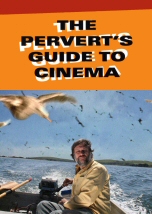
The film takes the viewer on an exhilarating ride through some of the greatest movies ever made. Serving as presenter and guide is the charismatic Slavoj Zizek, the Slovenian philosopher and psychoanalyst. With his engaging and passionate approach to thinking, Zizek delves into the hidden language of cinema, uncovering what movies can tell us about ourselves. The Pervert's Guide To Cinema offers an introduction into some of Zizek's most exciting ideas on fantasy, reality, sexuality, subjectivity, desire, materiality and cinematic form. Whether he is untangling the famously baffling films of David Lynch, or overturning everything you thought you knew about Hitchcock, Zizek illuminates the screen with his passion, intellect, and unfailing sense of humour. The film applies Zizek's ideas to the cinematic canon, in what The Times calls 'an extraordinary reassessment of cinema.'





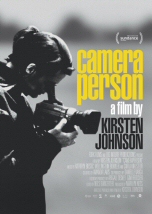



A hybrid work that combines documentary, autobiography, and ethical inquiry, Cameraperson is both a moving glimpse into one filmmaker's personal journey and a thoughtful examination of what it means to train a camera on the world.