




Last Watched

" Wildlife"  Sort by

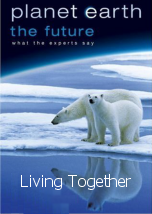
Living Together

   2006    Nature
The documentary deals with the future of conservation. It begins by looking at previous efforts. The 'Save The Whales' campaign, which started in the 1960s, is seen to have had a limited effect, as whaling continues and fish stocks also decline. In the 1990s, as head of the Kenya Wildlife Service, Richard Leakey took on the poachers by employing armed units. Although it was successful in saving elephants, the policy was detrimental to the Maasai people, who were forced from their land. The need for "fortress" areas is questioned, and the recently highlighted Raja Ampat coral reef in Indonesia is an example. The more tourism it generates, the greater the potential for damage — and inevitable coastal construction. Sustainable development is viewed as controversial, and one contributor perceives it to currently be a "contradiction in terms". Trophy hunting is also contentious. Those that support it argue that it generates wealth for local economies, while its opponents point to the reducing numbers of species such as the markhor. Ecotourism is shown to be beneficial, as it is in the interests of its providers to protect their environments. However, in some areas, such as the Borneo rainforests, the great diversity of species is being replaced by monocultures. The role of both religion and the media in conservation is argued to be extremely important. Contributors to the programme admit a degree of worry about the future, but also optimism.
Frozen Planet: To the Ends of the Earth

   2011    Nature
Our journey begins with David Attenborough at the North Pole, as the sun returns after six months of darkness. We follow a pair of courting polar bears, which reveal a surprisingly tender side. Next stop is the giant Greenland ice cap, where waterfalls plunge into the heart of the ice and a colossal iceberg carves into the sea. Humpback whales join the largest gathering of seabirds on earth to feast in rich Alaskan waters. Further south, the tree line marks the start of the Taiga forest, containing one third of all trees on earth. Here, 25 of the world's largest wolves take on formidable bison prey. At the other end of our planet, the Antarctic begins in the Southern Ocean where surfing penguins struggle to escape a hungry sea-lion and teams of orcas create giant waves to wash seals from ice floes -a filming first. Diving below the ice, we discover prehistoric giants, including terrifying sea spiders and woodlice the size of dinner plates. Above ground, crystal caverns ring the summit of Erebus, the most southerly volcano on earth. From here we retrace the routes of early explorers across the formidable Antarctic ice-cap - the largest expanse of ice on our planet. Finally, we rejoin David at the South Pole, exactly one hundred years after Amundsen then Scott were the first humans to stand there
Series: Frozen Planet

Nature Microworlds: Galapagos

   2012    Nature
A visit to arguably the most famous archipelago on Earth, the Galapagos. It's home to a myriad of bizarre and unique creatures, endemic to these islands - but how did they get here and what is the key to these extraordinary islands that allows them to thrive? The programme reveals that this key holds not just the secret to life here, but also to how Darwin was able to leave with the ideas that would revolutionise biology.

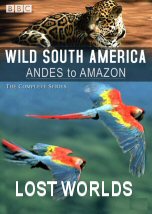
Wild South America: Lost Worlds

   2005    Nature
A major new series exploring the wildlife of South America. This is a breathtaking aerial journey through the most spectacular locations on the continent, from the icy peaks of the Andes to the Amazon jungle and the Atacama desert. These extreme conditions are home to a mind-boggling variety of creatures, many of them rarely seen before on television.
Series: Wild South America

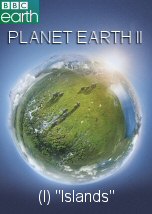
Planet Earth II Islands

   2016    Nature    HD
Experience the world from the viewpoint of animals themselves. From spellbinding wildlife spectacle to intimate encounters, Planet Earth II takes you closer than ever before.
Remote islands offer sanctuary for some of the planet's strangest and rarest creatures. The rare pygmy three-toed sloth enjoys a peaceful existence on an idyllic Caribbean island, while nesting albatross thrive in predator-free isolation. But island life always comes at a cost. On the Galapagos Islands, young marine iguana must escape an onslaught of deadly racer snakes the moment they hatch from the sand. On the sub-Antarctic island of Zavodovski, life gets more extreme still. Every day, one and a half million penguins risk being battered against the rocks by fierce waves as they try to get on and off the island.
Series: Planet Earth II

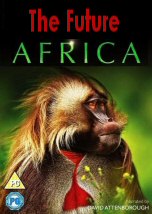
The Future

   2013    Nature
David Attenborough comes face-to-face with a baby rhino and asks what the future holds for this little one. He meets the local people who are standing side-by-side with the wildlife at this pivotal moment in their history. We discover what it takes to save a species, hold back a desert and even resurrect an entire wilderness - revealing what the world was like before modern man.
Series: Africa with David Attenborough
The Putin Interviews

The Putin Interviews

2017  Culture
The Story of the Jews

The Story of the Jews

2013  History
The Life of Birds

The Life of Birds

1998  Nature
Tiger

Tiger

2020  History
The Climate Wars

The Climate Wars

  Nature
Follow This

Follow This

2018  Medicine
Cosmos

Cosmos

1980  Culture