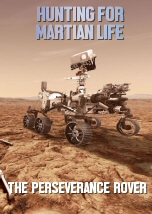
Meet Perseverance, NASA's latest rover, as it heads to Mars to answer one question: did life exist on the red planet? On the way, it will lay the foundation for human exploration of our closest neighbour. Today, Mars is hostile to life. It's too cold for water to stay liquid on the surface, and the thin atmosphere lets through high levels of radiation, potentially sterilizing the upper part of the soil. But it wasn't always like this. Some 3.5 billion years ago or more, water was flowing on the surface. It carved channels still visible today and pooled in impact craters. A thicker carbon dioxide atmosphere would have blocked more of the harmful radiation. The Mars 2020/Perseverance rover is designed to better understand the geology of Mars and seek signs of ancient life. The mission will collect and store a set of rock and soil samples that could be returned to Earth in the future. It will also test new technology to benefit future robotic and human exploration of Mars, as the Ingenuity Helicopter.
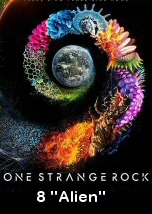
Over billions of years, planet Earth has become home to an amazing interdependent ecosystem, containing a dizzying variety of animals and plants. But how did life here begin? And does it exist anywhere outside of our solar system? We uncover the secrets of our world by tracking the evolution of the cosmos itself, from the Big Bang onwards. Follow scientists responsible for some of the major breakthroughs in understanding the origins of life and witness how their discoveries are fundamentally changing the way we perceive the universe.
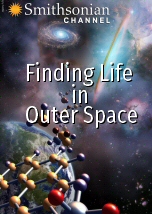
Every day Astronomers are finding a new planetary system that looks pretty similar to Earth. The possibilities of life somewhere else other than Earth I think are very high. If there is life out there what would it be like? Could we talk to it? Is there anything out there like you and me? To find out, we can't just look into space, we also need to look down here. The story of how a miraculous event transformed life on Earth into a complex interconnected food web; Astronauts and experts question other intelligent life in the universe.
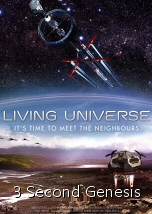
In episode 3, Artemis arrives on the exoplanet Minerva B, but will she find evidence of life? This is a vision of our future, the fateful day in a far-flung corner of the universe, when a probe from Earth initiates the first descent onto an alien world, looking for proof of life beyond our solar system. There are no witnesses, no cheering crowds in the control room. A decade or more will pass before news finally reaches us, back across the dark oceans of space. But the seeds of this mission are already being sowed today by the first generation of scientists bold enough to believe it could be possible.
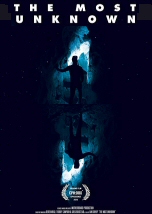
An epic documentary film in which nine scientists will meet in a chain of encounters to uncover unexpected answers to some of humanity's biggest questions. How did life begin? What is time? What is consciousness? How much do we really know? By introducing researchers from diverse backgrounds for the first time, then dropping them into new, immersive field work they previously hadn't tackled, the film reveals the true potential of interdisciplinary collaboration, pushing the boundaries of how science storytelling is approached. What emerges is a deeply human trip to the foundations of discovery and a powerful reminder that the unanswered questions are the most crucial ones to pose. The Most Unknown is an ambitious look at a side of science.
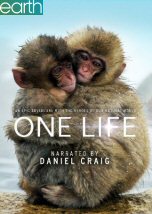
Growing up. Finding food. Seeking shelter. Finding a soul mate. Raising children. These universal themes touch the hearts of audiences everywhere. Parents will do anything to give their kids the best start in life. Witness the epic journey of a tiny poison arrow frog, scaling impossibly high trees to feed her tadpoles in the canopy. As the young grow, they confront the life long search for food. Capuchin monkeys spend up to eight years teaching their young the complex process of preparing a palm nut meal. For those creatures who successfully negotiated all the obstacles to adulthood, it’s time to face the ultimate test: to find a partner and to pass on their genes to the next generation. In what is one of the most spectacular and romantic courtship dances in the world, grebes step out across the surface of a lake in perfect unison. We see so much of ourselves in these different animals, and them in us – intelligence, strength, determination, courage, even love. The stories combine to reveal how every living thing on our planet shares the same desire – not just to live, but to foster new life. Relevant, engaging and above all, amazing. Narrated by Daniel Craig,



















Today, Mars is hostile to life. It's too cold for water to stay liquid on the surface, and the thin atmosphere lets through high levels of radiation, potentially sterilizing the upper part of the soil. But it wasn't always like this. Some 3.5 billion years ago or more, water was flowing on the surface. It carved channels still visible today and pooled in impact craters. A thicker carbon dioxide atmosphere would have blocked more of the harmful radiation. The Mars 2020/Perseverance rover is designed to better understand the geology of Mars and seek signs of ancient life. The mission will collect and store a set of rock and soil samples that could be returned to Earth in the future. It will also test new technology to benefit future robotic and human exploration of Mars, as the Ingenuity Helicopter.