

Last Watched

"Economy"  Sort by

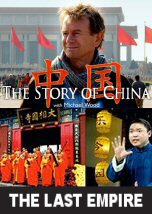
The Last Empire

   2016    History
China's last empire, the Qing, lasted from 1644 to 1912. It began in violence and war as the Manchus swept down from the north, but invaders became emperors, with three generations of one family ruling the country. Among them, Michael Wood argues, was China's greatest emperor - Kangxi. Under the Qing, China doubled in size to include Xinjiang in the far west, as well as Mongolia and Tibet, creating the essential shape of China today. The new dynasty tolerated a diversity of cultures and religions, including Islam. In Kaifeng, Michael visits a women's mosque with a female imam, a delightful scene that ends with laughter and selfies! The Qing also undertook huge cultural enterprises. At a traditional printing house where the wood blocks are hand-carved, we see how the Complete Tang Poems were reproduced - all 48,000 of them. We travel through the wintry countryside to a remote village where a hardy audience watch open-air opera in the snow and visit a painter's studio, and 'storytelling' houses in Yangzhou. In the 18th century, China was arguably the greatest economy in the world, and we get a fabulous sense of the rich culture that came with prosperity. But then came the clash with the British, in the first Opium War, when a British expedition destroyed the Qing navy and extracted territory and trading rights. We leave with a glimpse of the future. 'Every dynasty has risen and declined,' says Michael, 'and has needed new life to regenerate, and this time the catalyst was the British.' Among the ports China ceded was an almost uninhabited island, Hong Kong, one of today's greatest financial centres, and Shanghai, a small town then but now one of the greatest cities in world.
Series: The Story of China
Zeitgeist Moving Forward

   2011    Culture
A feature length documentary work which presents a case for a needed transition out of the current socioeconomic monetary paradigm which governs the entire world society. This subject matter will transcend the issues of cultural relativism and traditional ideology and move to relate the core, empirical 'life ground' attributes of human and social survival, extrapolating those immutable natural laws into a new sustainable social paradigm called a 'Resource-Based Economy'.
Series: Zeitgeist

Stock Maket

   2018    Science
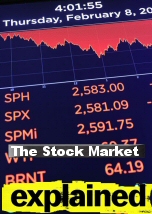
Does the stock market accurately reflect the status of the economy? Finance specialists discuss market history, valuations and CEO incentives.
Series: Explained

Food Water Waste

   2020    Nature
Across the world, rising demands for food, water and materials have pushed resources to the limit. Many parts of the world have major challenges over fresh water. A lot of soils have a lot of residual pesticides and herbicides. At the same time waste is piling higher. All this demands a new wave of innovation. The challenge is to make more of the things we need without the environmental cost.
Series: The Great Acceleration

The Pirate Republic

   2021    History
There had been other pirate settlements in different places but none of them had worked quite the same way that Nassau did. There was a fort there. People stayed, they built a community on the land. Larger and larger numbers of pirate-minded people were showing up there and starting to develop an economy around themselves. Men like Edward Thatch, later known as Blackbeard, his sidekick, Black Caesar, a former slave, and the pied pirate that led them all there, Captain Benjamin Hornigold.
In the second episode, tensions rise between Benjamin Hornigold and Henry Jennings; their rivalry takes a new direction when Hornigold declares Nassau a pirate republic.
Series: The Lost Pirate Kingdom