By August 1949 the USSR became the world's second superpower, thanks to its spies who had stolen America's atomic secrets. But by March 1953, Stalin is dead and KGB chief, Beria, is executed later the same year. Nikita Kruschev tries to reduce the power of the security service, splitting it into several sections...but it doesn't last and, soon, the KGB is back. In the USSR, countless KGB operatives spied on opponents of the regime at home, guarded the state and party leadership, and abroad tried to find out as much as possible about the intentions of the NATO countries and, if possible, to sabotage them.
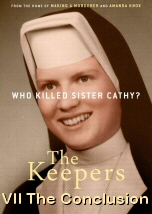
Charles Franz talks about his relationship with Father Maskell as a young student and reveals what he knows about the Church’s involvement with Maskell. Cathy’s sister sees the necklace given by Edgar Davidson and questions if it has significance. Potential DNA and evidence could exist for the crime, and the police might be forced to act. A push for victims’ rights in Maryland goes to a committee but getting justice might be more difficult... and time doesn’t stand still for anyone.
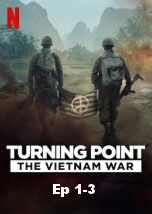
This gripping five-part docuseries marks the 50th anniversary of the fall of Saigon, revealing how a distant war redefined two nations. With unseen footage, candid interviews, and damning presidential recordings, it exposes the political manipulation, battlefield tragedies, and societal fractures that shaped the Vietnam War. From Washington’s strategic missteps to the raw trauma of those on the ground, it shows how the conflict shattered trust in government and left wounds that still resonate today. The first three episodes trace the war’s slow ignition and its rapid spiral into chaos. They take viewers deep into the secretive early stages of the U.S. military buildup, then shift to the complex realities inside Vietnam, with personal accounts from soldiers on both sides. The series then confronts the shock of the Tet Offensive and the atrocities of Mỹ Lai, dismantling the illusion of a winnable war. These opening chapters set a powerful tone—intimate, harrowing, and unflinchingly honest.












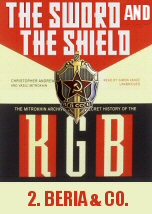






In the USSR, countless KGB operatives spied on opponents of the regime at home, guarded the state and party leadership, and abroad tried to find out as much as possible about the intentions of the NATO countries and, if possible, to sabotage them.