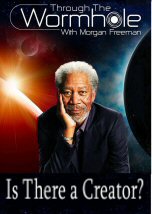
Morgan Freeman will take viewers on a global journey to meet with people from all cultures whose lives are shaped in surprising ways by different fundamental forces, this time exploring themes that unite us all. Each episode will explore a single fundamental force or topic, including love, belief, power, war and peace, rebellion and freedom. In the first episode, Freeman travels around the world in search of a greater understanding of the concept of freedom. From solitary confinement and forced labor camps, to social taboos and laws that hinder speech and expression, freedom seems to be a constant struggle. As individuals and as entire nations, we are confronted with the question: Will we all ever be truly free?
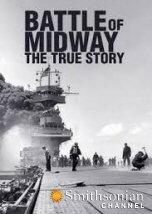
It's June 1942 and the world's fate is about to be decided by a handful of pilots and their untested aircraft. Experience an inside look at the Battle of Midway, captured through rarely seen battle footage and first-hand accounts from its hero dive-bombing pilot, "Dusty" Kleiss. This is an hour-by-hour recount of one of the most pivotal conflicts of the 20th century. Take a closer look at how this desperately needed victory came about through the design of U.S. air planes, the skill of the pilots, the element of surprise, and a stroke of luck.
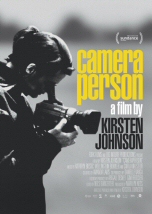
A boxing match in Brooklyn; life in postwar Bosnia and Herzegovina; the daily routine of a Nigerian midwife; an intimate family moment at home: these scenes and others are woven into Cameraperson, a tapestry of footage collected over the twenty-five-year career of documentary cinematographer Kirsten Johnson. Through a series of episodic juxtapositions, Johnson explores the relationships between image makers and their subjects, the tension between the objectivity and intervention of the camera, and the complex interaction of unfiltered reality and crafted narrative. A hybrid work that combines documentary, autobiography, and ethical inquiry, Cameraperson is both a moving glimpse into one filmmaker's personal journey and a thoughtful examination of what it means to train a camera on the world.
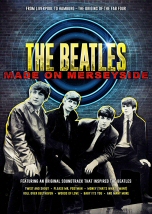
They defined music and popular culture like no other band ever will - but how did The Beatles make the journey from Merseyside teenagers to international pop stars in the 1960s? Made on Merseyside - The Beatles discovers how American rock 'n' roll and rhythm and blues dragged post-war Liverpool into one of the most vibrant music cities ever with the Mersey Sound. Featuring revealing interviews from those involved in the early years of The Beatles in Liverpool and Hamburg and unique archive, the incredible story of The Beatles' previous band formations and why it took so long for them to achieve success makes riveting viewing. From school bands, to colleges; Hamburg to The Cavern Club, The Beatles changed the world of pop music forever, but was Pete Best's sacking from the band and Ringo's replacement the final part of the jigsaw?
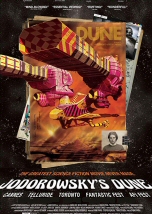
Alejandro Jodorowsky's daring and psychedelic films of the early 1970's, 'El Topo' and 'The Holy Mountain', cemented his status as the Godfather of the Midnight Movie. In 1974, he began work on his next film, possibly the most ambitious film ever attempted. In the pre-Star War era, Jodorowsky’s adaptation of Frank Herbert’s classic sci-fi novel DUNE was poised to change cinema forever. His DUNE would star Brontis Jodorowsky, Alejandro's own 12 year old son, alongside Orson Welles, Mick Jagger, David Carradine and even Salvador Dali. The team of assembled visual artists were some of the most provocative talents of the era, including H.R. Giger, Chris Foss, and Jean ‘Moebius’ Giraud. The groundbreaking special effects were under the control of Dan O'Bannon and the soundtrack would be created by Pink Floyd and the French prog-rock masters, Magma. For two years, Jodorowsky and his team of 'Spiritual Warriors' worked night and day on the massive task of creating the fabulous world of DUNE. In order to secure the necessary Hollywood funding, they created over 3,000 storyboards, numerous paintings, incredible costumes, and an outrageous, moving, and powerful screenplay. In the words of Jodorowsky’s producer, Michel Seydoux, 'It should have been enough. But it wasn’t.' Through intimate and honest conversations with Jodorowsky, filmed over the span of three years, plus interviews with legends and luminaries including H.R. Giger (artist, ALIEN), Gary Kurtz (producer, STAR WARS) and Nicolas Winding Refn (director, DRIVE and THE NEON DEMON), as well as never-before-seen realizations of Jodorowsky’s mind-blowing psychedelic space opera, director Pavich's film finally unearths the full saga of 'THE GREATEST MOVIE NEVER MADE'.
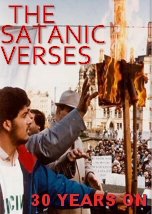
The publication of Salman Rushdie's novel The Satanic Verses in 1988 sparked a culture war in Britain between those in the Muslim community, who considered the book blasphemous and called for the book to be banned, and those defending it as an expression of freedom of speech. Protests, which began in the north of England, soon spread across the UK and to the rest of the Islamic world, culminating in February 1989 with Iran's Ayatollah Khomeini issuing a fatwa - a death sentence on the writer. Now, 30 years on, broadcaster and journalist Mobeen Azhar embarks on a journey, starting in his native Yorkshire where the protest first began, to examine the lasting effect the book has had on the Muslim community and how the events of 1989 continue to have an impact today.
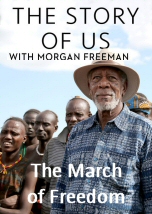




In the first episode, Freeman travels around the world in search of a greater understanding of the concept of freedom. From solitary confinement and forced labor camps, to social taboos and laws that hinder speech and expression, freedom seems to be a constant struggle. As individuals and as entire nations, we are confronted with the question: Will we all ever be truly free?