













Last Watched

"World War I"  Sort by

Resistance

   2007    History
Among the ranks of the Wehrmacht there was limited opposition to Hitler. Most officers initially felt enthusiastic about the prospect of war and were grateful to Hitler whose war-mongering had furthered their personal careers. Furthermore all soldiers had to make an oath of allegiance to the Führer and, up until the very end, there were many who felt unable to break this pledge. There were, however, some officers who opposed Hitler. For some it was on moral grounds and for others because they thought that his military tactics would lose them the war. There were plots against Hitler and attempted coups, the best known being the July bomb plot led by Claus von Stauffenberg. Some soldiers refused to bear arms and were shot, others deserted, others still carried out quiet acts of sabotage and subversion. By and large, however, the Wehrmacht carried out the orders Hitler issued, even if it involved perpetrating acts of atrocity.
Series: The Wehrmacht
To the Bitter End

   2007    History
The determination of the German forces to keep on fighting in the face of defeat had disastrous consequences. After the Allied landings in the summer of 1944, the Wehrmacht was on the defensive on all fronts. It was clear to the German generals interned at Trent Park that Germany would soon lose the war. In mid-1944, Gerhard Graf von Schwerin chose to use common sense instead of blindly obeying Hitler's orders. He decided to surrender the city of Aachen to the US army to avoid bloodshed. Other commanders such as Field Marshal Ferdinand Schorner kept on pushing their soldiers to give their all. Despite being outnumbered by the Soviet forces, Schorner forced his soldiers to hold out in Sworbe, a 200 square kilometre peninsula on the coast of Estonia. Thousands of soldiers died. Yet Schorner's attitude and the urging by Hitler and Goebbels to hold out were accepted by a large number of young soldiers. By April 1944, the Ruhr pocket was completely surrounded, yet Field Marshal Model refused to surrender, so that 1.2 million German soldiers and a large number of Allied soldiers died between January and May 1945.
Series: The Wehrmacht

Hiroshima 2 of 2

   2005    Technology
It was the defining moment of the 20th Century - the scientific, technological, military, and political gamble of the world's first atomic attack. This drama-documentary attempts to do what no other film has done before - to show what it is like to live through a nuclear explosion, millisecond by millisecond. Set in the three weeks from the first test explosion in New Mexico to the eventual dropping of the bomb, the action takes viewers into the room where the crucial political decisions are made; on board the Enola Gay on her fateful voyage; inside the bomb as it explodes; and on the streets of Hiroshima when disaster strikes. Parallel storylines interweave, unfolding the action from both US and Japanese perspectives, and revealing the tensions and conflicts in the actions and minds of people who were making history. Special effects recreate the reality of the mission - even going inside the workings of the bomb - and archive film replays the horrific aftermath.
Series: Hiroshima

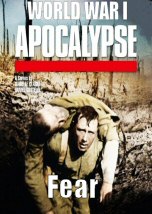
Fear

   2014    History
The French army stops the German advance at the battle of the Marne, while the Germans halt the Russians at Tannenberg on the eastern front. In France, the warring parties dig themselves in for 4 years in the trenches. Soldiers from the colonies come lend a hand to their colonizers and the war becomes global.
Series: Apocalypse: World War 1

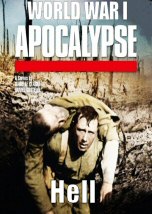
Hell

   2014    History
1916. The war is raging in Europe and stretches from the trenches in France to the Italian Alps and the Balkans, and beyond to the gates of the Eastern world. The conflict becomes industrial, and millions of shells rain down on the battlefields; Verdun and the Somme are the deadliest battles in this second year of the war. Who can stop this infernal machine?
Series: Apocalypse: World War 1

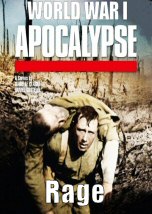
Rage

   2014    History
1917. People have had enough of the war. Behind the scenes, uprisings are brewing, like the one that toppled the Tsar in Russia; on the front soldiers begin to mutiny as they did at Chemin des Dames in France. German submarine attacks in the Atlantic will finally pull the Americans into the war, but they arrive too late to help prevent the carnage of the Battle of Passchendaele.
Series: Apocalypse: World War 1
The Gene Code

The Gene Code

2011  Science
Life

Life

2009  Nature
Life

Life

2009  Nature
Cosmos

Cosmos

1980  Culture
The Sky at Night

The Sky at Night

2018  Science
Leaving Neverland

Leaving Neverland

2019  Culture