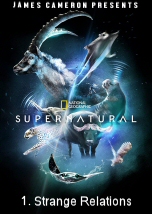
The second episode of the series immerses the viewer in a fascinating journey through the history of life on our planet, focusing on the evolution and adaptation of life in the seas. It begins billions of years ago, when the Earth was an inhospitable place and life was impossible on the surface due to a hostile environment. The documentary highlights how, beneath the waves, life began to flourish, protected from storms and other elements of nature. It addresses the development of photosynthesis by plankton and how this led to a significant change in the Earth's atmosphere, allowing the emergence of animal life. This visually stunning narrative chronicles the evolution of various forms of marine life, from the earliest complex life forms to the appearance of the first fish and cephalopods. The documentary shows how marine life has influenced terrestrial life, emphasizing the impact of the 'greening' of planet Earth.
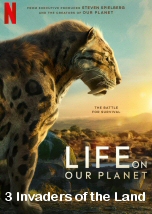
The third episode of the series is a visually stunning journey, from the earliest lichens and microplants to the imposing dinosaurs and the diversity of life forms we know today. Key moments in Earth's history are highlighted, such as the appearance of arthropods, the development of terrestrial flora and fauna, and the mass extinctions that have reshaped ecosystems. The documentary not only shows the resilience and adaptability of life on our planet but also highlights the fragility of our ecosystem and the crucial importance of preserving biodiversity for the future of Earth. This documentary is a celebration of life in all its forms and a powerful reminder of our role in protecting this incredibly diverse and dynamic world.
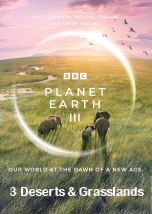
The third episode takes viewers on a riveting journey to some of the world's most extreme and breathtaking deserts and grasslands, where nature puts on its most dramatic show. It begins in the arid landscapes of Central Africa's Guelta d'Archei and the Namib Desert in Southwest Africa, places where water is scarce, and survival is a daily battle. The focus then shifts to the remarkable adaptability of creatures like ostriches, who brave the scorching heat and predators to raise their young and a handful of leopards who learned to hunt from trees on the African plains. In Australia, viewers witness the intricate courtship rituals of the spotted bowerbird, a species facing challenges due to climate change. The narrative then takes us to the vast Eurasian Steppe, home to the unique Saiga antelope, and to Brazil's Cerrado, a biodiverse grassland where the elusive maned wolf plays a crucial role in maintaining the ecosystem. The episode highlights not only the resilience and beauty of these creatures but also the fragility of their habitats, emphasizing the urgent need for conservation efforts.
What makes this series particularly compelling is its ability to show that beyond differences, the longing for connection, love, and acceptance is universal. ‘Love on the Spectrum U.S.’ is not just a testament to the resilience and strength of its protagonists but also serves as a source of education and empathy for viewers. Watching it is more than an entertaining experience; it's an invitation to reflect on the nature of love and the importance of celebrating our differences, making it an indispensable addition to the current TV landscape. In the second episode, James goes out with an Instagram admirer. Connor has a pleasant reunion with a former coworker. First-timer Tanner gets dating advice from Jennifer.
This series delves into the intimate and often unexplored world of romantic relationships among individuals on the autism spectrum. Through a series of personal stories, viewers are offered a glimpse into the complexities, challenges, and triumphs that define these relationships. From the hesitant first steps of reaching out to a potential partner, the documentary captures the raw emotions and vulnerabilities of its subjects. Through these stories, the documentary paints a poignant picture of love's diverse expressions, emphasizing that the need for companionship and understanding transcends the bounds of neurotypical norms. In the fifth episode, Steve embarks on his first date in a year. Abbey's dream comes true. Connor rethinks a past decision. Dani attends a comic-con with an old flame.
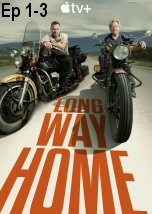
Two lifelong friends set out on an unforgettable journey across Europe like you've never seen before — not on modern machines, but on beautifully restored vintage motorbikes. From the rugged beauty of the Scottish Highlands to the icy reaches of the Arctic Circle, and down through the heart of the Baltics and continental Europe, they follow an unconventional path fueled by curiosity, friendship, and a passion for the open road. As they ride thousands of miles over two months, every detour reveals a new story, every breakdown sparks laughter, and every mile deepens their bond. This isn’t just a road trip — it’s a soulful ride through landscapes, memories, and the timeless joy of adventure. The first three episodes of this standout series follow Ewan and Charley as they set off across Europe — taking the longest, most adventurous way possible. After crossing the North Sea, they ride through the Netherlands and Germany, stopping in Charley’s mother’s hometown before continuing toward the Danish islands, where the sense of freedom begins to take hold. But the road soon turns unpredictable. In Sweden, Ewan’s bike breaks down, stranding him in unfamiliar territory. A group of local bikers steps in to help, showing that the journey is not just about distance, but about the people you meet along the way. With their support, he reaches iconic Scandinavian landmarks and new challenges, realizing that this ride is as much about resilience and friendship as it is about travel. These early episodes promise more than adventure — they deliver a soulful, cinematic ride into the heart of connection and discovery.











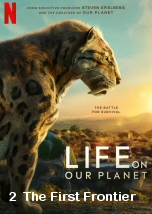






This visually stunning narrative chronicles the evolution of various forms of marine life, from the earliest complex life forms to the appearance of the first fish and cephalopods. The documentary shows how marine life has influenced terrestrial life, emphasizing the impact of the 'greening' of planet Earth.