


Last Watched

"Planet"  Sort by

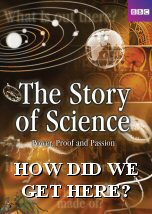
How Did We Get Here

   2010    Science
The question of our human origins is one of the most controversial science has wrestled with. This is the story of how scientists came to explain the beauty and diversity of life on earth, and reveal how its evolution is connected to the long and violent history of our planet. Featuring ocean adventurers, eccentric French aristocrats, mountain climbers, a secret Victorian publisher with 12 fingers, a ridiculed German meteorologist, and only a brief hint of Charles Darwin.
Series: The Story of Science
Alien Planet

   2005    Nature
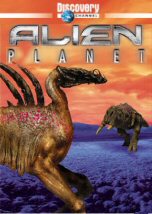
The computer animated drama takes place on Darwin IV, a planet 6.5 light years from earth, with 2 suns and 60% of Earth's gravity. Earth sends a pilot mission with three probes. This robotic fleet is responsible for finding and assessing any life forms on Darwin IV. The probes soon find themselves in the middle of a developed ecosystem teeming with diversity of life of all sizes. "Alien Planet" is motivated by real science missions, such as the NASA Origins Program and the NASA / JPL Planet-Finder Mission, as well as the European Space Agency's Darwin Project. It is a cosmic expedition along side Stephen Hawking, Michio Kaku, Jack Horner, Craig Venter, and George Lucas, and NASA's Chief Scientist Jim Garvin. No longer just the domain of science fiction, "Alien Planet" dramatizes an exciting and possible answer to what alien life really looks like and when we'll find it.

Life After People

   2008    Nature
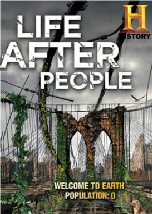
Visit the ghostly villages surrounding Chernobyl (abandoned by humans after the 1986 nuclear disaster), travel to remote islands off the coast of Maine to search for abandoned towns that have vanished from view in only a few decades, then head beneath the streets of New York to see how subway tunnels may become watery canals. A visual journey, LIFE AFTER PEOPLE is a thought provoking adventure that combines movie-quality visual effects with insights from experts in the fields of engineering, botany, ecology, biology, geology, climatology, and archaeology to demonstrate how the very landscape of our planet will change in our absence.

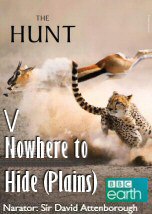
Nowhere to Hide

   2015    Nature
The open arenas of grassland and desert make up half of all land on our planet. In these exposed habitats, predators like cheetahs, bald eagles and lions can usually see their prey. But it works both ways: their prey can see them too. With nothing but open vistas, the element of surprise is hard-won, and predators must make their own opportunities.
Series: The Hunt

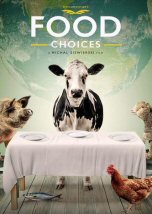
Food Choices

   2016    Medicine
Filmmaker Michal Siewierski explores the impact that food choice has on people's health, the health of our planet and on the lives of other species sharing our world. It looks at many misconceptions about food and diet, offering a new view on these issues. The film interviews world-renowned experts, including Dr. T Colin Campbell, Dr. Richard Oppenlander, Rich Roll, Joe Cross, Dr. John McDougall, Capitan Paul Watson, Dr. Toni Bark, Dr. Pam Popper, Dr. Michael Greger, Gloria Athanis, and several others. This film will certainly change the way you look at the food on your plate.

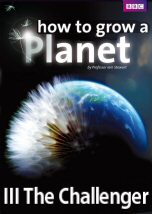
The Challenger

   2012    Science
In the last episode, Iain discovers the remarkable impact of just one plant: grass. On the savannah of South Africa he sees how grass unleashed a firestorm to fight its greatest enemy, the forests. He shows how cutting your finger on a blade of grass shows us how it transformed life in the oceans. In Senegal, he meets the cleverest chimps in the world. And, in the ruins of the oldest temple on Earth, he tells the extraordinary story of how grass triggered human civilisation.
Series: How to Grow a Planet
Wild Wild Country

Wild Wild Country

2018  Culture
Hidden Kingdoms

Hidden Kingdoms

2014  Nature
Top Gear

Top Gear

2012  Technology
Neanderthal

Neanderthal

  History
How to Stay Young

How to Stay Young

2016  Medicine
Minimalism

Minimalism

2015  Culture