







Last Watched

"Disco"  Sort by

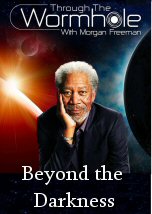
Beyond the Darkness

   2001    Science
Thirty years ago, scientists first realized that some unknown dark substance was affecting the way galaxies moved. Today, they think there must be five times as much dark matter as regular matter out there. But they have no idea what it is - onl that it's not made of atoms, or any other matter we are familiar with. And Dark Matter is not the only strange substance in the Universe - a newly discovered force, called Dark Energy, seems to be pushing the very fabric of the cosmos apart.
Series: Through the Wormhole
Astrobiology

   2008    Science
Does life exist on other planets? Astrobiology is a visionary new science that searches for life in space by combining the disciplines of astronomy, biology and geology. How did life evolve on Earth? What will life look like on other planets? These and other pertinent questions will be answered by a diverse group of scientists. Viewers will visit the Pilbara region of West Australia where the oldest evidence of life on Earth has been discovered. Travel to the moons of Jupiter and Saturn to test a theory that life could exist in the clouds of Venus. Finally, watch as experiments are done to see if life exists on exoplanets, earth-like planets beyond our solar system.
Series: The Universe

Biggest Things in Space

   2008    Science
We can't compare anything on earth to the biggest things known in space. The Cosmic Web may connect objects in the universe with threads of Dark Matter. The Lyman-alpha blob is a bubble like structure containing countless galaxies--perhaps the biggest object in the entire universe. Regions of radio-emitting gas called "radio lobes" could be even bigger. Then there are super galaxy clusters which are hundreds of galaxies merged together due to cosmic collisions. Discover which is the largest planet, star, star cluster, constellation, black hole, volcano, galaxy, explosions, moon, storm, impact crater and "void" in space.
Series: The Universe

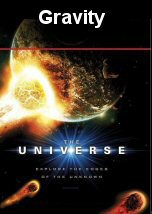
Gravity

   2008    Science
Gravity is the most powerful and exacting force in the universe. It is pervasive and penetrating. Gravity binds us together, its reach hangs stars in the sky and its grip crushes light. Gravity holds planets together, and leashes them to their suns. Without gravity, stars, comets, moons, nebulae, and even the Earth itself would not exist. Explore how science and humanity discovered, overcame and utilized gravity. Learn what it takes to propel objects into the heavens, to ride a wave or to ski down a slope. Take a front row seat as an astronaut subjects himself to the weightless wonders of the specially modified aircraft used to train astronauts known as the "Vomit Comet."
Series: The Universe

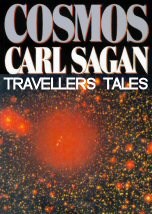
Travellers Tales

   1980    Science
The journeys of the Voyager probes is put in the context of the Netherlands in the seventeenth century, with a centuries-long tradition of sailing ship explorers, and its contemporary thinkers (such as Constantijn Huygens and his son Christian). Their discoveries are compared to the Voyager probes' discoveries among the Jovian and Saturn systems. In Cosmos Update, image processing reconstructs Voyager’s worlds and Voyager’s last portrait of the Solar System as it leaves is shown.
Series: Cosmos

The Crimes

   2007    History
Soldiers and officers continually came into conflict with their consciences. How much freedom did individuals have? Were they executing Hitler's criminal plans, or was it the Wehrmacht's war? There were crimes against humanity, against civilians, prisoners of war, and there was the Holocaust itself. The Trent Park records discovered and analysed by historian Sönke Neitzel, author of Tapping Hitler's Generals, show that the 84 German generals who were interned at Trent Park were aware of the severity of the war crimes they had been involved in and that some discussed them almost compulsively. They included the Commissar Order, to kill any Soviet commissar, and Rathenau's order to kill the Jews, including children.
Series: The Wehrmacht