


Last Watched

"ELE"  Sort by

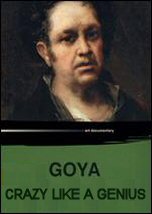
Goya: Crazy Like A Genius

   2007    Art
Written and presented by Robert Hughes, one of the world’s most prominent art commentators, this program explores the life and work of Francisco Goya—focusing on the painter’s subversive, often gruesome outlook. The video provides in-depth visual and intellectual analysis of dark Goya masterpieces, including The Dream of Reason, Witches in the Air, and The Third of May, as well as examples of his portraiture and early work—such as The Duchess of Alba, both Majas, and a gratuitously violent tapestry painting. Links between Goya’s work, deafness, and political stance are explored in detail, while observations from painter Leon Golub highlight Goya’s continuing relevance.
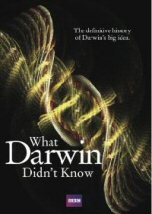
What Darwin Didnt Know

   2009    Science
Documentary which tells the story of the theory of evolution by natural selection which is now scientific orthodoxy, but when it was unveiled it caused a storm of controversy. Many people criticised it for being short on evidence and long on assertion and Darwin, being the honest scientist that he was, agreed with them. He entrusted future generations to complete his work and prove the essential truth of his vision. Evolutionary biologist Professor Armand Marie Leroi argues that, with the new science of evolutionary developmental biology (evo devo), it may be possible to take that theory to a new level - to do more than explain what has evolved in the past, and start to predict what might evolve in the future.

Science Britannica: Frankenstein Monsters

   2013    Culture
Professor Brian Cox grapples with science's darker side, asking why, when science has done so much for us, it often gets such a bad press. Starting with the original Frankenstein - the grisly 19th century tale of George Foster's hanging and subsequent 'electrocution', Brian confronts the idea that science can go 'too far'. From the nuclear bomb to genetic modification, British science has always been at the cutting edge of discovery, but are British scientists feckless meddlers, or misunderstood visionaries whose gifts to humanity are corrupted by the unscrupulous?

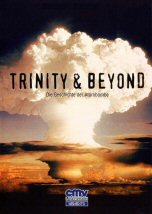
Trinity and Beyond: The Atomic Bomb Movie

   1995    Technology
An unsettling yet visually fascinating documentary presenting the history of nuclear weapons development and testing between 1945 until 1963. Narrated by William Shatner, features extremely rare film segments from top secret government archives and startling footage of nuclear bomb tests conducted by Great Britain and China, plus the largest atomic explosion ever created by Russia, and de-classified U.S. footage released to the public as recent as May, 2006. Whether being exploded under the ocean, suspended by a balloon, shot from a cannon or even detonated in space, these weapons are capable of devastating destruction - the quality of these images is as startling as are remarkable.

The Nazis, A Warning From History. Episode 1

   1997    History
The BBC's definitive television history of the rise and fall of the Nazis. The series explores how the Nazis came to power, how they ruled, how they treated their occupied territories and, above all, how a cultured nation could be responsible for such acts of inhumanity. How could a political party as fundamentally evil and overtly racist as the Nazis come to power? Acclaimed historian Laurence Rees exposes popular myths and encourages understanding of the real forces that led to one of the darkest chapters in modern history. Was it simply the hypnotic power of Hitler's rhetoric? Did the Gestapo really impose themselves by terror on an unwilling population?
Series: The Nazis, A Warning From History

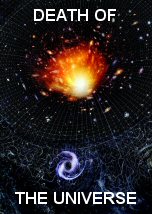
Death Of The Universe

   2008    Science
While scientists have previously theorised about a “Big Crunch” where the universe retracts back to its original size, the discovery of Dark Matter and Dark Energy has placed that hypothesis on the backburner. Some astronomers now believe that if Dark Matter offsets Dark Energy then as the universe slowly expands, stars will gradually fade, running out of fuel and leading to a dark, cold and lifeless universe. Others hypothesise a much more violent end where Dark Energy continues to expand the universe at a greater and greater speed. Stronger than gravity, Dark Energy would pull apart everything down to the fundamental particles – the universe’s very fibres. While the universe’s end may be 50 billion years away, great leaps in science will continue to alter how we believe the universe was formed – and how it will end.