From fears about work and privacy to a rivalry between the U.S. and China, the series explores the promise and perils of AI. It traces a new industrial revolution that will reshape and disrupt our lives, our jobs and our world, and allow the emergence of the surveillance society. Today, China leads the world in e-commerce and is a society that bypassed credit cards. Now shops in stores are without cashiers, where the currency is facial recognition. No country has ever moved that fast. And in a short two-and-a-half years, China's A.I. implementation really went from minimal amount to probably about 17 or 18 unicorns, that is, billion-dollar companies. The progress was powered by a new generation of ambitious young techs pouring out of Chinese universities, competing with each other for new ideas, and financed by a new cadre of Chinese venture capitalists.
An engineering revolution is underway. Driven by dedicated individuals who are building extraordinary machines that will change our lives. The first episode follows the race to generate vast power from thin air - the wind. One of the world’s biggest wind farms is being built off the English coast where the harsh conditions pose great challenges for the team. Meanwhile, a Norwegian team is striving to build the first-ever floating wind farm.
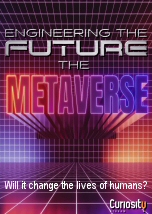
The metaverse is an environment where humans interact socially and economically through a software in cyberspace, which acts as a metaphor for the real world, but without its limitations. The metaverse is generally composed of multiple three-dimensional, shared and persistent virtual spaces linked to a perceived virtual universe. This virtual world is often facilitated by the use of virtual reality (VR) or augmented reality (AR) headsets and avatars. The Metaverse is the successor to the internet. It will change the lives of almost every human on the planet.
It bursts from the Sun with the power of ten thousand nuclear weapons... and when it hits our planet, it could create the largest disaster in recorded history. A magnetic storm from the Sun could wipe out electrical power, television, radio, military communication, and nearly every piece of electronics in the Northern Hemisphere. It's a "Solar Katrina" -- a planet-wide "hurricane" of magnetic forces that scramble all 21st Century technology, possibly for good. What causes this magnetic superstorm? Why is magnetism so powerful -- and yet so poorly understood? And is there anything we can do to prevent the Magnetic Storm?
Are the rings of Saturn a real celestial phenomenon or merely a cosmic Illusion? Technology allows the experts to get closer to the furthest planet visible to the naked eye. Old questions are answered and new ones arise. Does Saturn hold the key to Earth's weather and will one of its moons supply us with all the oil we'll ever need?
Space colonization is no longer the fodder of science fiction, it is becoming a reality. Examine the efforts underway to establish a human colony on Mars, including how they plan to grow food, recycle wastewater and introduce greenhouse gases to revive the red planet and make it more habitable for humans. Cutting-edge computer graphics are used to bring the universe down to earth to show what life would be like on Mars, and to imagine what kind of life forms might evolve in alien atmospheres.










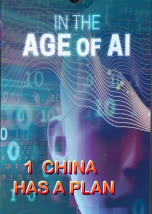


Today, China leads the world in e-commerce and is a society that bypassed credit cards. Now shops in stores are without cashiers, where the currency is facial recognition. No country has ever moved that fast. And in a short two-and-a-half years, China's A.I. implementation really went from minimal amount to probably about 17 or 18 unicorns, that is, billion-dollar companies. The progress was powered by a new generation of ambitious young techs pouring out of Chinese universities, competing with each other for new ideas, and financed by a new cadre of Chinese venture capitalists.