The series about the man, myth and legend - founder of Microsoft and co-founder of the Bill and Melinda Gates Foundation - reflects on his trailblazing work with computer software, starting the largest private philanthropic foundation. Bill Gates opens up about his childhood, business career and passion for improving the lives of people in the developing world. When Bill Gates stepped down from Microsoft in 2008, he was worth more than 58 billion dollars. He built that fortune thinking about computer software, operating systems, spreadsheets and the Internet. What was on his mind?
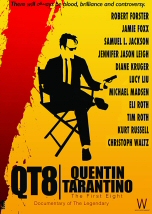
The film chronicles the life of Quentin Tarantino, from his start at Video Archives up to the releasing of Once Upon a Time in Hollywood. The documentary features interviews from his frequent collaborators of his films. The filmmaker Richard Linklater explores Quentin Tarantino from his trendsetting work on Reservoir Dogs and examines how his films have changed the movie making landscape forever.
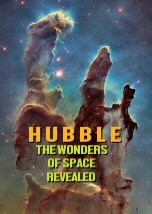
To celebrate the 30th anniversary of its launch, this film tells the remarkable story of how the Hubble Space Telescope revealed the awe and wonder of our universe and how a team of daring astronauts risked their lives to keep it working. Additionally, a team led by Greg Bacon and Dr Frank Summers has transformed many of Hubble's most awe-inspiring images into visualisations - from the spectacular Orion Nebula to the fabulous Whirlpool Galaxy and ethereal Horsehead Nebula. One of the most mind-blowing of the visualizations takes the viewer on a remarkable journey, flying across the Universe to witness almost 13 billion years of cosmic evolution. It's called the 'Hubble Ultra Deep Field' and was created when Hubble stared at a small patch of sky for the equivalent of more than 11 days to see some of the most distant galaxies ever observed.
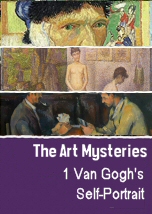
Waldemar Januszczak sets out to uncover the secret meanings hidden in four famous paintings by Van Gogh, Gauguin, Cezanne and Seurat. Everyone knows the pictures. They are among the most celebrated masterpieces of art. And yet, hidden inside them are codes and puzzles that no one has been able to decipher. Van Gogh’s Self-Portrait with Bandaged Ear was painted soon after he cut off his ear with a razor. But how much do we really know about it? In a far-ranging investigation, Waldemar Januszczak delves into the clues hidden in the painting. The result is a tale of geishas, brothels, bullfights, love affairs, suffering and a fiery relationship with Gauguin. The work has a powerful secret message, if you know what to look for.
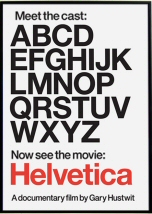
Helvetica is a feature-length independent film about typography, graphic design and global visual culture. It looks at the proliferation of one typeface (which celebrated its 50th birthday in 2007) as part of a larger conversation about the way type affects our lives. The film is an exploration of urban spaces in major cities and the type that inhabits them, and a fluid discussion with renowned designers about their work, the creative process, and the choices and aesthetics behind their use of type. The film encompasses the worlds of design, advertising, psychology, and communication, and invites us to take a second look at the thousands of words we see every day. Interviewees in Helvetica include some of the most illustrious and innovative names in the design world, including Erik Spiekermann, Matthew Carter, Massimo Vignelli, Wim Crouwel, Hermann Zapf, Neville Brody, Stefan Sagmeister, Michael Bierut, David Carson, Paula Scher, Jonathan Hoefler, Tobias Frere-Jones, Experimental Jetset, Michael C. Place, Norm, Alfred Hoffmann, Mike Parker, Bruno Steinert, Otmar Hoefer, Leslie Savan, Rick Poynor, and Lars Müller.
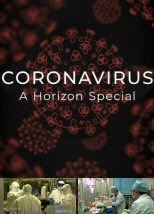
In just over 100 days, a new coronavirus has taken an unprepared world by storm, infiltrating every corner of the globe, sending entire nations into lockdown, killing thousands and infecting countless more. Across the world, governments are scrambling to react, hospitals are struggling to cope and an increasingly anxious public are starting to panic. The world's media is awash with data, information and misinformation. But what are the facts? What is COVID-19 and why is this strain of coronavirus so dangerous? What happens in our bodies when the virus attacks? How does this compare to previous pandemics? What do all the the numbers really mean, and how can data modelling help us look for an exit strategy? This programme investigates the scientific facts and figures behind the biggest public health crisis in living memory, and explores the latest research from the frontline of the medical and scientific fightback.






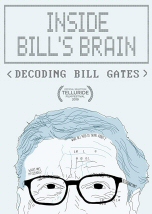
When Bill Gates stepped down from Microsoft in 2008, he was worth more than 58 billion dollars. He built that fortune thinking about computer software, operating systems, spreadsheets and the Internet. What was on his mind?