






Last Watched

"Time"  Sort by

The Cities

   2011    Culture
Humans are so clever they’ve built their own habitat, designed to keep wild nature out. Yet as we discover the urban environment is totally dependant on the natural world. Over the three years of filming for Human Planet, the teams have spent time with over seventy different communities in countries across the planet. Despite seeing many different ways of living, there are some aspects of family life that remain the same whether you live in a tree house in West Papua, or a brick house in Bolton. These similarities became very clear when the urban team went to film on a rubbish dump in Kenya. Here on the Kibarani dump on the outskirts of Mombasa, Ali, Ashe and their family live and survive amongst the rubbish, and even here, just like anywhere on the planet, everything stops for a nice cup of tea!
Series: Human Planet
Enemy of the State

   2010    Technology
Here, Aleks charts how the Web is forging a new brand of politics, both in democracies and authoritarian regimes. With contributions from Al Gore, Martha Lane Fox, Stephen Fry and Bill Gates, Aleks explores how interactive, unmediated sites like Twitter and YouTube have encouraged direct action and politicised young people in unprecedented numbers. Yet, at the same time, the Web's openness enables hardline states to spy and censor, and extremists to threaten with networks of hate and crippling cyber attacks.
Series: The Virtual Revolution

Why are We Here

   2014    Science
In episode two, Professor Brian Cox is off to India, where he assesses arguably the first evidence of rational thought in literature, the poetry of the Vedic monks. They pondered mankind's origins, realising there must have been a day with no yesterday - a day of creation - prompting the age-old question of where did the universe come from? Brian marvels that the universe seems to follow a set of rules, the laws of physics, allowing space to be considered on the grandest scale, travelling to the most distant, farthest reaches of the cosmos just by using our minds. Brian also visits Japan, and offers viewers the idea that man lives in just one of an infinite number of universes that are being made all the time.
Series: Human Universe

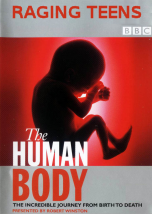
Raging Teens

   1998    Medicine
Raging Teens follows a group of young boys and girls throughout their teenage years and captures the changes that the body undergoes through puberty. Its main focus, however, is on Beatrice and the changes she undergoes such as shopping, growing breasts, pubic hairs and her first period (her mother bought her some Chocolate Éclairs to help celebrate which must be a British thing). The boy's side covers testosterone and what changes it spurs in a lad's body such as facial hair, their voice cracking at the wrong time, and parts of the body that have until now lain dormant. You also learn that a pubic hair only grows for 6 months, which keeps it short, and is actually flat oval and not round which is why they curl.
Series: The Human Body

Comets: Frozen Wanderers

   2012    Science
We think of comets as beautiful glowing balls of light streaking across our skies with their long sweeping tails, yet comets are so much more than just a cosmic firework display. Comets have a uniquely important place in modern science. As time machines from the early universe, they could hold the key to unlock the secrets of the cosmos. Comets could even be the origin of life itself. We follow the incredible odyssey of a comet as it sails through the solar system, watching it's every move as it evolves from a dormant chunk of ice and rock into a tumbling, violently active nucleus engulfed in a gaseous haze. What we learn is a revelation; comets are even more mysterious and fascinating than we had ever imagined.
Series: How the Universe Works

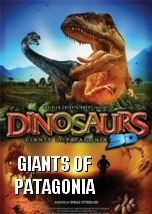
Dinosaurs Giants of Patagonia

   2007    Science    3D    HD
'Dinosaurs: Giants of Patagonia' Following Pr Rodolfo Coria, a world-reknown Argentinian paleontologist, we visit sites of major discoveries he has contributed to in Patagonia and travel back in time to see these amazing beasts come to life in 3D. Patagonia has given us the largest living animal to ever walk the Earth: the titanesque plant-eating Argentinosaur, and its nemesis, the Giganotosaur, a bipedal carnivore that could easily challenge the famous T-Rex.
The Rehearsal

The Rehearsal

2022  Culture
Secrets of the Universe

Secrets of the Universe

2022  Technology
Latino Americans

Latino Americans

2013  History
Top Gear

Top Gear

2012  Technology
The Hunt

The Hunt

2015  Nature
Universe

Universe

2021  Science