Everywhere you go, you generate a cloud of data. You're trailing data, everything that you do is producing data. And then there are computers looking at that data that are learning, and these computers are essentially trying to serve you better. They're trying to personalize things to you. They're trying to adapt the world to you. So on the one hand, this is great, because the world will get adapted to you without you even having to explicitly adapt it. There's also a danger, because the entities in the companies that are in control of those algorithms don't necessarily have the same goals as you, and this is where I think people need to be aware that, what's going on, so they can have more control over it. We came into this new world thinking that we were users of social media and search engines. It didn't occur to us that social media and search engines were actually using us.
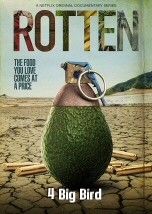
Today, worldwide, we each eat 27 pounds of chicken a year. Chicken's astonishing growth has been propelled and satisfied by a business that creates lives, and harvests them, at breathtaking speed and volume. But now the massive scale of production has exposed those in the chicken business to dangers large and small. The ruthlessly efficient world of chicken production pits vulnerable growers against each other and leaves them open to vicious acts of sabotage.
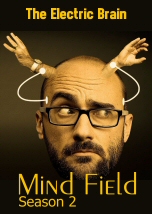
The nervous system is fundamentally electric. When we move our arm, it moves because a electric signal has been sent to the muscle that controls it. Now, because the brain is electric, we could also use electricity to record what the brain is doing or bypass it entirely, and control a body. That means that we could restore movement to people who are paralyzed, feel through an artificial hand as if it was our own, and even read people's minds. Michael Stevens explores how electricity can be used to move cockroaches, control other peoples' limbs and even read peoples' thoughts.
The second episode takes a look at how humans have always been voyagers and explorers, leaving the comfort of native shores to explore. Neil DeGrasse Tyson will show us a long-term vision of humanity's future worlds.
A child lies on the rug of a tenement dreaming of interstellar adventures. At the dawn of the space age, a young Carl Sagan’s career is forged in the clash of his mentors, two scientific titans. Sagan goes on realize his childhood dreams, to carry their research forward and communicate its significance to the whole world.
Episode 7 focuses specifically on first contact and the search for intelligent life in the vastness of the cosmos. Are humans ready to make first contact with other intelligent beings? Is our technology even sophisticated enough to detect communication signals from another world? Who are we to search for alien intelligence when we can't even recognize or respect the consciousness all around us, or even beneath our feet. Neil deGrasse Tyson reveals the hidden underground network that is a collaboration of four kingdoms of life, and a true first contact story between humans and beings who communicate in a symbolic language and have maintained a representative democracy for many tens of millions of years.











We came into this new world thinking that we were users of social media and search engines. It didn't occur to us that social media and search engines were actually using us.