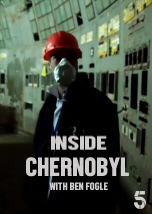
35 years after the Chernobyl disaster, Ben Fogle travels to the most radioactive place on Earth. He spends a week living alone inside the Chernobyl Exclusion Zone, gaining privileged access to the doomed Control Room 4 where the disaster first began to unfold. 'The planet faces unprecedented challenges - many of them, like Chernobyl, of our own making. What I've discovered in Chernobyl is that nature's reclaiming it. This is the greatest, accidental rewilding project of the globe. For me, the really exciting part of the Chernobyl story is the accidental hope that came from it. '
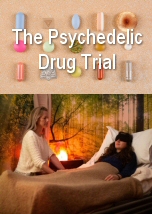
A ground-breaking new trial at Imperial College London sees, for the first time ever under controlled conditions, a psychedelic drug tested head-to-head against a standard antidepressant as a treatment for depression. The film follows a pioneering team of scientists and psychotherapists as they compare the effects of psilocybin (the active ingredient of magic mushrooms) with an antidepressant on a small group of participants with clinical depression. This is scientific research at its most cutting edge. With over seven million people being prescribed antidepressants each year in England alone, this drug trial is an important milestone in understanding a completely different treatment for depression. How do psychedelic drugs measure up against the industry-standard antidepressants that have been popular since the 1990s? The empirical results of the trial are explored alongside the participants’ powerful lived experience.
(Click CC for subtitles) Hannes Rossacher's documentary is a great journey. It begins in summer 1988 on the Ostseestrand in East Germany and accompanies the band on their long, sometimes painful, but finally successful conquest of the American continents up until 2001. It continues with their farewell to the US after the events of September 11th and ends in front of thousands of cheering Americans in Madison Square Garden. For the documentary, Rammstein provided extensive, previously unreleased footage and photos from the band archive. In numerous interviews from various periods in the band's history, the band members speak about their experiences across the Atlantic. Old and new friends and acquaintances, as well as many American colleagues, pay tribute to the band and recount anecdotes. Chad Smith (Red Hot Chili Peppers), Moby, CJ Ramone, Steven Tyler (Aerosmith), Iggy Pop, Gene Simmons and Paul Stanley from KISS, Wes Borland (Limp Bizkit), Marilyn Manson, Melissa Auf der Maur, Scott Ian (Anthrax), Jonathan Davis and Munky Shaffer from Korn, Shawn Crahan (Slipknot), director David Lynch, actor Kiefer Sutherland and many more.
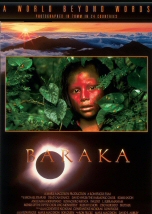
Without words, Ron Fricke shows us the world, with an emphasis not on 'where,' but on 'what's there.' It begins with morning, natural landscapes and people at prayer: volcanoes, water falls, veldts, and forests; several hundred Balinese Hindu men perform kecak, the monkey chant. Indigenous peoples apply body paint; whole villages dance. The film moves to destruction of nature via logging, blasting, and strip mining. Images of poverty, rapid urban life, and factories give way to war, concentration camps, and mass graves. Ancient ruins come into view, and then a sacred river where pilgrims bathe and funeral pyres burn. Prayer and nature return. A monk rings a huge bell; stars wheel across the sky. (Click CC for places description)
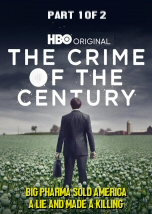
This series is a searing indictment of Big Pharma and the political operatives and government regulations that enable over-production, reckless distribution and abuse of synthetic opiates. Exploring the origins, extent and fallout of one of the most devastating public health tragedies of our time, with half a million deaths from overdoses this century alone, the film reveals that America's opioid epidemic is not a public health crisis that came out of nowhere. In the first part, a look at how Purdue Pharma worked with the FDA to get OxyContin approved for wider use, promoting the highly profitable pain medication's safety without sufficient evidence, and creating a campaign to redefine pain and how it's treated.
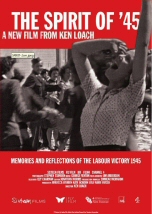
The film is focused on and celebrating the radical changes in postwar Britain under the Labour government of Clement Attlee, which came to power in 1945. Relying primarily on archive footage and interviews, and without a narrative voiceover, the documentary recounts the endemic poverty in prewar Britain, the sense of optimism that followed victory in World War II and the subsequent expansion of the welfare state, founding of the National Health Service and nationalisation of significant parts of the UK's economy. The film documents the extent to which these achievements, as the filmmaker Ken Loach sees them, have since been subject to attack in the decades that followed, particularly under the Conservative governments of Margaret Thatcher in the 1980s






'The planet faces unprecedented challenges - many of them, like Chernobyl, of our own making. What I've discovered in Chernobyl is that nature's reclaiming it. This is the greatest, accidental rewilding project of the globe. For me, the really exciting part of the Chernobyl story is the accidental hope that came from it. '