









Last Watched

"REM"  Sort by

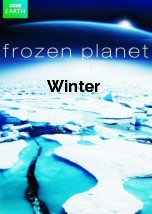
Frozen Planet: Winter

   2011    Nature
There is no greater test for life than winter, as temperatures plummet to 70 below and winds reach 200kph. Darkness and ice extend across the polar regions and only a few remarkable survivors gamble on remaining. We join a female polar bear trekking into the Arctic mountains to give birth as the first blizzards arrive. Out on the frozen ocean, the entire world's population of spectacled eider ducks brave the winter in a giant ice hole kept open by ferocious currents. Arctic forests transform into a wonderland of frost and snow - the scene of a desperate and bloody battle between wolf and bison, but also where a remarkable alliance between raven and wolverine is made. Beneath the snow lies a magical world of winter survivors. Here tiny voles dodge the clutches of the great grey owl, but cannot escape the ultimate under-show predator - the least weasel. Midwinter and a male polar bear wanders alone across the dark, empty icescape. Below the snow, polar bear cubs begin life in an icy den while fantastical auroras light the night skies above. In Antarctica, we join male emperor penguins in their darkest hour, battling to protect precious eggs from fierce polar storms. Weddell seals escape to a hidden world of jewel-coloured corals and alien-looking creatures but frozen devastation follows as sinister ice stalactites reach down with deadly effect.
Series: Frozen Planet
The Mountains

   2011    Culture
From lush cloud forests to bare summits that take your breath away, the higher you climb the tougher life gets on a mountain. Human Planet explores the extraordinary ways in which people survive at extreme altitudes where nature becomes utterly unforgiving. In the Altai Mountains in Western Mongolia the vast open spaces make hunting for animals almost impossible, so the locals have forged an astonishing partnership with golden eagles which can do the hunting for them. On the precipitous cliffs of the Simien Mountains of Ethiopia we join a young boy locked in a dramatic battle with fearsome gelada monkeys which are hell-bent on raiding his family's meagre grain harvest. In the Himalayan state of Nepal - the roof of the world - we witness a rarely seen ceremony: a sky burial. In a land where there is little wood to burn for cremation, and where burying the dead is virtually impossible, the dead are fed to vultures in the ultimate reverence of nature.
Series: Human Planet

The Rivers

   2011    Culture
Rivers provide the essentials of life: fresh food and water. They often provide natural highways and enable us to live in just about every environment on Earth. But rivers can also flood, freeze or disappear altogether!Cities - Surviving the Urban Jungle Human Planet joins Sam Niang, a Laotian fisherman, as he walks a high wire strung above the raging Mekong River rapids on an extraordinary commute to work. There's also a look at the remarkable partnership between Samburu tribesmen and wild elephants in their search for water in the dried-out river beds of Northern Kenya. Plus, a father who must take his two children on a six-day trek down a frozen river - the most dangerous school run on Earth, and the ice dam busters of Ottowa with their dynamite solution to a city centre hold-up.

The Insatiable Appetite

   1998    Nature
The next instalment focuses on dietary needs and how different species have evolved beaks to suit their individual requirements. The latter come in a multitude of forms. Blue tits and goldfinches have beaks akin to tweezers, with which to extract seeds, while the hawfinch's razor-like bill can deal with a cherry-stone. However, the crossbill is the only finch that can twist its mandibles in opposite directions. Jays store acorns for winter by burying them in the ground, whereas woodpeckers can keep up to 60,000 of them in one tree trunk. Sap is also desirable, and there are a variety of methods used to obtain it. The hoatzin is the only specialised leaf-eater, and accordingly has a digestive system more akin to that of cattle. Plants recruit birds to aid pollination, and offer nectar as a reward. Hummingbirds eat little else, and the sword-bill's beak is the longest of any bird in relation to its body. Insects are also highly prized, and Galapagos finches are shown to possess some ingenuity as they not only strip bark, but also use 'tools' to reach their prey. Crows are hailed as being among the most intelligent birds, and one is shown using a twig to spear a grub within a fallen log. The robin is an opportunist, and Sir Attenborough observes one seizing morsels as he digs a patch of earth. In South America, a cattle tyrant sits atop an obliging capybara and uses its vantage point to spot passing food that may be dislodged by its grazing partner.
Series: The Life of Birds

The Big Freeze

   1993    Nature
As almost all animal inhabitants of Antarctica are forced to migrate north, the sea underneath the frozen ice still provides a home to many specially adapted fish whose cells are protected from freezing through an 'antifreeze' liquid. Many of them feed on the faeces of other animals. The most notable larger animal that does not migrate north is perhaps the Weddell Seal, which can be found as close as 1300 kilometres to the pole. Groups of seals tear holes into the ice to dive for food and come up to breathe. The females come back to the ice to give birth. This episode also describes primitive plant life such as lichen, which can still be found on the continent in winter, even in the extremely dry and permanently frozen valleys conditions under which dead animals can lie frozen for many centuries without decomposing. It details the life of the Emperor Penguin, 'the only birds to lay their eggs directly on ice'. While other animals retreat, Emperors migrate not just to the ice, but into the Antarctic continent. The females lay eggs which are incubated by the males under the harshest conditions on Earth (huddling closely together for warmth), while the females return to the sea.
Series: Life in the Freezer

Secretive Creatures

   2015    Nature
Take another walk on the wild side with our favourite pets. Extraordinary photography reveals their hidden senses and secret communication skills. Dogs take a car trip through Paris, using their legendary sense of smell to show us a very different city. A hamster uses his remarkable senses to stage a great escape and then deploys more navigational talents to find his way home. Cats become intoxicated on the scent of a plant and suffer the consequences. A budgie shows his hidden charms to his mate as, under UV light, his crown and cheeks positively glow. Goldfish reveal secret senses that can detect the slightest water movement. A guinea pig gives birth and the newborns receive surprising care from their father. In South America, where guinea pigs have lived with people for 7,000 years, they express the true meaning of their entertaining calls. When we groom a horse we speak their language, but horses use ears to communicate in ways that we are rarely aware of. In Japan cats show their secret messages and in Peru dogs reveal the hidden signs that allow them to communicate across a city. Packed with extraordinary facts and wild behaviour - you'll never look at your pet in the same way again
Series: Pets: Wild at Heart
Walking with Cavemen

Walking with Cavemen

2003  History
The Story of India

The Story of India

2007  History
The Hunt

The Hunt

2015  Nature
Top Gear

Top Gear

2012  Technology
The Big Conn

The Big Conn

2022  Culture
The Last Narc

The Last Narc

2020  Culture
Leaving Neverland

Leaving Neverland

2019  Culture