Three years in the making, Francis Whately’s film is a social and musical history of (probably) the world’s greatest music festival, as told by its principal curators, Michael and Emily Eavis, and many of the key artists who’ve appeared there between 1970 and 2019 – Billie Eilish, Thom Yorke, Florence Welch, Dua Lipa, The Levellers, Aswad, Orbital, Fatboy Slim, Linda Lewis, Noel Gallagher, Ed O’Brien, Chris Martin, Stormzy and more. Balancing the driving forces of social conscience and hedonism, Glastonbury has always been both a world apart and a barometer of the state of the nation. Looking at the hippie days, CND, the contribution of the travellers, dance music, Britpop, The Wall, the impact of television and the first black British solo headliner, this film takes viewers backstage and deep into the archive to reveal the forces that have driven this alternative nation between utopia and dystopia, the greatest night of your life and a muddy field in the middle of nowhere. This is not a chronological plod through the festival’s evolution so much as a thematic and story-driven exploration of the peaks and troughs, and the agonies and ecstasies, that have shaped Glastonbury’s 50 years and counting.
Japan's role in World War II gets a whole new perspective in this consisting entirely of full colour footage, including colour films from Japan that were recently discovered. As the visuals of the world war take on a new vivid immediateness, the story of the rise of the militarists in Japan is told through the personal writings of the Japanese themselves. From the first overconfident tastes of victory, to the devastating losses that led to an unthinkable defeat amidst the ruins, the Pacific Theater of World War II is told through the Japanese's eyes.
Alice Roberts explores the latest discoveries in the study of human origins, revealing the transformation that has been brought about in this field by genetics. Traditional Palaeoanthropology, based on fossils, is being transformed by advanced genome sequencing techniques. We now know that there were at least four other distinct species of human on the planet at the same time as us - some of them identified from astonishingly well-preserved DNA extracted from 50,000-year-old bones, others hinted at by archaic sections of DNA hidden in our modern genome. What's more, we now know that our ancestors met and interacted with these other humans, in ways that still have ramifications today. Alice uses these revelations to update our picture of the human family tree.
Sir David Attenborough takes a breath-taking journey through the vast and diverse continent of Africa as it's never been seen before. From the richness of the Cape of Good Hope to blizzards in the high Atlas Mountains, from the brooding jungles of the Congo to the steaming swamps and misty savannahs, Africa explores the whole continent. An astonishing array of previously unknown places are revealed along with bizarre new creatures and extraordinary behaviours. Using the latest in filming technology including remote HD cameras, BBC One takes an animal's eye view of the action. The journey begins in the Kalahari, Africa's ancient southwest corner, where two extraordinary deserts sit side by side and even the most familiar of its creatures have developed ingenious survival techniques. Black rhinos reveal a lighter side to their character as they gather around a secret waterhole. Springbok celebrate the arrival of rains with a display of 'pronking'. Bull desert giraffes endure ferocious battles for territory in a dry river bed.
Japan's landscapes range from snowy mountains to subtropical warmth. They are full of wildlife - and animals' and people's lives often cross as they adapt to these extremes. The central island of Honshu is home to over 100 million people, and its biggest city, Tokyo, is one of the largest urban metropolises on earth. But it has a wild heart - most of Honshu is mountainous. This wilderness is home to an astonishing range of wildlife - black bears, monkeys, exquisite fireflies and even cow demons. But all across this island, from the mountains to the edge of the sea, people and nature are drawn together in the most unexpected ways.
After several rogue traders stories made the headlines these last years, revealing the human factor behind the global economy, neuroscientists have started to scrutinize traders' brain and stress management. What stimulates and motivates them? How can their brain cope with such a high level of stress and competition? This film investigates further into Neuroeconomics, showing how traders are being governed by unconscious psychological and biological processes which can trigger borderline behaviours and have disastrous financial consequences on the financial markets.







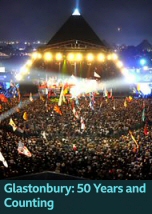







Balancing the driving forces of social conscience and hedonism, Glastonbury has always been both a world apart and a barometer of the state of the nation. Looking at the hippie days, CND, the contribution of the travellers, dance music, Britpop, The Wall, the impact of television and the first black British solo headliner, this film takes viewers backstage and deep into the archive to reveal the forces that have driven this alternative nation between utopia and dystopia, the greatest night of your life and a muddy field in the middle of nowhere.
This is not a chronological plod through the festival’s evolution so much as a thematic and story-driven exploration of the peaks and troughs, and the agonies and ecstasies, that have shaped Glastonbury’s 50 years and counting.