







Last Watched

"Time"  Sort by

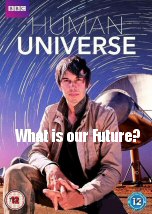
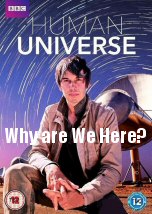
Why are We Here

   2014    Science
In episode two, Professor Brian Cox is off to India, where he assesses arguably the first evidence of rational thought in literature, the poetry of the Vedic monks. They pondered mankind's origins, realising there must have been a day with no yesterday - a day of creation - prompting the age-old question of where did the universe come from? Brian marvels that the universe seems to follow a set of rules, the laws of physics, allowing space to be considered on the grandest scale, travelling to the most distant, farthest reaches of the cosmos just by using our minds. Brian also visits Japan, and offers viewers the idea that man lives in just one of an infinite number of universes that are being made all the time.
Series: Human Universe
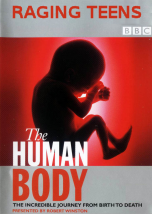
Raging Teens

   1998    Medicine
Raging Teens follows a group of young boys and girls throughout their teenage years and captures the changes that the body undergoes through puberty. Its main focus, however, is on Beatrice and the changes she undergoes such as shopping, growing breasts, pubic hairs and her first period (her mother bought her some Chocolate Éclairs to help celebrate which must be a British thing). The boy's side covers testosterone and what changes it spurs in a lad's body such as facial hair, their voice cracking at the wrong time, and parts of the body that have until now lain dormant. You also learn that a pubic hair only grows for 6 months, which keeps it short, and is actually flat oval and not round which is why they curl.
Series: The Human Body

Comets: Frozen Wanderers

   2012    Science
We think of comets as beautiful glowing balls of light streaking across our skies with their long sweeping tails, yet comets are so much more than just a cosmic firework display. Comets have a uniquely important place in modern science. As time machines from the early universe, they could hold the key to unlock the secrets of the cosmos. Comets could even be the origin of life itself. We follow the incredible odyssey of a comet as it sails through the solar system, watching it's every move as it evolves from a dormant chunk of ice and rock into a tumbling, violently active nucleus engulfed in a gaseous haze. What we learn is a revelation; comets are even more mysterious and fascinating than we had ever imagined.
Series: How the Universe Works

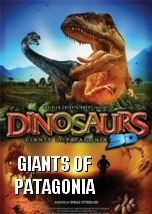
Dinosaurs Giants of Patagonia

   2007    Science    3D    HD
'Dinosaurs: Giants of Patagonia' Following Pr Rodolfo Coria, a world-reknown Argentinian paleontologist, we visit sites of major discoveries he has contributed to in Patagonia and travel back in time to see these amazing beasts come to life in 3D. Patagonia has given us the largest living animal to ever walk the Earth: the titanesque plant-eating Argentinosaur, and its nemesis, the Giganotosaur, a bipedal carnivore that could easily challenge the famous T-Rex.

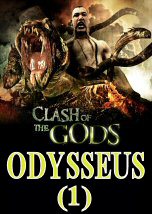
Clash of the Gods: Odysseus I

   2009    History
Homer's The Odyssey ranks amongst the most famous epics ever written. Follow its archetypal hero, Odysseus, as he sets sail on a twenty-year journey to return home from battle to reclaim his wife and kingdom. It's a timeless tale of adventure, filled with mythological beasts, vengeful gods, and enchanting seductresses. But could it have actually happened? Underwater divers have uncovered remains that date back thousands of years and may be a direct link to the story of Odysseus.
Series: Clash of the Gods

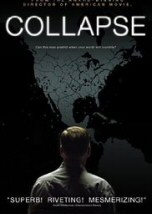
Collapse

   2009    Culture
Michael Ruppert is an independent journalist who has made a minor career out of telling people news that most folks do not want to know. Ruppert, a former police officer, predicted the Wall Street debacle of 2008 several years before the fact, at a time when most analysts were still imagining infinite growth for the stock market and major investment banks. Since then, his vision of the world's future has grown only darker. As Ruppert sees it, civilization and the global economy has yet to wean itself off fossil fuels, and when the world's supply of oil finally runs out, it will lead to a global financial catastrophe that will leave no one unscathed. But while most of what Ruppert has to say bears the ring of truth, there's a small audience for his dire message -- the primary medium for his work is a self-published newsletter, and his most recent book has done so poorly in the marketplace that he faces eviction from his home. Is Ruppert right? And if he is, why doesn't anyone care? Filmmaker Chris Smith profiles Michael Ruppert and gives him a chance to explain his apocalyptic vision of the future at length