



Last Watched

"DNA"  Sort by

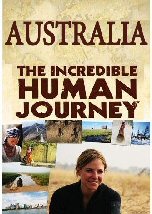
The Incredible Human Journey: Australia

   2009    History
Dr Alice Roberts looks at our ancestors' seemingly impossible journey to Australia. Miraculously preserved footprints and very old human fossils buried in the outback suggest a mystery: that humans reached Australia almost before anywhere else. How could they have travelled so far from Africa, crossing the open sea on the way, and do it thousands of years before they made it to Europe? The evidence trail is faint and difficult to pick up, but Alice takes on the challenge. In India, new discoveries among the debris of a super volcano hint that our species started the journey much earlier than previously thought, while in Malaysia, genetics points to an ancient trail still detectable in the DNA of tribes today. Alice travels deep into the Asian rainforests in search of the first cavemen of Borneo and tests out a Stone Age raft to see whether sea travel would have been possible thousands of years ago, before coming to a powerful conclusion.
Series: The Incredible Human Journey
Some of the Things That Molecules Do

   2014    Science    HD
The story begins with Tyson sitting at a campfire, and telling how the wolf changed through artificial selection, and selective breeding into the dog breeds around today. He then enters the Ship of Imagination, and explains natural selection with the process that helped to create the polar bears. Along the way he talks about DNA, genes and mutation. Next he goes to a forest and describes the Tree of life, this leads him to discussing the evolution of the eye. He then discusses extinction, by going to a monument called the Halls of Extinction, dedicated to the broken branches of the tree of life. Explaining the five great Extinction events. He then tells how some life has survived, and then focuses on the tardigrade. From there he talks about what other kinds of life might have been created on other worlds. He then goes to Saturn's moon Titan. From there he speculates about life and how it first began. He then returns to Earth and tells about abiogenesis and how life changed and evolved. The show ends with an animated sequence from the original series of life's evolution from one cell to humans.
Series: Cosmos: A Spacetime Odyssey

The Persistence of Memory

   1980    Science
The idea of intelligence is explored in the concepts of computers (using bits as their basic units of information), whales (in their songs and their disruptions by human activities), DNA, the human brain (the evolution of the brain stem, frontal lobes, neurons, cerebral hemispheres, and corpus callosum under the Triune Brain Model), and man-made structures for collective intelligence (cities, libraries, books, computers, and satellites). The episode ends with speculation on alien intelligence and the information conveyed on the Voyager Golden Record.
Series: Cosmos

The Immortals

   2014    Science
This episode covers the nature of how life may have developed on Earth and the possibility of life on other planets. Tyson begins by explaining how the human development of writing systems enabled the transfer of information through generations, describing how Princess Enheduanna ca. 2280 BCE would be one of the first to sign her name to her works, and how Gilgamesh collected stories, including that of Utnapishtim documenting a great flood comparable to the story of Noah's Ark. Tyson explains how DNA similarly records information to propagate life, and postulates theories of how DNA originated on Earth, including evolution from a shallow tide pool, or from the ejecta of meteor collisions from other planets. In the latter case, Tyson explains how comparing the composition of the Nakhla meteorite in 1911 to results collected by the Viking program demonstrated that material from Mars could transit to Earth, and the ability of some microbes to survive the harsh conditions of space. With the motions of solar systems through the galaxy over billions of years, life could conceivably propagate from planet to planet in the same manner. Tyson then moves on to consider if life on other planets could exist. He explains how Project Diana performed in the 1960s showed that radio waves are able to travel in space, and that all of humanity's broadcast signals continue to radiate into space from our planet. Tyson notes that projects have since looked for similar signals potentially emanating from other solar systems. Tyson then explains that the development and lifespan of extraterrestrial civilizations must be considered for such detection to be realized. He notes that civilizations can be wiped out by cosmic events like supernovae, natural disasters such as the Toba disaster, or even self-destruct through war or other means, making probability estimates difficult. Tyson describes how elliptical galaxies, in which some of the oldest red dwarf stars exist, would offer the best chance of finding established civilizations. Tyson concludes that human intelligence properly applied should allow our species to avoid such disasters and enable us to migrate beyond the Earth before the Sun's eventual transformation into a red giant.
Series: Cosmos: A Spacetime Odyssey

Oaxaca to LA

   2020    Culture
Ewan McGregor and Charley Bormann are very close to finishing their journey. Discussions on security are still on the agenda; they cannot travel at night due to dangerous cartels. They will need to do many miles on a bus with space for the bikes inside. The team manage to get the bikes on after concerns they wouldn’t fit. Repairing and conditioning the bus is an achievement considering they did it in a few days.
Ewan and Charley get back on their bikes, and they head to their last border cross to enter the United States. After 12 hours in the border, the crew, Ewan and Charley make it to America. It’s an easy stretch to L.A. on their bikes. Ewan, the crew and family, finish the last leg. It’s done, they’ve managed to finish Long Way Up. It’s such an achievement. Episode 11 is a heartfelt finale, showcasing the end of an incredible journey from both Ewan, Charley, and the team that supported them.
Series: Long Way Up

Can We Cheat Death

   2017    Medicine
Death is life's greatest certainty. But that may be about to change. Scientists have discovered an immortal animal that may hold the secret of endless regeneration. They're on the brink of editing our DNA so that we can cure ageing like a disease. Or is dying necessary for the survival of our species?
Series: Through the Wormhole Season 8
Cooked

Cooked

2016  Culture
Life

Life

2009  Nature
Racism: A History

Racism: A History

2007  Culture
The Art of Germany

The Art of Germany

2010  Art
Power of Art

Power of Art

2006  Art