












Last Watched

"Forest"  Sort by

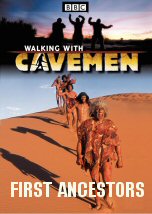
Walking with Cavemen: First Ancestors

   2003    History
It's 3.5 million years ago and in East Africa a remarkable species of ape roams the land. Australopithecus afarensis has taken the first tentative steps towards humanity by standing and walking on two legs. The rift valley was forming, and the rain forests dying as Africa dried out - turning the landscape into a mosaic of scattered trees and grass. In this new environment afarensis found it more efficient to move about on two legs rather than four.
Series: Walking with Cavemen
The Private Life of Plants: Travelling

   1994    Nature
Sir David Attenborough reveals plants as they have never been seen before - on the move and dangerously devious. About the major problems of life - growing, finding food, reproduction - and the varied ways plants have evolved to solve it. Filmed from the plant's point of view, using computer animations, fibre-optics and unique time-lapse photography. The first episode looks at how plants are able to move". The bramble is an aggressive example: it advances forcefully from side to side and, once settled on its course, there is little that can stand in its way. An altogether faster species is the birdcage plant, which inhabits Californian sand dunes. When its location becomes exposed, it shifts at great speed to another one with the assistance of wind — and it is this that allows many forms of vegetation to distribute their seeds. While not strictly a plant, the spores of fungi are also spread in a similar fashion. One of the most successful (and intricate) flowers to use the wind is the dandelion, whose seeds travel with the aid of 'parachutes'. They are needed to travel miles away from their parents, who are too densely packed to allow any new arrivals. Trees have the advantage of height to send their seeds further, and the cottonwood is shown as a specialist in this regard. The humidity of the tropical rainforest creates transportation problems, and the liana-species Alsomitra macrocarpa is one plant whose seeds are aerodynamic 'gliders'. Some, such as those of the sycamore, take the form of 'helicopters', while others, such as the squirting cucumber release their seeds by 'exploding'. Water is also a widely used method of propulsion. The tropical sea bean Entada gigas has one of the biggest fruits of all plants and is dispersed by water streams. However, most plants use living couriers, whether they be dogs, humans and other primates, ants or birds, etc., and to that end, they use colour and smell to signify when they are ripe for picking.
Series: The Private Life of Plants

Conquest

   2010    Science
Attenborough's journey continues in Canada's Rocky Mountains, where fossils document an explosion in animal diversity never seen before or since. Travelling from there to North Africa, the rainforests of Australia and the east coast of Scotland, Attenborough discovers how animals evolved to conquer not only the oceans but also the land and air. These remote and fascinating creatures are brought to life as never before with the help of cutting-edge scientific technology and photorealistic visual effects. From the first large predators to the first legs on land, these were creatures that evolved the traits and tools that allow all animals, including ourselves, to survive to this day.
Series: First Life

Adoration in the Forest

   2010    Art
Painted over five centuries ago, Filippo Lippi's nativity is like none other: it shows the birth of Christ in a dark, wooded wilderness. There are no shepherds, kings, ox, ass – there is no Joseph. Its beauty inspired Michelangelo, Leonardo da Vinci and Botticelli. But it also conceals a deeply personal story. It was painted for Cosimo de Medici, a wealthy banker who feared that his money was dragging him straight to hell. The artist's life was equally surprising. One of the most celebrated painters of his day, Filippo Lippi was also a Carmelite friar, but he was no stranger to the temptations of the flesh, to which he frequently yielded. Shortly before painting his Adoration, he caused uproar by seducing a twenty year-old nun. His paintings rejoice not only in divine beauty, but in the beauty of women. In later times, the Adoration's history was interwoven with that of rulers and dictators. It became a bargaining chip after Napoleon's allies seized twenty merchant ships. And in the 20th century, it was hidden by the Nazis in a potassium mine, where specialist american officers, known as Monuments Men, stumbled upon it. they were now told to get it ready to be shipped out. In an unprecedented turn of events they refused. This is the only known case in the whole of the Second World War of American officers refusing an order. It was sent to the National Gallery of Art, but in 1949 Lippi's Adoration was returned to Germany.
Series: The Private Life of a Masterpiece

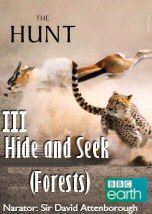
Hide and Seek. Forests

   2015    Nature
The third episode follows tigers, harpy eagles, chimpanzees, army ants and other predators as they rise to the challenge of hunting within the forest - a dense, confusing, three-dimensional world, one in which even finding prey is a maddening task. The prize for succeeding at nature's great game of hide-and-seek is one worth winning. Forests cover one third of the land surface, and concealed within are over half of the species on Earth.
Series: The Hunt

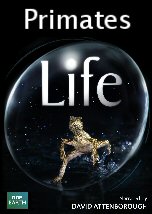
Life: Primates

   2009    Nature
Intelligence and adaptability allow primates to tackle the many challenges of life, and this is what makes our closest relatives so successful. This resourcefulness has enabled primates to conquer an incredible diversity of habitat. Hamadryas baboons live on the open plains of Ethiopia in groups up to 400 strong. Strength in numbers gives them some protection from potential predators. But, should their path cross with other baboon troops, it can lead to all-out battle, as males try to steal females from one another, and even settle old scores. Japanese macaques are the most northerly-dwelling primates and they experience completely different challenges. Some beat the freezing conditions by having access to a thermal spa in the middle of winter. But this privilege is only for those born of the right female bloodline. For western lowland gorillas, it's the male silverback that leads his family group in the rich forests of the Congo basin. He advertises his status to all with a powerful chest-beating display. Most primates are forest dwellers, and one of the strangest is the tarsier – the only purely carnivorous primate. As it hunts for insects the tarsier leaps from tree to tree in the dead of night, using its huge forward-facing eyes to safely judge each jump. Good communication is essential for success in primate society.
Series: Life
100 Foot Wave

100 Foot Wave

2021  Culture
Frozen Planet

Frozen Planet

2011  Nature
Sex Explained

Sex Explained

2020  Medicine
Food Inc

Food Inc

2009  Technology
The Story of God

The Story of God

2016  Culture
The Gene Code

The Gene Code

2011  Science
Minimalism

Minimalism

2015  Culture