








Last Watched

"Leave"  Sort by

The Secret Life of the Cat

   2013    Science
Horizon discovers what your cat really gets up to when it leaves the cat flap. In a groundbreaking experiment, 50 cats from a village in Surrey are tagged with GPS collars and their every movement is recorded, day and night, as they hunt in our backyards and patrol the garden fences and hedgerows. Cats are fitted with specially developed cat-cams which reveal their unique view of our world. You may think you understand your pet, but their secret life is more surprising than we thought.
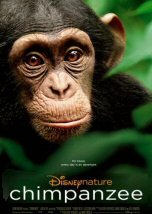

Chimpanzee

   2012    Nature
A young common chimpanzee nicknamed Oscar is part of a close-knit tribe of chimpanzees. They occupy a forest territory which is rich in native fruits, nuts, and figs, among other things. The chimps hunt small tree monkeys, and they also eat termites collected with primitive tools made from sticks. They also use rocks as tools to crack nuts. Oscar is tended by his mother, nicknamed Isha, and from her he begins learning many things about how to survive in the jungle. In the chaos of an attempted raid by a rival gang of chimpanzees led by 'Scar', Isha is injured and separated from the group and her son. This twist of fate leaves Oscar to fend for himself with a little help from an unexpected ally.

The Virus of Faith

   2006    Culture
Dawkins opines that the moral framework of religions is warped, and argues against the religious indoctrination of children. He discusses specifically the idea of religion seen as a virus in the sense of a meme. He begins by explaining how a child is genetically programmed to believe without questioning the word of authority figures, especially parents – the evolutionary imperative being that no child would survive by adopting a sceptical attitude towards everything their elders said. But this same imperative, he claims, leaves children open to infection by religion.
Series: The Root of All Evil

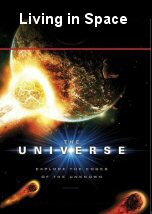
Living in Space

   2009    Technology
When mankind eventually leaves the cradle of Earth and ventures forth into the uncharted territories of the cosmos, where, and what form, will our new homes take?
Series: The Universe

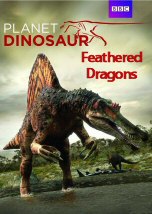
Feathered Dragons

   2011    Culture
In a late Jurassic forest in what is now China, an Epidexipteryx escapes from a juvenile Sinraptor by climbing a tree. It finds a beetle grub in the tree bark, being shown to use its elongated fingers in a similar way to a modern day aye-aye. However, its prey is stolen by another, larger Epidexipteryx, and after a brief bout of posturing, the smaller individual goes to find more food. It drops a second grub to the forest floor, where the other Epidexipteryx retrieves it, only to be killed by the juvenile Sinraptor. The episode then cuts to a desert in late Cretaceous Mongolia, where a Saurornithoides is shown brooding a nest of eggs. When it leaves the nest, an Oviraptor raids it, fleeing when the troodontid returns. The Saurornithoides is suddenly attacked and eaten by a Gigantoraptor, which then heads to compete in a breeding ritual for mates. The males use their feathers for display, a brief fight between two erupting at one point, allowing the females to choose the best suitor. The episode finally cuts to an early Cretaceous forest in China, where a Xianglong is being hunted by a Microraptor, which uses its feathers to pursue the gliding lizard in the air. A Sinornithosaurus attacks it, and after a brief chase the Microraptor manages a lucky escape. The Sinornithosaurus, alongside two other members of its species is then shown hunting a Jeholosaurus and its three young. The group brings down the parent, the narrator explaining that their possibly venomous bite allowed them to tackle animals much larger than themselves. A montage is then shown of the feathered dinosaurs featured in the programme, with the narrator saying that Microraptor not only hints at how flight might have developed, but also that dinosaurs still live amongst us today, as birds.
Series: Planet Dinosaur

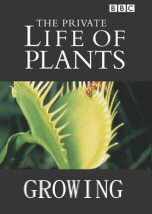
Growing

   1994    Nature
The second episode is about how plants gain their sustenance. Sunlight is one of the essential requirements if a seed is to germinate, and Attenborough highlights the cheese plant as an example whose young shoots head for the nearest tree trunk and then climb to the top of the forest canopy, developing its leaves en route. Using sunshine, air, water and a few minerals, the leaves are, in effect, the "factories" that produce food. However, some, such as the begonia, can thrive without much light. To gain moisture, plants typically use their roots to probe underground. Trees pump water up pipes that run inside their trunks, and Attenborough observes that a sycamore can do this at the rate of 450 litres an hour — in total silence. Too much rainfall can clog up a leaf's pores, and many have specially designed 'gutters' to cope with it. However, their biggest threat is from animals, and some require extreme methods of defence, such as spines, camouflage, or poison. Some can move quickly to deter predators: the mimosa can fold its leaves instantly when touched, and the Venus flytrap eats insects by closing its leaves around its prey when triggered. Another carnivorous plant is the trumpet pitcher that snares insects when they fall into its tubular leaves. Attenborough visits Borneo to see the largest pitcher of them all, Nepenthes rajah, whose traps contain up to two litres of water and have been known to kill small rodents.
Series: The Private Life of Plants
The Germanic Tribes

The Germanic Tribes

2007  History
Cosmos: Possible Worlds

Cosmos: Possible Worlds

2020  Science
Clash of the Gods

Clash of the Gods

2009  History
Building Giants

Building Giants

2019  Technology
The Universe

The Universe

2007  Science
How the Universe Works

How the Universe Works

2014  Science