(Click CC for subtitles) Ranjit, a farmer in India, takes on the fight of his life when he demands justice for his 13-year-old daughter, the victim of a brutal gang rape. His decision to support his daughter is virtually unheard of, and his journey unprecedented. Nominated for Best Documentary Award, the film has an undeniable and unshakable power. It is one of those documentaries where anyone who watches it won’t be the same person by the end as they were when it started. To Kill a Tiger offers the viewer remarkable access to village life, not just in the modest home where Ranjit’s family make roti on an open fire, but in the fields where they herd goats and collect water from a pump. The camera finds quiet details, like Ranjit’s daughter carefully weaving ribbons into her hair. Women and men insist that the community, not the criminal court, should solve the issue with a forced marriage—to remove the ‘stain on her’. The men become increasingly hostile—to the family, and eventually to the film crew itself.
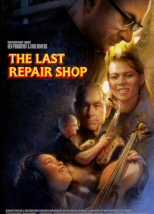
Winner of the Best Documentary Short Award, the film tells the story of four unassuming heroes who ensure no student is deprived of the joy of music. It is also a reminder of how music can be the best medicine, stress reliever and even an escape from poverty. Since 1959, Los Angeles has been one of the few United States cities to offer and fix musical instruments for its public school students at no cost. Those instruments, numbering around 80,000, are maintained at a Los Angeles downtown warehouse by a handful of craftspeople. The film profiles four of them, each specializing in an orchestra section, as well as students whose lives have been enriched by the repair shop's work. The film concludes with a performance by district alumni.
The once-quiet suburbs of Sweden's major cities are the epicenter of a vicious turf war between rival gangs competing for the drug trade. The fierce competition has resulted in a series of tit-for-tat killings with almost daily shootings and bombings. More than 45 people have been shot dead so far this year. Paraic O'Brien steps onto the frontline of Sweden's deadly gang war, as the country becomes one of the most lethal for gun crime in the whole of Europe. From the front line of its lethal drug wars, a look at how Sweden has become one of Europe's deadliest hot spots for gun crime, with shootings often committed by children.
In an enthralling documentary, Dan Snow and archaeologist Raksha Dave delve into the catastrophic impact of the Black Death on Britain 700 years ago, a pandemic that extinguished around half of the population, or three million people. The duo embarks on a journey to trace the origins and merciless spread of the plague, starting from its arrival on Britain's South coast in June 1348, through the bustling trade routes that brought the disease to Melcombe Regis, Dorset. Their investigation takes them to various hotspots of the outbreak, including the Old Operating Theatre in London and Wildwood Animal Sanctuary in Kent, where they explore the role of rats in dispersing the bubonic plague. Through dramatic reconstructions and visits to places like Nottingham University's biomedical laboratories, they uncover the rapid spread and deadly impact of the plague, offering a month-by-month account of how it ravaged the country, decimating cities, towns, and villages alike. The documentary not only showcases the horrific symptoms and desperate attempts at cures through brutal medical practices of the time but also leverages cutting-edge research to explain why the Black Death remains the deadliest pandemic in history. The personal stories of victims, from princes to paupers, are brought to light, revealing the indiscriminate nature of the disease. Dan's visit to Canterbury Cathedral and Raksha's investigation into the recent discovery of mass graves beneath a tranquil London square underline the widespread desperation and devastation. Their journey through the history of the Black Death, culminating in the discovery of its indiscriminate toll and the unveiling of mass graves in London, not only sheds light on the darkest chapters of British history but also ignites a profound understanding of the tragedy, making a compelling case for why this documentary is a must-watch for anyone interested in the profound impacts of pandemics on human society.
From a 2,400-year-old corpse in remarkable condition to how shrunken heads are made, these 15 ancient secrets will have you completely riveted. The Vesuvius eruption may have been a gradual process. It took a storm to lift the cover on this ancient Roman city. The people of Pompeii often resorted to vigilante justice. How the wealthy of Pompeii protected their valuables? Was this pre-Viking gathering a prelude to a massacre? The valuable commodity behind King Solomon's wealth. This valuable Viking grave is missing something important. Is this where humanity decided to settle down? This mysterious stone structure is older than Stonehenge. This 2,400 year old corpse is in remarkable condition. Here's exactly how shrunken heads are made. DNA analysis reveals troubling news about shrunken heads. This mass grave discovery could alter Roman history. Gladiator teeth reveal signs of infant malnourishment. Evidence suggests Stonehenge was an elite cemetery.
In 2009, competing in the most expensive and technologically advanced racing series on Earth, the impossible happened. An understaffed, underfinanced and independent team won the World Championship. Go behind the scenes of this Formula 1 fairytale with Keanu Reeves and the people who were there, on the track, in the garage and the boardroom, giving their own thrilling versions of a miraculous year. With exclusive access to the F1 archives, much of it previously unseen - from a year that global sport will never forget, with contributions from British F1 driver Jenson Button and Ross Brawn, who led the team to victory.
















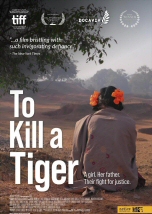







To Kill a Tiger offers the viewer remarkable access to village life, not just in the modest home where Ranjit’s family make roti on an open fire, but in the fields where they herd goats and collect water from a pump. The camera finds quiet details, like Ranjit’s daughter carefully weaving ribbons into her hair. Women and men insist that the community, not the criminal court, should solve the issue with a forced marriage—to remove the ‘stain on her’. The men become increasingly hostile—to the family, and eventually to the film crew itself.