Salvador Dali's strange crucifixion is often called the greatest religious painting of the 20th century. Yet its artist was a notorious blasphemer some of whose work had outraged the Catholic Church. The Christ of St John of the Cross by Salvador Dali is the first of two extraordinary crucifixions painted by Dali in the early 1950s. The painting is based on a 'cosmic dream' Dali is said to have had, in which the nucleus of the atom was a figure of Christ himself. The painting offers a surrealist view of the crucifixion of Christ, and is based on a drawing by the 16th century Spanish friar Saint John of the Cross. But Dali's vision was somewhat unique, using an unusual artistic perspective in which Christ is seen from above. His Christ of St. John of The Cross was inspired by a weird mix of Spanish mysticism and nuclear physics, with his Christ being modelled by a Hollywood stuntman. It's also a masterpiece of painting technique.
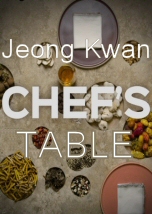
Chef's Table goes inside the lives and kitchens of six of the world's most renowned international chefs. Each episode focuses on a single chef and their unique look at their lives, talents and passion from their piece of culinary heaven. Jeong Kwan is a not your regular defined chef. She's living as a monk in Korea. She is connected to the spiritual side of food. Instead of trying to be the best in the world, any sense of ego is stripped from her mind and she cooks from the soul. This episode follows the daily life of Jeong Kwan, as she lovingly prepares vegan 'temple food', using ages old recipes and natural ingredients. She is a humble genius. Inspirational and meditative, gorgeously shot. She is a tiny, calm, firebrand.
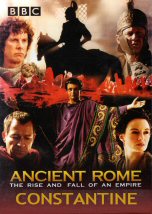
This episode tells the story of how the Emperor Constantine brought Christianity to the western world. In AD 312, Rome was in crisis. The empire had been divided into four parts, each with its own emperor who fought one another. Constantine intervened and united Rome, using military might and a new religion - Christianity.
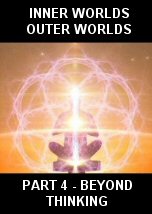
We live our lives pursuing happiness 'out there' as if it is a commodity.
We have become slaves to our own desires and craving. Happiness isn't something that can be pursued or purchased like a cheap suit. This is Maya, illusion, the endless play of form. In the Buddhist tradition, Samsara, or the endless cycle of suffering is perpetuated by the craving of pleasure and aversion to pain. Freud referred to this as the "pleasure principle." Everything we do is an attempt to create pleasure, to gain something that we want, or to push away something that is undesirable that we don't want. Even a simple organism like the paramecium does this. It is called response to stimulus. Unlike a paramecium, humans have more choice. We are free to think, and that is the heart of the problem. It is the thinking about what we want that has gotten out of control. The dilemma of modern society is that we seek to understand the world, not in terms of archaic inner consciousness, but by quantifying and qualifying what we perceive to be the external world by using scientific means and thought.
Thinking has only led to more thinking and more questions. We seek to know the innermost forces which create the world and guide its course. But we conceive of this essence as outside of ourselves, not as a living thing, intrinsic to our own nature. It was the famous psychiatrist Carl Jung who
said, "one who looks outside dreams, one who looks inside awakes." It is not wrong to desire to be awake, to be happy. What is wrong is to look for happiness outside when it can only be found inside.
With optional Hebrew subtitles. The story of medieval Jews struggling to preserve their identity--and sometimes their lives--under the rule of Christianity and Islam. Whether labelled 'Christ-killers' by the Christians or 'dhimmi' (non-Muslim citizens of an Islamic community) by the Muslims, diaspora Jews built new lives and invented new ways of being Jewish in exile in the face of discrimination, blood-libels and persecution interspersed with periods of tolerance, protection and peaceful co-existence. Drawing on some of the documents they left behind, this episode offers a vivid portrait of Jewish bankers, merchants, doctors, poets and artists flourishing in Lincoln, Cordoba, Venice and Cairo and tells the story of their mass expulsion from Spain in 1492.
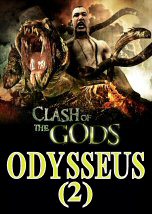
In part 2, we take a look at Odysseus, whom Homer made famous in "The Odyssey," including his adventures in light of astronomical and geographical evidence which bases the story on accurate real events.











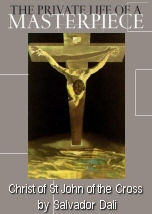







The painting offers a surrealist view of the crucifixion of Christ, and is based on a drawing by the 16th century Spanish friar Saint John of the Cross. But Dali's vision was somewhat unique, using an unusual artistic perspective in which Christ is seen from above. His Christ of St. John of The Cross was inspired by a weird mix of Spanish mysticism and nuclear physics, with his Christ being modelled by a Hollywood stuntman. It's also a masterpiece of painting technique.