How does a chef trained in the finest kitchens of France translate his haute cuisine to fast food? Ludo’s obsession with a perfectly cooked bird can be traced back to France, where he learned to roast chicken. His love for the American classic was solidified in 1996 when he arrived in LA and ate at KFC for the first time. “It was the same sensation,” he’s said, the crunchy skin and juicy flesh, and the gap between his two worlds was bridged. In this episode we learn how a Frenchman became famous for a truly American dish.
To survive Mars, our species will need to evolve how we eat, drink, and build our homes. Will we need our genes to evolve as well? Sometime in the future humans will leave Earth to colonize Mars, and in doing so will begin to adapt to life on another planet in surprising ways. Evolutionary biologist Dr. Scott Solomon foresees a series of changes to our species from the size of our hearts and heads to the pigments in our skin.
Jean Hargadon Wehner discusses how she came to remember years later the sexual abuse she suffered at Archbishop Keough High School. She also talks about what happened when she reported the abuse to Church officials and how she realized she was connected to the death of Sister Cathy Cesnik. As the can of worms is opened on the hidden world in the high school and the people begin to talk about what happened behind closed doors. With the Jean’s accusations, Abbie Schaub, Gemma Hoskins, and Tom Nugent learn about a story of a graveyard and a source nicknamed 'Deep Throat' who could hold the key.
Sir David Attenborough explores the surprisingly vibrant seas that surround the British Isles. The vast watery wilderness around us is over three times the size of our land mass, and yet to many, our oceans remain a mystery. Full of colour and teeming with life, the seas of Britain and Ireland are crucially important to a range of wildlife. This episode goes beneath the waves to uncover the thriving habitats that exist along our 22,000-mile coastline. In winter, clear evidence of the ocean’s abundance can be seen on a beach in Norfolk. Thousands of grey seals congregate on the shoreline to give birth. Britain and Ireland are home to 40 per cent of the world’s grey seals, and the number being born on our shore rises every year. Once the newly born pups are weaned, the females are ready to breed again, and heavyweight males enter violent, bloody fights to win a stretch of beach, and the females along with it. Beyond the beach, the vibrant shallows contain several important habitats. Rich beds of seagrass are nurseries for a range of animals, while also acting as very important carbon storage areas. They are also home to one of the strangest fish in our waters, the seahorse. We follow a male and female as they perform a balletic mating dance in the water, delicately entwining their tails. The stakes are high, as these animals mate for life. In a touching piece to camera, Sir David bids a fledging Manx shearwater chick farewell as it embarks on a 6,000-mile journey across the oceans to South America. There is no better example of how important the British Isles and its abundant seas are to the survival of wildlife worldwide.
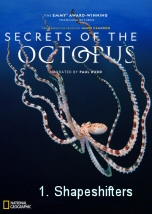
In every ocean… just beyond our shores…lives an animal with characteristics we think of as ‘human’ – intelligent, social, curious, gentle, and fierce. They build cities, use tools, and collaborate with other species to hunt. They have personalities – some are bold, while others shy. These animals can change their skin colour, texture, and body shape in a blink of an eye and see in wavelengths beyond our vision. Recent studies reveal octopuses’ consciousness, sophisticated decision-making, and unique personalities. On tropical reefs, in frigid waters, from the shoreline to the deep sea and everywhere in between, the octopus have made a home. Join us as we reveal ‘Secrets of the Octopus’. In the first chapter, whether transforming their body shape and color to disappear or mimicking their deadliest enemy, Octopus use shape-shifting superpowers to survive.













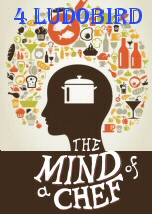





His love for the American classic was solidified in 1996 when he arrived in LA and ate at KFC for the first time. “It was the same sensation,” he’s said, the crunchy skin and juicy flesh, and the gap between his two worlds was bridged. In this episode we learn how a Frenchman became famous for a truly American dish.