



Last Watched

"Survival"  Sort by

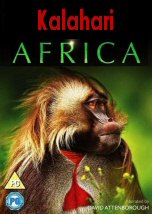
Kalahari

   2013    Nature
In Africa's ancient south west corner, two extraordinary deserts sit side by side. Water is in short supply, yet these deserts are somehow full of life because the creatures that live here have turned the rules of survival on their head. This film celebrates nature's ingenuity, no matter how tough it gets. In the Kalahari scrublands, clever meerkats are outsmarted by a wily bird, solitary and belligerent black rhinos get together to party and giant insects stalk huge flocks of birds. Rain almost never falls in the Namib - instead it must make do with vaporous, vanishing fog. The creatures in this, the world's oldest desert, have gone to the extremes, as spiders wheel to escape and a desert giraffe fights to defend his scant resources in the greatest giraffe battle ever filmed.
Series: Africa with David Attenborough
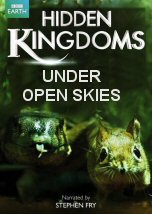
Hidden Kingdoms: Under Open Skies

   2014    Nature
Hidden Kingdoms for the first time takes the viewer into a unique and unexplored miniature world, immersing you into the action-packed lives of the planet's smaller animals. This episode is the story of two young animals forced to grow up fast. In Africa's savannah, a baby elephant shrew learns how speed is the secret to survival amongst the largest animals on Earth; and in America, a young grasshopper mouse confronts the Wild West's deadliest creatures to stake a claim of his own
Series: Hidden Kingdoms

Why Do We Dream

   2009    Medicine
Horizon uncovers the secret world of our dreams. In a series of cutting-edge experiments and personal stories, we go in search of the science behind this most enduring mystery and ask: where do dreams come from? Do they have meaning? And ultimately, why do we dream? What the film reveals is that much of what we thought we knew no longer stands true. Dreams are not simply wild imaginings but play a significant part in all our lives as they have an impact on our memories, the ability to learn, and our mental health. Most surprisingly, we find nightmares, too, are beneficial and may even explain the survival of our species.

The Death of the Oceans

   2010    Nature
Sir David Attenborough reveals the findings of one of the most ambitious scientific studies of our time - an investigation into what is happening to our oceans. He looks at whether it is too late to save their remarkable biodiversity. Attenborough explores some of the ways in which we are affecting marine life - from over-fishing to the acidification of sea water. The film also uncovers the disturbing story of how shipping noise is deafening whales and dolphins, affecting their survival in the future.

Are We Still Evolving

   2011    Science
Dr Alice Roberts asks one of the great questions about our species: are we still evolving? There's no doubt that we're a product of millions of years of evolution. But thanks to modern technology and medicine, did we escape Darwin's law of the survival of the fittest? Alice follows a trail of clues from ancient human bones to studies of remarkable people living in the most inhospitable parts of the planet and the frontiers of genetic research, to discover if we are still evolving - and where we might be heading.

Can We Make a Star on Earth

   2009    Technology
Could nuclear fusion hold the answers to the energy crisis? It is the process that has forged all matter in the universe. It lights the stars and it is what transformed the lighter atoms that formed in the Big Bang into heavier atoms. In Can We Make a Star on Earth?, Brian Cox peers beyond the glare of our Sun to reveal the hidden forces that provide its power. He discovers how this fusion energy has kept our closest star burning for five billion years. Brian believes humanity must build a star on Earth to ensure survival. Will scientists be able to harness fusion power and achieve abundant, cheap, clean energy?