





Last Watched

"The Brain"  Sort by

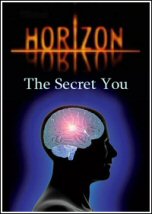
The Secret You

   2009    Medicine
Professor Marcus du Sautoy goes in search of answers to one of science's greatest mysteries: how do we know who we are? While the thoughts that make us feel as though we know ourselves are easy to experience, they are notoriously difficult to explain. He has his mind scrambled by a cutting-edge experiment in anaesthesia. After, Marcus is given an out-of-body experience in a bid to locate his true self.
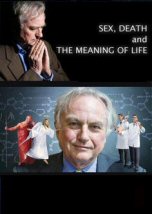
Sex, Death And The Meaning Of Life

   2013    Culture
Richard Dawkins explores what science can tell us about death. It's a journey that takes him from Hindu funeral pyres in India to genetics labs in New York.Dawkins brings together the latest neuroscience, evolutionary and genetic theory to examine why we crave life after death, why we evolved to age and how the human genome is something like real immortality - traits inherited from our distant ancestors that we pass on to future generations.

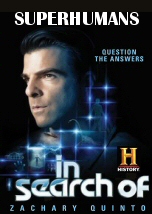
Superhumans

   2018    Culture
The Series 'In Search of' conducted investigations into the controversial, paranormal and mysterious. The producer's purpose is to suggest some possible explanations, but not necessarily the only ones, to the mysteries examined. The 2018 revival is presented by Zachary Quinto.
In this episode, Zach wants to understand how a person can be superhuman. He meets a man who bent the metal frame of a car door with his bare hands in a moment of crisis; a man who can feel no pain; and a Shaolin warrior monk, who teaches him how to harness superhuman powers of his own.
Series: In Search of

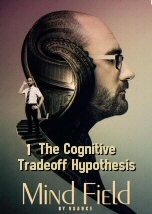
The Cognitive Tradeoff Hypothesis

   2019    Science
Join us on a journey into the mysterious depths of the human psyche as we investigate the strange and surprising terrain of the Mind Field.
Chimps and Humans can be traced biologically back to a common ancestor. The Cognitive Tradeoff Hypothesis theorizes about the two different paths of development - particularly cognitive development - that occurred in these two species after the split. Chimps stayed in the trees and developed some extraordinary cognitive capabilities which are shown by the research work of Japanese scientists, while humans came down into the savanna and developed social capabilities and language.
The hypothesis is that humans 'traded' some aspects of cognitive capabilities by re-purposing areas of the brain that had evolved in the context of other uses. Those capabilities are kept in chimps and are far surpassing that of normal humans. This is shown by the research work of scientists at the Primate Research Center connected with Kyoto University.
Series: Mind Field

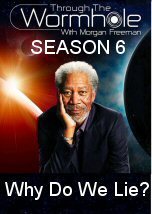
Why Do We Lie

   2015    Culture
We all agree lying is shameful. Yet we still deliberately deceive each other constantly. Are our brains wired for lying from a young age? The brains of pathological liars may provide insights. Will technology make it easier for us to be dishonest, or could it someday instantly reveal someone is lying? Perhaps we are deceitful because our limited senses prevent us from seeing the real truth. Scientists say our own memories deceive us, and have managed to implant false memories. Other scientists look for ultimate truth in the subatomic world … only to end up turning reality on its head.
Series: Through the Wormhole Season 6

The Power Of The Placebo

   2014    Medicine
Placebos come in all shapes and sizes, but they contain no active ingredient. They are the miracle pills that shouldn't really work at all. Now they are being shown to help treat pain, depression and even alleviate some of the symptoms of Parkinson's disease. It seems they're not acting alone. The placebo effect is intertwined with how is did the healthcare. Explores why they work, and how we could all benefit from the hidden power of the placebo.
Earth from Space

Earth from Space

2019  Nature
Human Universe

Human Universe

2014  History
Cosmos

Cosmos

1980  Science
Life

Life

2009  Nature
The Story of Maths

The Story of Maths

2008  Science
History of the Eagles

History of the Eagles

2013  History
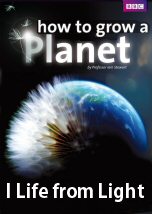
How to Grow a Planet

How to Grow a Planet

2012  Science