








Last Watched

"The Sun"  Sort by

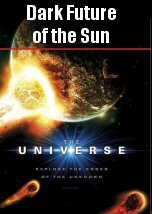
Dark Future of the Sun

   2010    Science
Our Sun has served Earth well for almost five billion years. It's bathed us with heat and energy. But like humans, our home star is mortal. In five billion years, it will stop nurturing its planetary offspring. The aging star will bloat out beyond the orbit of our planet incinerating all living things--including humans if we're still around.
Series: The Universe
The Secrets of the Sun

   2007    Science    3D
A look at how the Sun was formed and how it could potentially die; its physical composition; how it makes energy; and the nature of solar eclipses, solar flares and sunspot activity. Behold the sun and all of its glory. Learn all things about the sun ranging from its beginning to its death. Also learn about how stars work in general and MUCH, MUCH more.
Series: The Universe

Spaceship...Earth

   2007    Science
Take a ride through the formation of the third planet from the Sun, Earth. A survivor of one of the most violent neighbourhoods in the universe, learn how earth was created and discover what creatures hold clues to how life began. What evil forces threaten the demise of Earth?
Series: The Universe

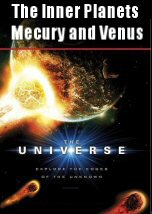
The Inner Planets: Mecury and Venus

   2007    Science
Scorched by their proximity to the sun, Mercury and Venus are hostile worlds; one gouged with craters from cosmic collisions and the other a vortex of sulphur, carbon dioxide and acid rain. Prime examples of planets gone awry, do they serve as a warning for ominous scenarios that might someday threaten Earth?
Series: The Universe

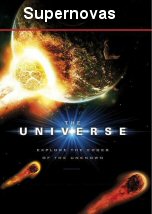
Supernovas

   2008    Science
A stellar explosion, the supernova is the sensational death of a star. It can shine as bright as 100 billion Suns and radiate as much energy as the Sun would emit over 10 billion years. Jets of high-energy light and matter are propelled into space and can cause massive Gamma Ray Bursts and emit intense X-ray radiation for thousands of years. Astronomers believe that this process creates the very building blocks of planets, people and plants. Meet the world's leading Supernova hunters, and take a look at recorded supernovas throughout history.
Series: The Universe

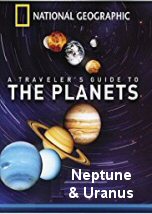
Neptune and Uranus

   2011    Science
Uranus and Neptune: The 'ice giants'. Strap yourselves in for an incredible voyage to the most remote and intriguing planets of all. There has never been a better time to boldly go where no human has gone before to follow in the footsteps of our robot pioneers and visit the planets of the Solar System. Ever wanted to be an astronaut? Imagine heading into the Ice Zone, the frigid, dark realm beyond the orbit of Saturn. So far from the Sun, you wouldn't expect much to be happening here. From orbit, Uranus appears sedate and calm. But why is the planet on its side? And Neptune: The second blue planet, and the last world in our Solar System. But something is driving its wild winds. And what about its Great Dark Spot? this planet just changes its spots. Leopards don't, but Neptune does.
Series: A Traveler Guide to the Planets