The cosmos, with its billions of galaxies and countless stars, isn't the only one. We share our lives with another universe: The world of the small, of the viruses, of the bacteria. We call this strange hidden kingdom the Microcosmos. We share our world with the microcosmos. Will we coexist in an uneasy peace, or will it destroy us? In 2020, A tiny virus caused a global pandemic, COVID-19. This pandemic makes people see the world completely differently, because there was an invisible universe, pretty much ignored for the most part. Very, very tiny things have a huge impact on our lives. The microcosmos is complex, while some parts kill us, others keep us alive. The microcosmos is responsible for the very oxygen that we breathe and the soil on which we live. And it will influence our future as we venture out into space.
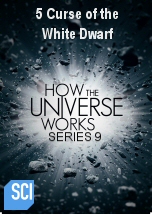
They're the cooling corpses of stars like our sun, but new research proves white dwarfs are one of the driving forces of our universe. And they can tell us literally about the nature of the cosmos itself. Have scientists finally discovered how these small stars could be such massive galactic players?
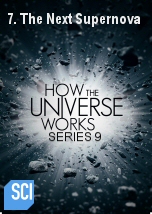
There's a killer lurking in our galaxy, a star ready to explode into a supernova. Seen from Earth, a supernova in the Milky Wave would have a terrible beauty. But for us, it could be fatal. In a few seconds, it can release as much energy as the sun will over its entire lifetime. It could be anywhere. It is nearly impossible to predict where and when the next supernova will happen. The hunt is on to find the next supernova before it finds us.
Described as one of the most influential female boxers of all time, helping legitimize women’s participation in the sport, Christy Martin shocked the world by becoming a superstar after winning a blood-soaked undercard match at the Mike Tyson/Frank Bruno fight in 1996. After her meteoric rise, the film breaks down Christy’s incredible fight for survival both in and out of the ring as she battled substance abuse, domestic violence and a harrowing brush with death. We also see Christy’s struggle with her sexual orientation and her journey of self-discovery. This is a story stranger than fiction, that must be seen to be believed.
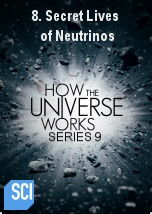
Our world, our solar system, our universe, none of it would exist without a ghostly particle called the neutrino. They are our early warning system whenever there's trouble in the universe. Neutrinos trigger star-killing explosions, supernovas. Neutrinos can answer so many questions, from why do we exist to how was the universe created. Neutrinos can be the very reason that we exist at all. The more we understand these elusive particles, the more we can gain insight into how the universe works.
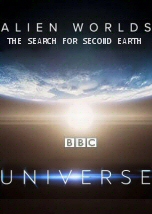
Humans have long gazed up at the night sky, wondering whether other lifeforms and intelligences could be thriving on worlds far beyond our own. But over the last few decades, ultra-sensitive telescopes and dogged detective work have transformed alien planet-hunting from science fiction into hard fact. We expected to find worlds similar to the planets in our own solar system, but we instead discovered a riot of exotic worlds. Vivid animation based on data from the most successful planet hunter of them all, the Kepler space telescope, brings these worlds into view: puffy planets with the density of polystyrene, unstable worlds orbiting two suns and 1,000-degree, broiling gas giants with skies whipped into titanic winds. But perhaps the most startling discovery was the number of worlds that may be contenders for a second Earth, at the right distance from their sun to have that ingredient so crucial for life as we know it, liquid water. Amongst them, we witness the most tantalizing discovery of all: a so-called ‘super-Earth’, situated in the Goldilocks zone - the area just the right distance from a sun to potentially support life - and with the faint signal of water in its atmosphere.







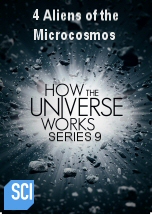








In 2020, A tiny virus caused a global pandemic, COVID-19. This pandemic makes people see the world completely differently, because there was an invisible universe, pretty much ignored for the most part. Very, very tiny things have a huge impact on our lives. The microcosmos is complex, while some parts kill us, others keep us alive. The microcosmos is responsible for the very oxygen that we breathe and the soil on which we live. And it will influence our future as we venture out into space.