A Chapter of forgotten history. The first permanent European settlement in the United States was founded in 1565–two generations before the settlements in Jamestown and Plymouth–not by English Protestants, but by the Spanish and a melting pot of people they brought with them from Africa, Italy, Germany, Ireland and even converted Jews, who integrated almost immediately with the indigenous tribes. The film uncovers one story of America’s past that never made it into textbooks. Follow some of America’s leading archaeologists, maritime scientists, and historians as they share the story of Florida’s earliest settlers. It’s a story that has taken more than 450 years to reveal.
Documentary about progressive music and the generation of bands that were involved, from the international success stories of Yes, Genesis, ELP, King Crimson and Jethro Tull to the trials and tribulations of lesser-known bands such as Caravan and Egg. The film is structured in three parts, charting the birth, rise and decline of a movement famed for complex musical structures, weird time signatures, technical virtuosity and strange, and quintessentially English, literary influences. It looks at the psychedelic pop scene that gave birth to progressive rock in the late 1960s, the golden age of progressive music in the early 1970s, complete with drum solos and gatefold record sleeves, and the over-ambition, commercialisation and eventual fall from grace of this rarefied musical experiment at the hands of punk in 1977. Contributors include Robert Wyatt, Mike Oldfield, Pete Sinfield, Rick Wakeman, Phil Collins, Arthur Brown, Carl Palmer and Ian Anderson.
Lucy Worsley travels to Russia to tell the extraordinary story of the dynasty that ruled the country for more than three centuries. It's an epic tale that includes giant figures such as Peter the Great and Catherine the Great, the devastating struggle against Napoleon in 1812, and the political murders of Nicholas II and his family in 1918 which brought the dynasty to a brutal end. In this first episode, Lucy investigates the beginning of the Romanovs' 300-year reign in Russia. In 1613, when Russia was leaderless, 16-year-old Mikhail Romanov was plucked from obscurity and offered the crown of Russia. Lucy also charts the story of Peter the Great, the ruthless and ambitious tsar who was determined to modernise Russia at the end of the 17th century.
The Bronze Age covers 2,000 years of history in the Aegean/Mediterranean, Egypt and Near East from roughly 3000 BC to 1000 BC. New animations produced by Pixeldust include the reconstruction of four ancient capitals, including the Egyptian city of Thebes and the early Greek capital of Mycenae. What singled out this period and the new societies and cities that emerged? The development of formal writing is one among several important factors.
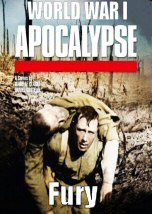
Was the sacrifice of an entire generation worldwide an avoidable or a necessary tragedy? Are the roots of World War II to be found in the devastation of World War I? Drawing from over 300 hours of archival footage and tracing the journeys of the civilians and soldiers across the world, anonymous or well-known, who fought for survival in this unprecedented period in human history, both heroic and barbaric. On June 28th, 1914, the assassination of an obscure Austrian archduke in Sarajevo triggers the most disastrous conflict the world has ever known. Germany becomes an enemy to France, invades Belgium, and in September arrives at the gates of Paris.
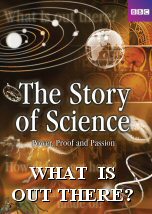
An informative and ambitious journey exploring how the evolution of scientific understanding is intimately interwoven with society's historical path. The Story Of Science tells the forces that came together to create scientific knowledge; the practical business of making instruments and machines; the great forces of history – revolutions, voyages of discovery and artistic movements – and the dogged determination of scientists and experimenters. This is the story of how scientific ideas shaped the modern world and how science made history. Michael Mosley begins the first episode with the story of one of the great upheavals in human history - how we came to understand that our planet was not at the centre of everything in the cosmos, but just one of billions of bodies in a vast and expanding universe. He reveals the critical role of medieval astrologers in changing our view of the heavens, and the surprising connections to the upheavals of the Renaissance, the growth of coffee shops and Californian oil and railway barons. Michael shows how important the practical skills of craftsmen have been to this story and finds out how Galileo made his telescope to peer at the heavens and by doing so helped change our view of the universe forever.




The film uncovers one story of America’s past that never made it into textbooks. Follow some of America’s leading archaeologists, maritime scientists, and historians as they share the story of Florida’s earliest settlers. It’s a story that has taken more than 450 years to reveal.