Humans have long gazed up at the night sky, wondering whether other lifeforms and intelligences could be thriving on worlds far beyond our own. But over the last few decades, ultra-sensitive telescopes and dogged detective work have transformed alien planet-hunting from science fiction into hard fact. We expected to find worlds similar to the planets in our own solar system, but we instead discovered a riot of exotic worlds. Vivid animation based on data from the most successful planet hunter of them all, the Kepler space telescope, brings these worlds into view: puffy planets with the density of polystyrene, unstable worlds orbiting two suns and 1,000-degree, broiling gas giants with skies whipped into titanic winds. But perhaps the most startling discovery was the number of worlds that may be contenders for a second Earth, at the right distance from their sun to have that ingredient so crucial for life as we know it, liquid water. Amongst them, we witness the most tantalizing discovery of all: a so-called ‘super-Earth’, situated in the Goldilocks zone - the area just the right distance from a sun to potentially support life - and with the faint signal of water in its atmosphere.
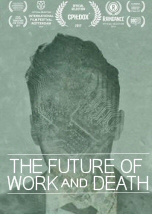
Frontline and service workers have borne the health consequences of the pandemic, increasing racial and economic disparities. Certain robotic and AI applications are accelerating as the value of human workers is further questioned. Determining the likely areas of job growth and training needs is difficult. Post-secondary education has become more virtual and its costs, more controversial. How can we predict job growth, training needs and the role of education in order to prepare for the work of the future?
As the landscape of work shifts, do we need a drastic rethinking of social safety nets? Do businesses need offices? Is a 9-to-5 workday valid? Does the nation need a drastic rethinking of the social safety nets? Does America face a 'post-work' era, or will there be increased inequities in how we make our livings?
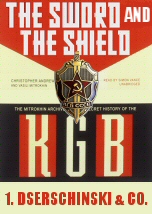
For the past century, Russian history has also been the history of its security services. They were used by the Soviet state to crush dissent. Millions suffered at their hands. Mass executions, secret wars, spies capable of stealing the atomic bomb, poisoning scandals all add up to the most extraordinary and dangerous security network the world has ever known. But even today, the security network is arguably stronger than ever. This is the History of the KGB, told through its veterans and its victims. Founded in 1917, Cheka was the predecessor organization of the KGB. Set up as a 'temporary' measure by Lenin, unknown number of Soviet citizens would die at the hands of the secret services as internal dissents in the 1920s. An inglorious chapter is the "Great Terror" phase, when millions of Soviet citizens were convicted and executed in mock trials under Stalin's rule in the 1930s. Outside the Soviet Union, during the WWII they were busy infiltrating German High Command, British Intelligence and America's Manhattan Project. The Cold War had begun in earnest.
Hitler’s rise to power was a unique moment in history. Germany suffered a humiliating defeat in WWI; now it's crippled by massive war reparations. Hitler offers a scapegoat: the Jews. The Nazis are quick to institute anti-Semitic laws and stoke distrust of the Jews. Anyone deemed 'undesirable,' from political opponents, to the handicapped, gypsies and Jews are sent to camps. There they are either worked to death, starved or executed. But just how much did the rest of the world know of what was going on?
Deep Throat comes forward with the orders of anonymity with the horror story of what happened in 1994 with the charges against Maskell. With the location of a secret grave of documents, Deep Throat’s story contradicts the story of the former state’s attorney Sharon A.H. May. The group begins to investigate Dr. Richter who worked with Maskell to groom girls and their families. As the case prepares for a potential trial, the disappearance of Father Maskell causes problems as the prosecutors find themselves defending the idea of repressed memories. When things fall apart, victims still find themselves seeking justice. Abbie and Gemma seek the links between Jean and the killer... which leads to a man named Brother Bob.


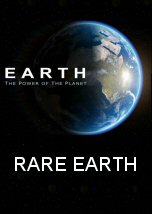





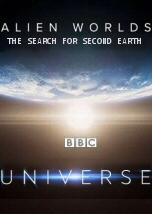




But perhaps the most startling discovery was the number of worlds that may be contenders for a second Earth, at the right distance from their sun to have that ingredient so crucial for life as we know it, liquid water. Amongst them, we witness the most tantalizing discovery of all: a so-called ‘super-Earth’, situated in the Goldilocks zone - the area just the right distance from a sun to potentially support life - and with the faint signal of water in its atmosphere.