Their quest is to discover whether the items we throw away today have any value for tomorrow's world. In a unique science experiment, Dr George McGavin and Dr Zoe Laughlin chronicle the history of rubbish and explore how what we throw away tells us about the way we live our lives. With unprecedented access to one of the UK's largest landfill sites, the team of experts spend three days carrying out tests all over the site, revealing the secret world of rubbish. They also carry out three other 'archaeological' digs into historic landfills to chart the evolution of our throwaway society. Is mining trash for something valuable really viable? McGavin concluded: 'The idea of landfill mining is a pretty compelling vision of the future.'
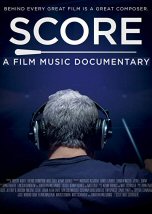
For a predominately visual medium like cinema, its musical component plays a vital role as well, especially its score. In that essential musical accompaniment, the soul of the film is expressed whether it be sweepingly majestic fanfares or delicate lyrical pieces. This documentary explores the artistic role of this special musical discipline that completes the cinematic artistic creation process and the artists who have devoted their careers to this contribution. We explore the form's history and examine the masters who defined it with their own distinctive artistic vision. In doing so, the various components of this delicate creative process are revealed as they create a musical compositional work that has inspired a popular appreciation of music in all its forms, which gave some old musical ways their own new lease on life.
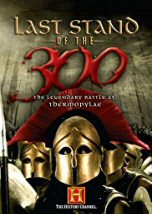
In the year 480 B.C., the Greeks and the Persians fight one of the most famous battles in history at a place called Thermopylae. Here, the mighty Persian war machine, which has conquered most of the known world, will attempt an expansion into Europe. The only thing standing in their way will be an army led by 300 Spartans, the greatest soldiers the world has ever known. They will fight to the very last man, and in doing so will protect the cradle of democracy during its infancy, and the battle will go down in history as the greatest military stand of all time.
The film the tells the life of Jamaican sprinter and three times Olympic gold medalist and World Record holder for 100m, 200m and 4x100m, Usain Bolt, the fastest man in recorded human history. It describes Bolt's journey in winning nine gold medals and the incidents surrounding the Olympic titles. Featuring interviews with famous athletes like Pelé, Neymar, and Serena Williams, the film examines multiple world-record holder Bolt's rise to dominance and the the legacy of the fastest man ever timed.
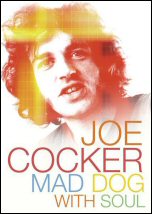
The turbulent life of soul and blues singer, the late Joe Cocker. A former gas fitter from Sheffield, catapulted to world stardom in 1969 at Woodstock with his legendary performance of the Beatles song, 'A Little Help from My Friends'. But in the early 1970s, Joe Cocker's inner demons nearly killed him. Overcoming his struggles with alcohol and drugs, he rebuilt his reputation as 'one of the great primal rock and roll vocalists of all time' (Billy Joel).
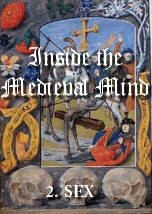
Leading authority on the Middle Ages, Professor Robert Bartlett, presents a series which examines the way we thought during medieval times. In the second episode, Bartlett unearths remarkable evidence of the complex passions of Medieval men and women. The Church preached hatred of the flesh, promoted the cult of virginity and condemned woman as the sinful heir to Eve. Yet this was the era that gave birth to the idea of romantic love.













Is mining trash for something valuable really viable? McGavin concluded: 'The idea of landfill mining is a pretty compelling vision of the future.'