Daniel Radcliffe, Rupert Grint and Emma Watson join filmmaker Chris Columbus and other esteemed cast members across all eight Harry Potter films as they travel back to Hogwarts for the first time to celebrate the anniversary of the franchise’s first film, Harry Potter and the Sorcerer’s Stone, which premiered 20 years ago. The retrospective will tell an enchanting making-of story through all-new in-depth interviews and cast conversations, inviting fans on a magical first-person journey through one of the most beloved film franchises of all time.
Embark on a thrilling journey through time and five continents to the heart of creativity. Fusing social history, politics, science, nature, archaeology and religion, this international landmark series unravels a universal mystery - why the world around us looks like it does. Modern-day mysteries are answered by journeying back to the beginning of civilisation via some of the most amazing man-made creations in the world. In the first episode, one image dominates our contemporary world above all others: the human body. How Art Made the World travels from the modern world of advertising to the temples of classical Greece and the tombs of ancient Egypt to solve the mystery of why humans surround themselves with images of the body that are so unrealistic.
This is the story of a book that could have changed the history of the World. To the untrained eye, it is nothing more than a small and unassuming Byzantine prayer book. For faintly visible beneath the prayers on its pages are other, unique, writings - words that have been lost for nearly two thousand years. The text is the only record of work by one of the world's greatest minds - the ancient Greek, Archimedes - a mathematical genius centuries ahead of his time. Hidden for a millennium in a middle eastern library, it has been written over, broken up, painted on, cut up and re-glued. But in the nick of time scientists have saved the precious, fragile document, and for the first time it is revealing just how revolutionary Archimedes' ideas were. If it had been available to scholars during the Renaissance, we might have reached the Moon over a hundred years ago.
Professor Marcus du Sautoy explores why we are driven to measure and quantify the world around us and why we have reduced the universe to just a handful of fundamental units of measurement. He tells the story of the metre and the second - how an astonishing journey across revolutionary France gave birth to the metre, and how scientists today are continuing to redefine the measurement of time and length, with extraordinary results.
Japan's landscapes range from snowy mountains to subtropical warmth. They are full of wildlife - and animals' and people's lives often cross as they adapt to these extremes. The central island of Honshu is home to over 100 million people, and its biggest city, Tokyo, is one of the largest urban metropolises on earth. But it has a wild heart - most of Honshu is mountainous. This wilderness is home to an astonishing range of wildlife - black bears, monkeys, exquisite fireflies and even cow demons. But all across this island, from the mountains to the edge of the sea, people and nature are drawn together in the most unexpected ways.
Stonehenge is an icon of prehistoric British culture, an enigma that has seduced archaeologists and tourists for centuries. Why is it here? What is its significance? And which forces inspired its creators? Now a group of international archaeologists led by the University of Birmingham and the Ludwig Boltzman Institute in Vienna believe that a new state-of-the-art approach is the key to unlocking Stonehenge's secrets. For four years the team have surveyed and mapped every monument, both visible and invisible, across ten square kilometres of the sacred landscape to create the most complete digital picture of Stonehenge and the surrounding area over millennia. Known monuments have yielded more data than ever before, revealing hidden structures within, and new finds are revolutionising the very timeline of Stonehenge. The film takes the viewer on a prehistoric journey from 8000 BC to 2500 BC as the scientists uncover the very origins of Stonehenge, learning why this landscape is sacred, preserved and has been revered by following generations. Evidence of war and conflict, as well as the cultivation of ideas and industry, is explored to reveal complex communities with international trade links as far-reaching as Spain and central Europe.









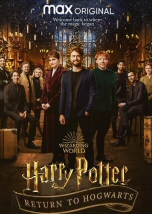


The retrospective will tell an enchanting making-of story through all-new in-depth interviews and cast conversations, inviting fans on a magical first-person journey through one of the most beloved film franchises of all time.