This remarkable science-history series investigates the blistering pace of human endeavour in space exploration, computing, energy, resources, Earth science and our understanding of the evolution of life itself. Across the last 50 years, humans have set a blistering pace and scientific discovery. We've crossed the boundaries of our solar system, made machines that can learn harnessed the power of the sun and built life from scratch. It's a period like no other in history, where human endeavour is changing everything: this is The Great Acceleration. As we race toward the future, we must examine the journey. In the first episode, Dr Shalin Naik explores the ambitious space shuttle mission that began in the '70s plus the future colonization of Mars. Over the past 50 years, space has become central to everything, from communications to entertainment to climate modelling. And as private enterprise enters space exploration, our understanding of the universe will only continue to expand. We will know if we can survive on other objects - the moon, maybe Mars, maybe even some of the moons of Jupiter and Saturn. Deep space is the last and infinite frontier. That's what we do as human beings. We explore, we learn, we make discoveries, from the moment we're born to the moment we die.
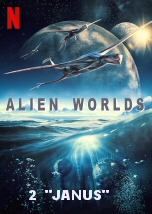
Most planets we know of are so hellish, it seems impossible that anything could live. But it's amazing where life can take hold in the Earth. Astrobiologists look for simple single-celled microbes known as extremophiles in places as Danakil Depression, known in Ethiopia as 'The Gateway to Hell.' In Episode 2, the fictional world is Janus, a planet in such a close orbit than its rotation is locked by the star's gravity and it always shows the same face to its sun. On one side of the planet, it's always daytime, a searing desert. On the other side, it's forever night, a frozen shadowland. Squeezed between the two, a sliver of perpetual twilight. Freezing meltwater flows from the cold side, carving canyons through the landscape. Deep in these canyons lives an extraordinary five-legged creature.
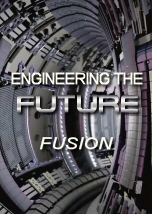
It is the greatest technological challenge ever undertaken by humankind. The quest to produce the ultimate energy solution, Fusion, a reliable source of clean power. What if we could create here on earth, our very own version of a star, a machine that makes power from nuclear fuel? But so immense are the challenges, the goal of a power-producing fusion reactor has so far remained elusive and out of reach... until now.
The great mountain ranges are some of the planet's most spectacular landscapes, but they are unforgiving places to live in, and only a few animals have what it takes to live at extreme altitude. Mountain animals are amongst the most elusive in the world, and this film provides unique and intimate glimpses into their secretive lives. Witness the moment four snow leopards come together when a mother and cub become trapped between two rival males. Join grizzly bears as they dance against trees to rub off their winter fur and soar with golden eagles hunting amongst Europe's snow-capped peaks.
The third assault on the tattered remains of Roman civilization came from even further North, where the melting glacial ice had created immense sheltered fjords, leaving its inhabitants little choice but the sea. These fearless navigators understood that dominion over the oceans was the key to their ambitions. Where the Romans expanded incrementally, the Vikings adopted a bolder, more aggressive approach. So was it the Dark Age which failed Europe, or the stifling uniformity of the great Roman experiment? Were the lost tribes more victim than failure? Richard Rudgley will hope to shed new light on the real secrets of the so-called Dark Age.
The world's deserts are lands of extremes that force animals to come up with ingenious ways of coping with hostile conditions, giving rise to the most incredible survival stories on earth. A pride of desert lions are so hungry they risk hunting a giraffe several times their size, while male sandgrouse fly 120 miles each day to the nearest waterhole and dice with death to collect water for their chicks. Filmed for the first time, a tiny bat does battle with one of the world's deadliest scorpions, and in Madagascar, a locust swarm of biblical proportions is seen as never before.



















In the first episode, Dr Shalin Naik explores the ambitious space shuttle mission that began in the '70s plus the future colonization of Mars. Over the past 50 years, space has become central to everything, from communications to entertainment to climate modelling. And as private enterprise enters space exploration, our understanding of the universe will only continue to expand. We will know if we can survive on other objects - the moon, maybe Mars, maybe even some of the moons of Jupiter and Saturn. Deep space is the last and infinite frontier. That's what we do as human beings. We explore, we learn, we make discoveries, from the moment we're born to the moment we die.