






Last Watched

"Gen"  Sort by

One Voice in the Cosmic Fugue

   1980    Science
Sagan discusses the story of the Heike crab and artificial selection of crabs resembling samurai warriors, as an opening into a larger discussion of evolution through natural selection (and the pitfalls of intelligent design). Among the topics are the development of life on the Cosmic Calendar and the Cambrian explosion; the function of DNA in growth; genetic replication, repairs, and mutation; the common biochemistry of terrestrial organisms; the creation of the molecules of life in the Miller-Urey experiment; and speculation on alien life (such as life in Jupiter's clouds). In the Cosmos Update ten years later, Sagan remarks on RNA also controlling chemical reactions and reproducing itself and the different roles of comets (potentially carrying organic molecules or causing the Cretaceous–Paleogene extinction event).
Series: Cosmos
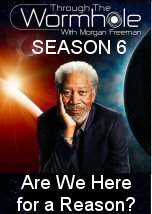
Through the Wormhole Season 6: Are We Here for a Reason

   2015    Science
Evolution tells us that all life exists for only one purpose: to reproduce. But is that all there is? How could such a simple imperative lead us to create great art and civilizations? A new theory suggests that instead of passing on genes, our ultimate purpose is to process and pass on information. We are the universe figuring itself out. Scientists dig deep into DNA, chemistry, technology and engineering to find the meaning of life. One thing is certain: living is easier if you find a reason for living.
Series: Through the Wormhole Season 6

The Hunt The Hardest Challenge

   2015    Nature
The contests between predators and prey are the most dramatic events in nature. Taking an intimate and detailed look at the remarkable strategies employed by hunters to catch their prey and the hunted to escape. Sir David Attenborough narrates. "The Hardest Challenge" reveals the extraordinary range of techniques predators use to catch their prey - from a leopard using all its powers of stealth to stalk impala in broad daylight to wild dogs, whose tactic is to wear down their prey over long distances; from Nile crocodiles, the planet's most patient predators, to killer whales who use teamwork and intelligence to take on humpback whales. But even with these finely tuned strategies, the outcome is far from certain. Surprisingly, most predators fail most of the time.
Series: The Hunt

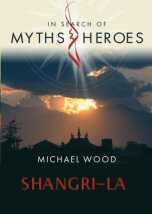
Shangri-La

   2005    History
For centuries, man has yearned for an earthly paradise, and no place better encapsulates this desire than Shangri-La - but was it ever real? The tale of an earthly paradise is among the most enduring myths in the world. From Sumerian epic to the 'islands of the blest' in Celtic literature, it has been a recurring theme through many bodies of literature and for thousands of years. Not surprisingly, then, modern people have also been drawn to the dream of a lost paradise where the ravages of time and history have been held back, where human beings live in harmony with nature, and where the wisdom of the planet is saved for future generations. In other words, to a Shangri-La.
Series: Myths and Heroes

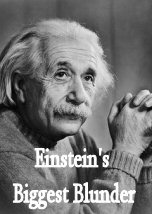
Einstein Biggest Blunder

   2000    Science
At the dawn of a new century, a new theory is being born. It threatens to demolish the foundations of 20th century physics. Its authors are two of the world's leading cosmologists. If they're right, Einstein was wrong. It all began when Andy Albrecht and Joao Magueijo met at a conference in America in 1996. This program began from Newtonian view of the universe then takes you through the General Relativity and the Flatness problem. This leads to the Horizon problem and its solution, the Inflation theory. However modern astronomy doesn't stop here, the Inflation theory has its flaw too, and what happened before the big bang? This can all be answered by changing one thing, the one thing no body dare to question until now.

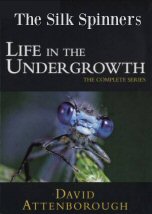
The Silk Spinners

   2005    Nature
Silk is the invertebrates' great invention, used in a range of ways from from the protective stalks of lacewing eggs to the amazing hanging threads of New Zealand's 'glow worms'. Spiders, though, have taken silk-spinning to extremes. The common wolf spider has no web, but the female is a gentle parent, encasing her eggs in silk and carrying the precious bundle wherever she goes. The bolas spider uses a ball of sticky silk soaked in a copy of moth pheromone to lure its prey. Millions of communal spiders live and feed together in a vast, towering web - an arachnophobe's nightmare.
Series: Life in the Undergrowth
Science and Islam

Science and Islam

2017  History
The Cell

The Cell

  Science
Ancient Aliens

Ancient Aliens

  History
Leaving Neverland

Leaving Neverland

2019  Culture
Trainwreck

Trainwreck

2025  Culture
Long Way Home

Long Way Home

2025  Culture