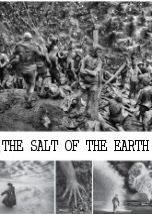
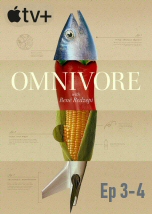
In episodes 3 and 4, a seemingly simple ingredient becomes the invisible force that has shaped civilizations, fueled exploration, and quietly dictated the fate of empires. From ancient trade routes to modern industry, salt emerges not just as a seasoning, but as a powerful driver of human history and survival. At the same time, the story shifts to something far more familiar yet equally unsettling: the global dominance of a single type of banana. What appears to be abundance hides a fragile system built on uniformity, where one disease could wipe out a staple food relied upon by millions. As the journey unfolds, the narrative exposes the hidden cost of convenience and monoculture, revealing how the loss of biodiversity is not a distant ecological concern but an immediate threat to our food security and future. With striking connections between past and present, these episodes invite you to rethink what you eat, where it comes from, and how something as ordinary as salt or a banana could hold the key to understanding the balance—and imbalance—of our world.
An extraordinary journey into the powerful natural forces that shape our planet, this visually stunning documentary series reveals how extreme weather, oceans, landscapes, and atmospheric phenomena combine to create some of Earth’s most spectacular events. Using breathtaking aerial footage and immersive close-up filming, the series brings viewers closer than ever to the beauty, danger, and raw power of nature. In the first two episodes, the documentary explores the spectacular lightning storms of Arizona, the giant waves of Nazaré, the power of storm clouds, hail, downbursts and tornado-like winds, the ocean forces that build monstrous waves, the cloud ‘tablecloth’ over Table Mountain in Cape Town, and the rare circular rainbows at Victoria Falls. It is a journey through extreme weather, dramatic locations and the hidden natural forces that create some of the most spectacular scenes on Earth.
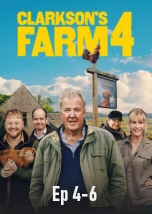
In these three episodes, we'll see how life on the farm becomes more ambitious, more expensive, and much more unpredictable. A major new arrival promises to transform the future of the business, while unexpected births bring fresh challenges and moments of joy among the animals. As the livestock move out to pasture and new technology is introduced to improve daily operations, every success seems to be matched by a new obstacle. What begins as a season of optimism soon becomes a race against time, budgets, and the realities of modern farming. Meanwhile, Jeremy takes a crucial step into the cattle trade and discovers that turning farm produce into a profitable venture is far more complicated than expected. His long search for a pub finally appears to be reaching a breakthrough, but expert advice reveals a daunting list of costs, regulations, and risks that threaten to derail the entire project. With major financial decisions looming and pressure mounting from every direction, the dream of building something bigger than a farm hangs in the balance.
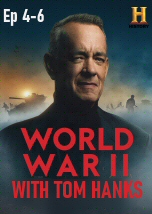
In these three episodes, we see how Japan’s war in China, U.S. sanctions, and the desperate search for vital resources push the Pacific toward a decisive breaking point. Driven by military ambition and imperial ideology, Japan launches the attack on Pearl Harbor, shocking the world and bringing America fully into World War II. From that moment, the conflict becomes a vast struggle across oceans, supply lines, naval codes, aircraft carriers, submarines, and nations fighting for survival. The story then moves into the brutal battle for control of the seas, where German U-boats threaten Britain’s lifeline in the Atlantic while Japan’s powerful navy tries to dominate the Pacific. After Pearl Harbor, Japanese forces sweep through Southeast Asia with alarming speed, but on Guadalcanal their advance meets fierce resistance. In the jungle, at sea, and in the air, U.S. Marines face exhaustion, fear, and relentless combat in one of the first great tests of America’s resolve in the Pacific.
In episodes 13 and 14, the war reaches a decisive new stage as the Allies prepare to launch Operation Overlord and open the long-awaited second front in Nazi-occupied France. Behind the invasion of Normandy lies an enormous gamble of planning, deception, weather, timing and nerve, with Dwight D. Eisenhower carrying the weight of one of the most dangerous military decisions in history. From the beaches of D-Day to the struggle to break through Hitler’s Atlantic Wall, the episode captures the fear, scale and sacrifice of the operation that begins the liberation of Western Europe. The story then moves to World War II’s often overlooked Asian theater, where Allied forces and Japan fight across jungles, mountains, plains and impossible supply routes. In Burma, India and China, commanders such as Joseph Stilwell, William Slim and Lord Mountbatten face a brutal war of disease, exhaustion, monsoon terrain and relentless Japanese resistance. From the Burma Road and the deadly airlift over the Hump to the fighting at Myitkyina, Imphal and Saipan, these episodes reveal a vast and punishing conflict far from Europe’s headlines, where survival itself becomes a battle and victory demands endurance on a staggering scale.
In episodes 17 and 18, the Second World War enters its most devastating final phase as two distant battlefields become the stage for unimaginable destruction. Across the Pacific, American forces fight island by island against an enemy determined to resist to the very last soldier. Every beachhead is won at an unbearable cost, revealing a campaign where courage, sacrifice and survival are pushed beyond all human limits. As casualties mount and Japan refuses to surrender, the conflict descends into one of the bloodiest chapters in military history. Meanwhile, the Soviet Union launches its overwhelming final offensive into the heart of Nazi Germany. As the Red Army closes in on Berlin from the east and Western Allied forces advance from the west, Hitler's collapsing regime makes one last desperate stand. Street by street, the battle for the German capital becomes a brutal struggle that seals the fate of the Third Reich. Through extraordinary archival footage and firsthand accounts, these episodes reveal how two immense campaigns—one in Europe and one in the Pacific—brought the deadliest war in history to its dramatic and unforgettable conclusion.





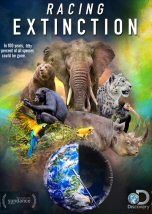










As the journey unfolds, the narrative exposes the hidden cost of convenience and monoculture, revealing how the loss of biodiversity is not a distant ecological concern but an immediate threat to our food security and future. With striking connections between past and present, these episodes invite you to rethink what you eat, where it comes from, and how something as ordinary as salt or a banana could hold the key to understanding the balance—and imbalance—of our world.