





Last Watched

"Time"  Sort by

Cosmic Holes

   2007    Science
Today, we know black holes exist, and now scientists are trying to confirm that other holes lurk in hyperspace. Our infinite cosmos could contain a variety of "holes" such as black, white, "mini" and wormholes. White holes are the reverse of black holes; instead of matter being sucked into it, matter is ejected out. Wormholes are gateways in the fabric of space and time. They are included in Einstein's field equations as possibilities for their existence. Neither white holes nor wormholes have ever been found. Learn about new discoveries including, colliding binary black holes, intermediate black holes and manufacturing mini black holes.
Series: The Universe
Cosmic Apocalypse

   2008    Science
The Universe as we know it is condemned to death. Space, matter and even time will one day cease to exist and there's nothing we can do about it. Harsh realities are revealed about the future of our Universe; it may collapse and burn or it might be gripped by a galactic ice age. Either of these scenarios might be a long way off. However, our Universe could suddenly be destroyed by a "random quantum fluctuation", a bubble of destruction that can obliterate the entire cosmos in the blink of an eye. No matter how it ends, life in our Universe is doomed.
Series: The Universe

Parallel Universes

   2008    Science
Some of the world's leading physicists believe they have found startling new evidence showing the existence of universes other than our own. One possibility is that the universe is so vast that an exact replica of our solar system, our planet and ourselves exists many times over. These Doppelganger Universes exist within our own Universe; in what scientist now call "The Multiverse." If proof is found it will change our lives, our minds, our planet, our science and our universe.
Series: The Universe

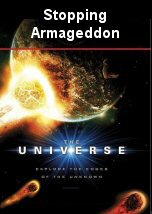
Stopping Armageddon

   2009    Technology
It sounds like a Hollywood blockbuster: a deadly asteroid is on a collision course with Earth. But in reality, it's only a matter of time before a giant space rock threatens to wipe out civilization. An asteroid took out the dinosaurs sixty-five million years ago. Are we next? This episode analyzes the threat and explores the many ways--from a nuclear bomb to ingenious new technology--that experts are proposing to stop Armageddon
Series: The Universe

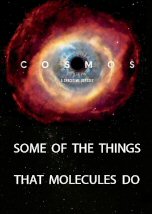
Some of the Things That Molecules Do

   2014    Science    HD
The story begins with Tyson sitting at a campfire, and telling how the wolf changed through artificial selection, and selective breeding into the dog breeds around today. He then enters the Ship of Imagination, and explains natural selection with the process that helped to create the polar bears. Along the way he talks about DNA, genes and mutation. Next he goes to a forest and describes the Tree of life, this leads him to discussing the evolution of the eye. He then discusses extinction, by going to a monument called the Halls of Extinction, dedicated to the broken branches of the tree of life. Explaining the five great Extinction events. He then tells how some life has survived, and then focuses on the tardigrade. From there he talks about what other kinds of life might have been created on other worlds. He then goes to Saturn's moon Titan. From there he speculates about life and how it first began. He then returns to Earth and tells about abiogenesis and how life changed and evolved. The show ends with an animated sequence from the original series of life's evolution from one cell to humans.
Series: Cosmos: A Spacetime Odyssey

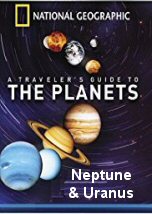
Neptune and Uranus

   2011    Science
Uranus and Neptune: The 'ice giants'. Strap yourselves in for an incredible voyage to the most remote and intriguing planets of all. There has never been a better time to boldly go where no human has gone before to follow in the footsteps of our robot pioneers and visit the planets of the Solar System. Ever wanted to be an astronaut? Imagine heading into the Ice Zone, the frigid, dark realm beyond the orbit of Saturn. So far from the Sun, you wouldn't expect much to be happening here. From orbit, Uranus appears sedate and calm. But why is the planet on its side? And Neptune: The second blue planet, and the last world in our Solar System. But something is driving its wild winds. And what about its Great Dark Spot? this planet just changes its spots. Leopards don't, but Neptune does.
Series: A Traveler Guide to the Planets
Dangerous knowledge

Dangerous knowledge

2007  Science
Tyson

Tyson

2026  History
The Big Think

The Big Think

2017  Technology
The Planets

The Planets

2000  Science
History of the Eagles

History of the Eagles

2013  History
The Life of Birds

The Life of Birds

1998  Nature
The Sky at Night

The Sky at Night

2026  Science